



News Release
You are viewing ARCHIVED content
This content was published online before January 20, 2025. Please note that this content is NOT UPDATED, and links may not work. For current information, visit https://www.nps.gov/aboutus/news/index.htm.
NPS / Jacob W. Frank
News Release Date: March 16, 2021
Contact:
Morgan Warthin, (307) 344-2015
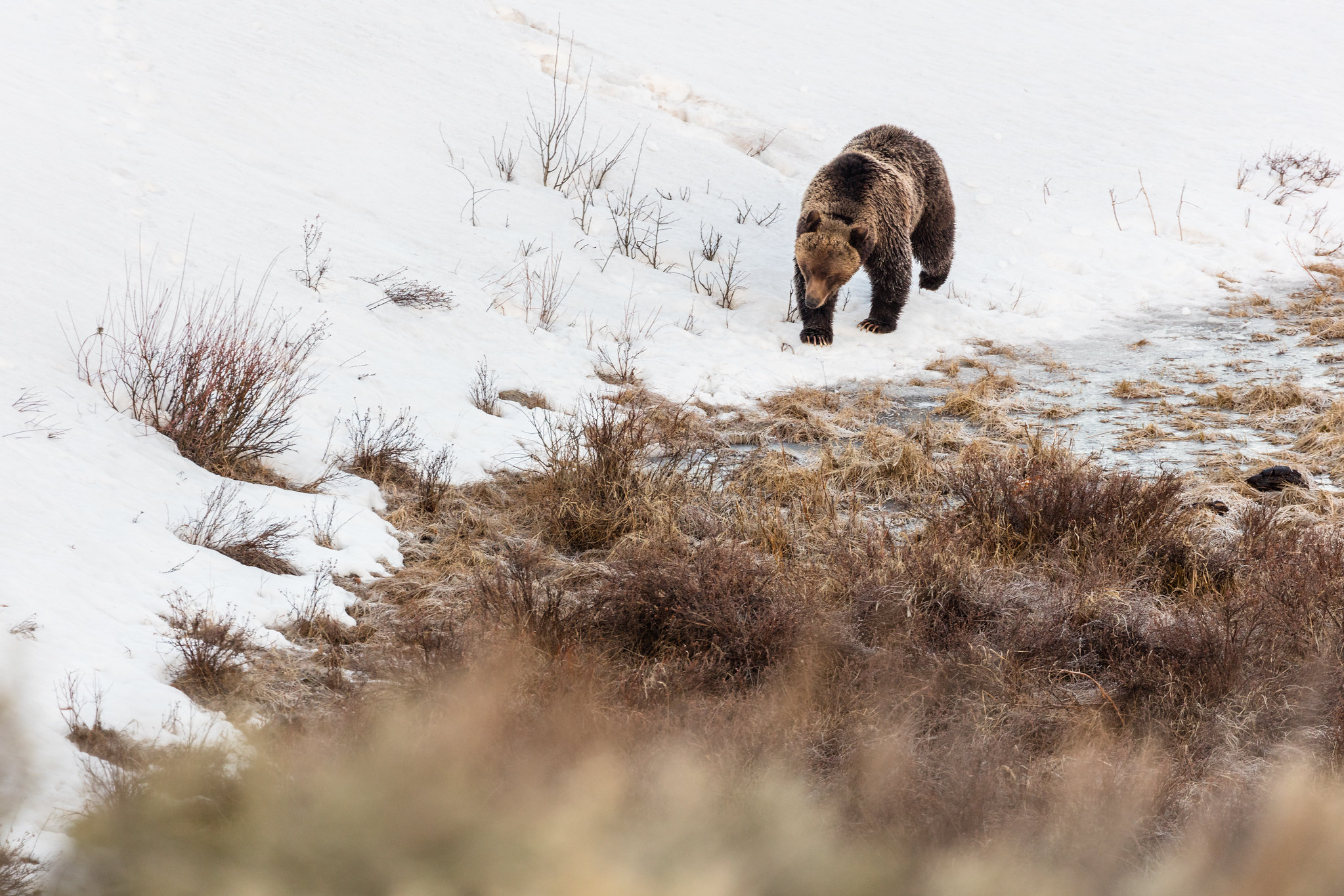
The first bear sighting of 2020 occurred on March 7.
Male grizzlies come out of hibernation in early March. Females with cubs emerge in April and early May. When bears emerge from hibernation, they look for food and often feed on elk and bison that died over the winter. Sometimes, bears will react aggressively while feeding on carcasses.
All of Yellowstone National Park is bear country: from the deepest backcountry to the boardwalks around Old Faithful. Protect yourself and the bears people come here to enjoy by following these guidelines:
- Prepare for a bear encounter.
- Carry bear spray, know how to use it, and make sure it’s accessible.
- Stay alert.
- Hike or ski in groups of three or more, stay on maintained trails, and make noise. Avoid hiking at dusk, dawn, or at night.
- Do not run if you encounter a bear.
- Stay 100 yards (91 m) away from black and grizzly bears. Use binoculars, a telescope, or telephoto lens to get a closer look.
- Store food, garbage, barbecue grills, and other attractants in hard-sided vehicles or bear-proof food storage boxes.
- Report bear sightings and encounters to a park ranger immediately.
- Learn more about bear safety.
While firearms are allowed in the park, the discharge of a firearm by visitors is a violation of park regulations. Bear spray has proven effective in deterring bears defending cubs and food sources. It can also reduce the number of bears killed by people in self-defense.
The park restricts certain visitor activities in locations where there is a high density of elk and bison carcasses and lots of bears. Restrictions began in some bear management areas on March 10.
Tags:
yell bear management
Last updated: March 13, 2024