



News Release
You are viewing ARCHIVED content
This content was published online before January 20, 2025. Please note that this content is NOT UPDATED, and links may not work. For current information, visit https://www.nps.gov/aboutus/news/index.htm.
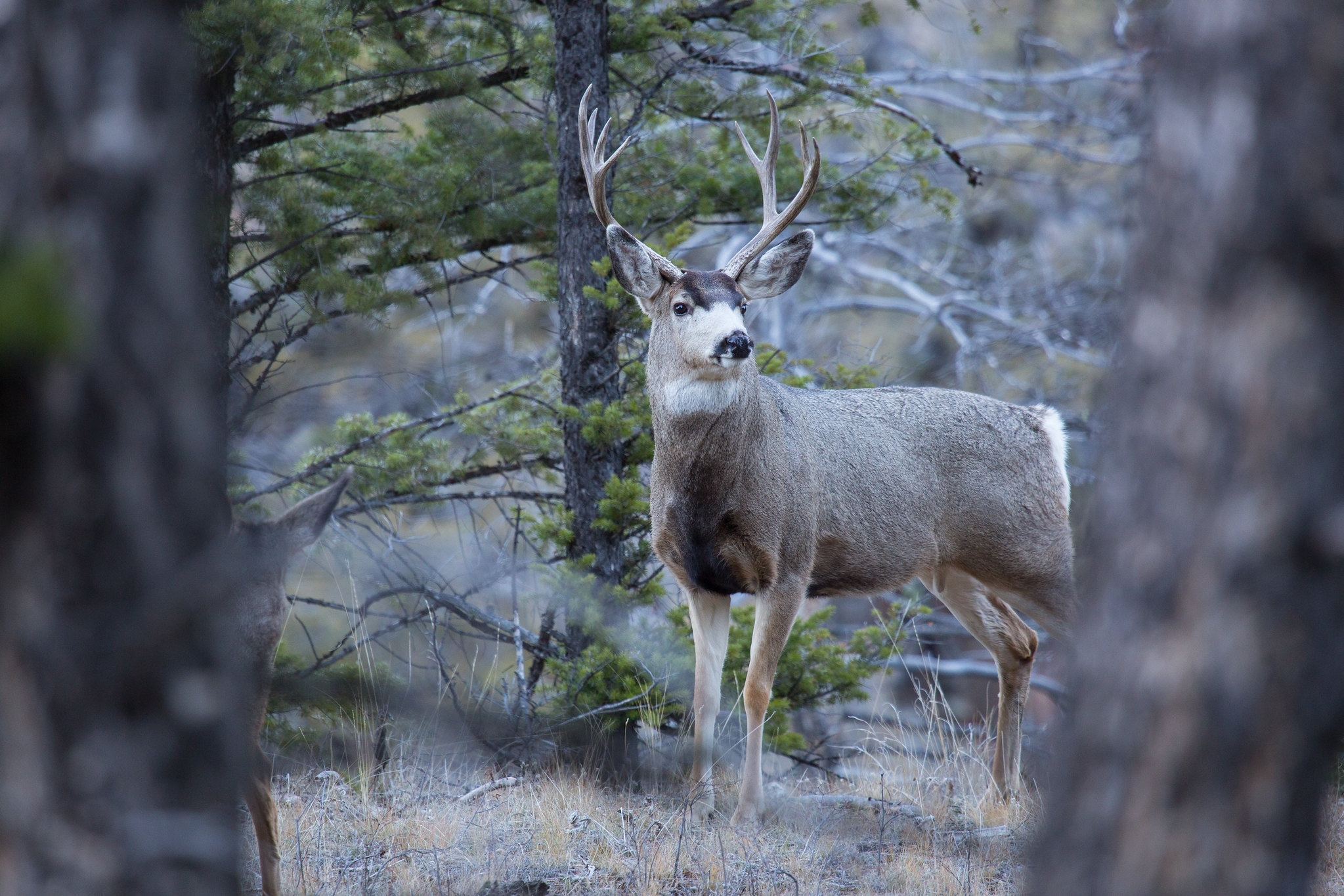
NPS / Neal Herbert
News Release Date: November 14, 2023
Contact:
Morgan Warthin, 307-344-2015
Next steps
Yellowstone staff will prioritize the following actions to manage the disease as there is no effective strategy to eradicate it once established.
- Increase collaboration and information sharing with WGFD and other state agencies to identify areas within Yellowstone with increased risk for CWD.
- Increase monitoring for the presence of CWD in other deer, elk and moose in the park.
- Increase the investigation of carcasses and collection of samples for testing.
- CWD is a contagious, fatal disease of deer, elk and moose caused by a malformed protein (prion) for which there is no vaccine or known treatment.
- The malformed prion protein accumulates in the brain and other tissues causing physiological and behavioral changes, emaciation and death.
- Signs of CWD include listlessness, weight loss, increased drinking and urinating, excessive drooling and head lowering.
- It is transmitted by direct animal-to-animal contact or indirectly through contact with infectious particles persisting in the environment such as feces, soil or vegetation.
- Since the mid-1980s, CWD has spread across Wyoming and is now found in most of the state.
- About 10-15% of the mule deer near Cody, Wyoming, that migrate into the southeast portion of Yellowstone during summer months are estimated to have CWD.
- The long-term effect of CWD on deer, elk and moose in the Yellowstone area is uncertain.
- Most wild animals in Yellowstone are healthy and thrive in their natural environment, but sometimes wildlife can get sick just like people.
- If you see any sick or dead wildlife, notify a National Park Service (NPS) employee as soon as possible and avoid contact with the animal.
- Avoid touching or handling sick or dead wild animals as some disease-causing organisms can be passed between wild animals and people.
- NPS employees trained in wildlife health use specific protective measures to safely deal with a wild animal that may have died of disease.
- It is recommended that people avoid consumption of any part of an animal that is suspected or confirmed to have CWD.
- There is currently no evidence that CWD can infect humans or domestic animal species. However, it is recommended that tissues from CWD-infected animals not be consumed.
Tags:
yell resources
Last updated: February 29, 2024