



|
Traveling into the Virgin River Narrows requires careful planning. At least 60% of the hike will be spent wading, walking, and sometimes swimming in the river. Currents can be strong, and pools can be deep. Even on short trips, this hike can be challenging and risky. 
NPS Photo Flash FloodsFlash floods, often caused by storms miles away, are a very real danger and can be life threatening. During a flash flood, the water level rises quickly, within minutes or even seconds. A flash flood can rush down a canyon in a wall of water 12 feet high or more. 
NWS Flash Flood Potential ForecastsNOT EXPECTED: Flash Flooding is not expected.
If you observe any of these signs, seek higher ground immediately. Climbing even a few feet higher may save your life. Remain on high ground until conditions improve — water levels usually drop within 24 hours. Clothing and EquipmentHiking in the Virgin River is like walking on slippery bowling balls. Much of the hike requires balancing on algae-coated rocks in the middle of a swiftly flowing river. Sturdy, closed-toe footwear is essential. Hiking boots with good ankle support are best. Sandals, crocs, and bare feet are not appropriate. Inappropriate footwear often results in twisted ankles and crushed toes. If you had to spend an unplanned evening/night in the canyon due to an injury, how prepared would you and your group be? Extra clothing options are essential for a safe and fun trip. Year-RoundThe temperature of the water in the Virgin River is often colder than the air. At the same time, breezes blow steadily, and very little sunlight penetrates to the canyon floor. Regardless of the time of year, always take additional warm clothing stored in a dry waterproof bag. Clothing made of wool or synthetic fibers has the best insulation. SummerEven in mid-summer, the temperature of the river can be cool. Average summer water temperatures range from 56° to 68° Fahrenheit (13° to 20° Celsius). Although you'll probably hike in shorts and a short-sleeve shirt, bring extra warm clothing in a dry bag for each member of your group. Parts of the canyon are quite shady, breezy, and cool. Spring and FallHike with multiple layers that can be removed or added as the air temperature changes. In the early spring and late fall months, neoprene socks, pants, bib overalls, or a wetsuit may be necessary to hike in the river. Average spring and fall water temperatures range from 41° to 53° Fahrenheit (5° to 12° Celsius). WinterA neoprene wetsuit or drysuit with warm layers may be needed. Average winter water temperatures range from 38° to 45° Fahrenheit (3° to 7° Celsius). During the winter months, ice may form within the canyon. Watch for falling ice and be prepared for very slippery conditions. Hiking/trekking poles or sticks are highly recommended and will help you maintain balance. It is often difficult to balance without the support of a pole. Poles/sticks can also be used to check water depth when the river is cloudy with sediments. Water levels in the Virgin River Narrows, even when the flow is low, can range from ankle deep to full swims. Most of the time, the river is ankle to knee-deep, but all top-down hikers should be prepared for deep sections where swimming is required. Food keeps your energy up and helps you stay warm. Always bring more food than you plan to eat. It can be a life-saver if you spend an unexpected evening or night in The Narrows. Even on a cool day, you will lose hydration through sweat, urination, and breathing. Bring at least one gallon of water per person per day and drink it. Even a minor injury can cause major problems in Zion Wilderness. Be sure to bring basic first aid supplies for you and your group. Every week, hikers and canyoneers spend unintended nights in the Wilderness of the park. A good headlamp can mean the difference between getting back to the trailhead and spending the night in the canyon. Human waste, toilet paper, and hygiene products must be carried out of all Wilderness areas and narrow canyons. Wilderness permit groups must carry a minimum of one human waste disposal bag per person while in the wilderness. Common InjuriesLower leg fractures are among the most common injuries suffered in the Wilderness. The most common cause of lower leg injuries is jumping from rocks. Do not jump from any height – lower yourself down slowly or find an easier way around. Cyanobacteria and Water SourcesAll hikers should be aware that there may be a risk of cyanotoxin exposure when recreating in water in Zion. Cyanotoxins can cause illness and/or death if ingested or absorbed through an opening in the skin. The risk of exposure increases during and immediately after any precipitation events. HypothermiaHypothermia occurs when the body is cooled to dangerous levels. It is the number one killer of outdoor recreationists, even in summer.
If you recognize any of these signs, stop hiking and immediately replace wet clothing with dry clothing. Warm the victim with your own body and a warm drink, and shelter the individual from breezes. A pre-warmed sleeping bag will also help prevent further heat loss. Heat ExhaustionHeat exhaustion often occurs when the body loses more fluid than it takes in. Signs of heat exhaustion include nausea, vomiting, fatigue, headaches, pale appearance, stomach cramps, and cool clammy skin. If a member of your party begins to experience any of these symptoms, stop your hike immediately. Find a cool, shady area and rest with your feet up to distribute fluids throughout your body. Heat StrokeHeat stroke is an advanced stage of heat exhaustion, where the body is unable to cool itself. Symptoms include confusion, disorientation, behavior changes, and seizures. If you believe that a member of your party is suffering from heat stroke, it is imperative to cool them using any available means and obtain immediate medical assistance. 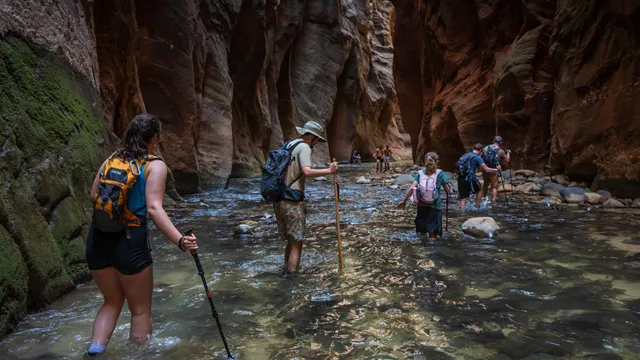
Hiking upstream in The Narrows does not require a permit. However, the hike is challenging. Read up on how to have a safe and fun trip here.

Hike 16 miles through The Narrows starting at Chamberlain's Ranch. This is a permitted hike through Zion Wilderness.

Learn how to plan and obtain permits for backpacking, canyoneering, and other Wilderness trips.

Make your ideal visit a reality! Explore fun activities, places to stay, and trip-planning advice.
|

Last updated: September 17, 2026