



|
Many partners along the 100-mile Cuyahoga River are working toward its recovery. About 26 miles of the river lie within Cuyahoga Valley National Park. Everything that happens upstream impacts the national park. What happens within the national park, impacts everything downstream. The Cuyahoga flows into Lake Erie at Cleveland. As a result, it is part of the world’s largest supply of surface freshwater: the Great Lakes. Water is vital to life. It connects us. 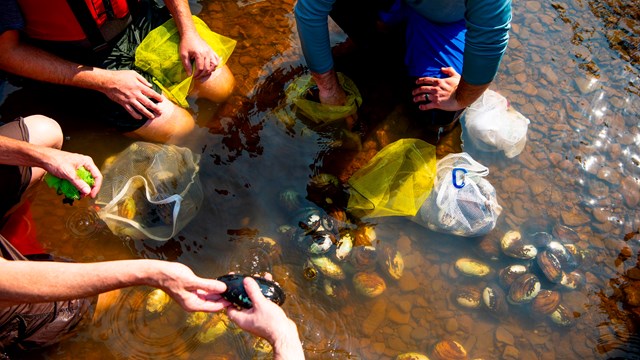
Can the River Support Rare Wildlife?
Teams of scientists are studying whether the Cuyahoga River is healthy enough to support freshwater mussels and lake sturgeon. 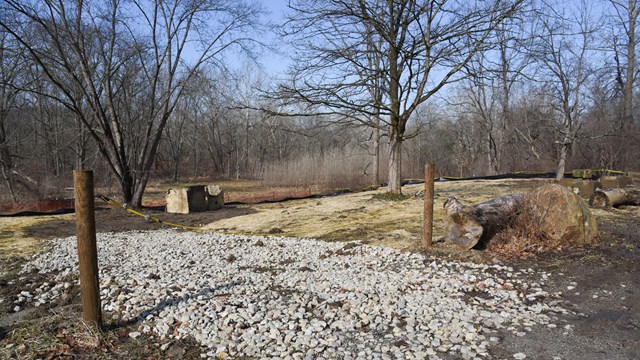
Restoring Open Space in the Park
Learn about our work to protect critical resources for the recreational and educational benefit of the visiting public. 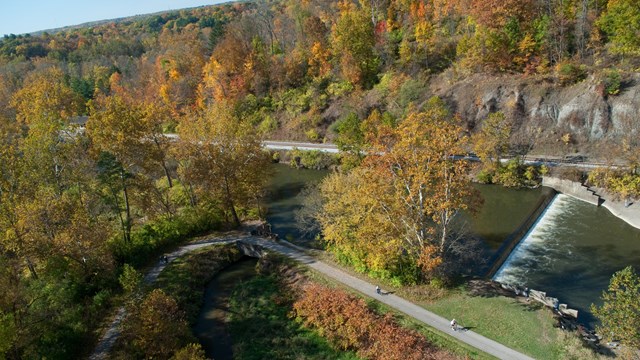
Removing Dams
The Brecksville Diversion Dam and Pinery Feeder Dam were removed in 2020. This marks a huge win for the restoration of the Cuyahoga River. Other ongoing and upcoming restoration projects
Evaluation and mitigation of contamination and contaminated soils associated with the historic Jaite Paper Mill. Work will involve closures to the Towpath and Valley trails between Boston and Red Lock trailheads.
We are restoring 4 under-used picnic areas back to their natural conditions:
Restoration of these sites is one of the actions identified in the park's 2023 Community Access Plan. This plan aims to protect, preserve, and improve the resources of Cuyahoga Valley, while also seeking efficiencies in park operations.
The full scope of work is still being determined. Closures of the Towpath Trail and Boston Trailhead are possible.
Stream Restoration at Station Road 

Left image
Right image
|
Last updated: March 9, 2026