• Giant Sequoia Trees

    Sequoia & Kings Canyon

    National Parks California

  • Road Construction Delays in Sequoia NP through Mid-Aug. (if entering/exiting via Hwy. 198)

    Expect 20-minute to 1-hour delays on weekdays and 20-minute delays on weekends along main road through parks. Weeknight closures with one pass through the construction zone at 11:30 p.m. See link to schedule and map or call 559-565-3341 (press 1, 1, 1,). More »

  • 22-foot Vehicle Length Limit in Sequoia National Park

    Planning to see the "Big Trees" in Sequoia National Park? If you enter/exit via Hwy. 198, all vehicles must be less than 22 feet in length. Even vehicles towing trailers must be less than 22 feet in combined length. Longer vehicles must enter at Hwy. 180. More »

  • Road Conditions in the Parks

    For the latest road and weather conditions, call 559-565-3341 (press 1, 1, 1) More »

Overnight Backpacking

Please read important park alerts by clicking the red tab above before you come to the parks.

 
Overnight backpacker
NPS Photo
 

The Sequoia and Kings Canyon Wilderness encompasses hundreds of thousands of acres of pristine High Sierra country and forms the backbone of these two parks. Select from the information below for more information on how to enjoy and protect the parks' wilderness. The Wilderness Office is also available to assist you in planning your trip.


Minimum Impact Restrictions
Basic practices to minimize the impact on the land. Download 2012 pdf, 117 KB

Wilderness Trip Planner

Download Table of Contents

Download pages 2-11

Download pages 12-21

Download pages 22-33

Wilderness Permits and Reservations
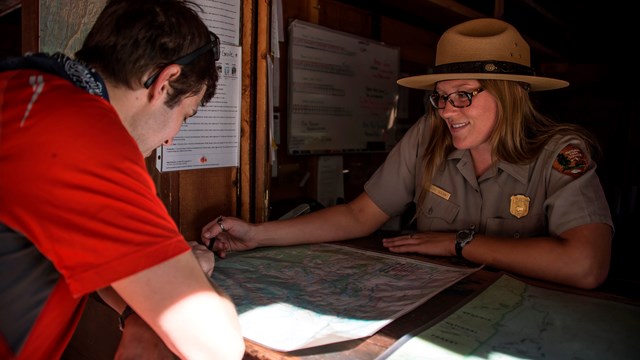
Wilderness permits are required for all overnight camping outside designated campgrounds. Permits are not required for day hikes, except in the Mount Whitney area.

Food Storage
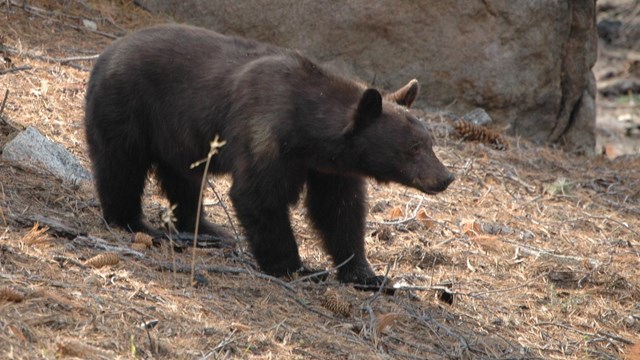
With black bears at home in these parks, proper food storage is required at all times. Federal regulations require proper food storage and prohibit feeding of any park animal.

Trail Safety
The key to a safe, enjoyable trip is preparedness. Learn more about staying safe on park trails.

Maps and Trail Guides
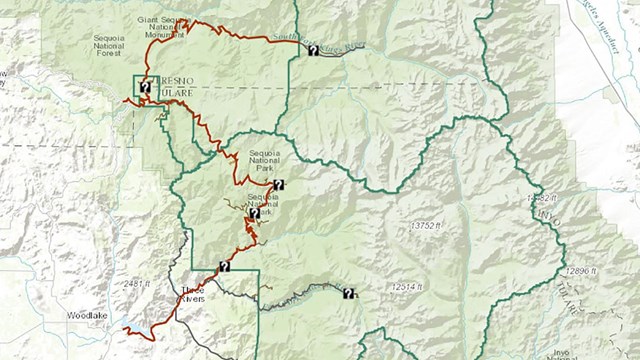
The Sequoia Natural History Association Bookstore offers park maps and trail guides both online and at each of the visitor centers in the parks to help you plan your trip.


2011 WILDERNESS RESTRICTIONS

Special Wilderness Regulations
This bulletin gives a snapshot of all special regulations, recommendations, closures, and limits. Download 2012 pdf, 354 KB

Protecting Foxtail Pines in the Kern River Drainage
As of 2009 no campfires above 10,400 feet in elevation in the Kern Drainage or above 10,000 feet at Nine Lakes Basin & Big Arroyo areas. No campfires at Lower Crabtree Meadow within 1/4 mile of the food storage locker. Download 2012 pdf, 388 KB

Wilderness Food Storage Guidance
This bulletin provides background information for the strong recommendation that all visitors carry and use portable bear-resistant food-storage containers. Download 2012 pdf, 197 KB

Help Prevent the Spread of New Zealand Mud Snails
The New Zealand mud snail is a very small invasive species of freshwater snail. These snails quickly form large colonies that can take over waterways that they invade, altering the natural ecosystems. To help prevent the introduction of this and other invasive species clean your boots, laces, and equipment carefully before hiking in the parks. Read more about from Yosemite National Park...


Contact the Wilderness Office

Phone

(559) 565-3766

Fax (559) 565-4239 
E-mail SEKI_Wilderness_Office@nps.gov   


Note: The Wilderness Office may be closed intermittently due to weather and road conditions.

Did You Know?

Col. Charles Young in uniform

In 1903, an African-American served as superintendent of Sequoia National Park, the first to do so in the National Park Service. Colonel Charles Young and his troops played a major part in completing the first wagon road to the Giant Forest, and the Moro Rock Road. A sequoia tree was named for him. More...