



News Release
NPS Photo
News Release Date: January 5, 2026
Contact:
Zion News Desk, 435-772-0162
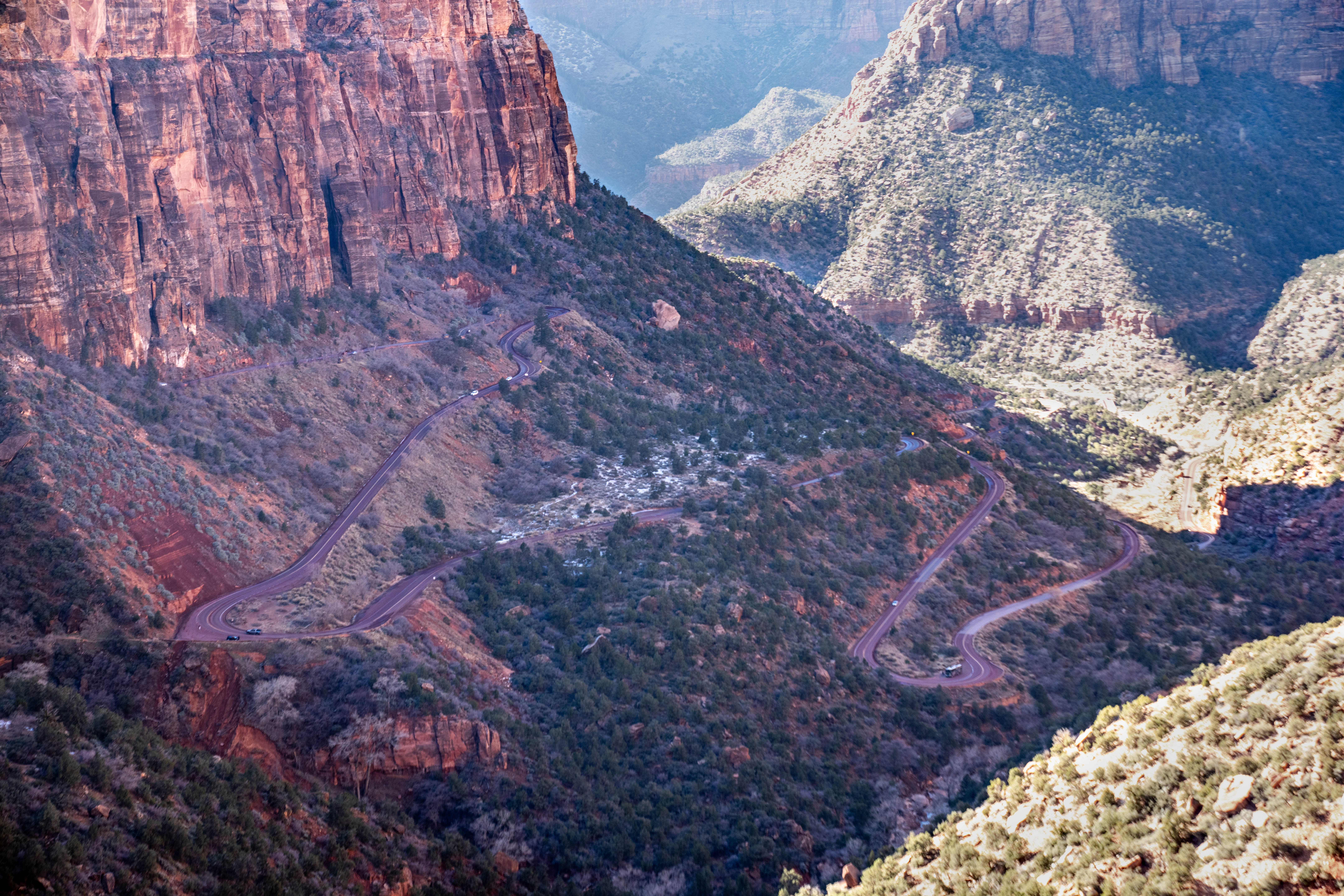
SPRINGDALE, Utah – Restrictions on large vehicles traveling the historic Zion–Mt. Carmel Highway (ZMCH) in Zion National Park will take effect on June 7, 2026. The change will improve safety, preserve historic features, and reduce delays on this 10.7-mile route.
Beginning June 7, 2026, vehicles larger than 35 feet, 9 inches in length; 7 feet, 10 inches in width; 11 feet, 4 inches in height; or 50,000 pounds will no longer be permitted to drive the highway between Canyon Junction and the park’s East Entrance. Combined vehicles, such as trucks with trailers, cannot exceed 26 feet from hitch to rear axle and 50 feet overall.
Why the change is needed
These restrictions are based on two safety studies conducted in 1989 and 2019 and validated by the U.S. Department of Transportation’s Federal Highway Administration. These studies found:
- A single vehicle over 35 feet, 9 inches long or combined vehicle over 50 feet long (including no more than 26 feet from hitch to rear axle) cannot safely maintain their lane along the ZMCH.
- Vehicles wider than 7 feet, 10 inches or taller than 11 feet, 4 inches cannot pass through the Zion-Mt. Carmel Tunnel in a single lane of travel.
- Vehicles over 50,000 pounds exceed weight limits on four bridges along the ZMCH.
The restrictions serve a dual purpose: improving safety while protecting a piece of America’s cultural history. Completed in 1930, the Zion-Mt. Carmel Highway is listed on the National Register of Historic Places and designated a Historic Civil Engineering Landmark. Its bridges, tunnels, and sharp switchbacks were built in an era with smaller, lighter vehicles, and large vehicles increase the risk of damage to historic infrastructure that was not designed to accommodate them.
“Many of today’s large touring vehicles and RVs simply couldn’t have been envisioned when the road was built,” said Superintendent Jeff Bradybaugh. “This decision comes after years of careful study and collaboration with our neighbors, transportation agencies, and the tourism industry.”
The change also improves the visitor experience by reducing delays. A 2016 study found that, under the current pass system for large vehicles to transit the Zion-Mt. Carmel Tunnel, there was an average of 19 minutes of free-flowing traffic out of each hour, with the busiest day having only eight minutes. These delays lead to traffic congestion and diminish the overall visitor experience.
Visitor options
Visitors with large vehicles will still have access to Zion National Park. Though large vehicles will not be able to enter through the park’s East Entrance, they will be allowed past the South Entrance if:
- They are planning on parking in the large vehicle lot next to the Zion Canyon Visitor Center and there is room
- They have a pass to visit the Zion Lodge
- They are driving up the Zion Canyon Scenic Drive during the shuttle off-season
- They are camping in Watchman Campground or South Campground (once it reopens)
There are also alternate routes around the park that provide access to Bryce Canyon National Park, the North Rim of Grand Canyon National Park, and other destinations in the popular “Grand Circle” tour. These routes add between 10 to 45 minutes of drive time.
Plan ahead and prepare
Visitors traveling to Zion National Park in 2026 should plan ahead by reviewing their vehicle dimensions, including after-market accessories like roof racks and tires, and considering alternate routes if limits are exceeded. Visitor safety depends on individual preparation and compliance with posted requirements, and advance planning helps ensure traffic moves safely and efficiently through the corridor.
More information can be found at: go.nps.gov/ZMCH
About the National Park Service: More than 20,000 National Park Service employees care for America's national parks and work with communities across the nation to help preserve local history and create close-to-home recreational opportunities. Learn more at www.nps.gov, and on Facebook, Instagram, Twitter, and YouTube.
Tags:
zion,
imr,
zion-mt. carmel highway,
highway,
traffic,
safety,
zion national park,
rv,
bus,
large vehicles
Last updated: May 20, 2026