An official website of the United States government
Here's how you know
Official websites use .gov A
.gov website belongs to an official government
organization in the United States.
Secure .gov websites use HTTPS A
lock (
) or https:// means you've safely connected to
the .gov website. Share sensitive information only on official,
secure websites.
It's not rude to set boundaries. Viewing from a safe distance will keep both people and animals safe!
It may be hard to believe, but keeping your distance is as much about the animal’s safety as it is yours. Feeding, touching, and getting too close are all things that can put you and your furry, feathered, or scaled counterparts in grave danger. While Zion National Park is a conscientious partner for visitors, we also remain committed to the protection and preservation of nature and wildlife.
Despite their best intentions, some visitors love park animals to death. As wildlife become comfortable around humans and lose their natural fear, the animals will become more aggressive. If animals become too aggressive, they will have to be removed or killed. At the same time, animals that become dependent on human food may lose their ability to survive independently. Keep wildlife safe by avoiding interaction.
Although they may appear harmless and even curious, wildlife do injure visitors every year. Small rodents can and will bite the hand that feeds them, transmitting a variety of diseases. Larger animals, such as deer, have been known to buck or kick suddenly and cause serious injuries. This is partly why approaching, harassing, or feeding any kind of wildlife (no matter how small or familiar) is illegal in all national parks.
We want all visitors to be able to create fun, lasting memories. So, be safe and remember that "distance makes the heart grow fonder."
How close is too close?
Animals behave unpredictably. Stay safe and never assume you can get away with a close encounter.
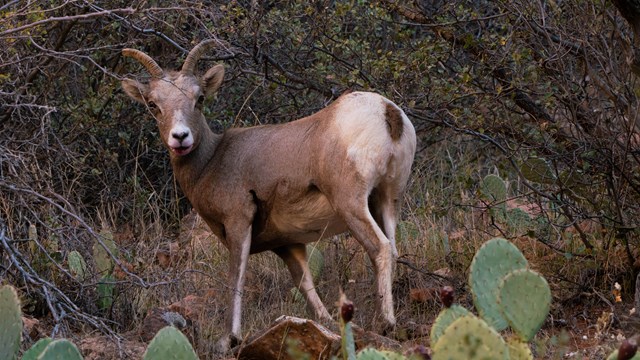
Stay at least 100 feet (30 meters) away from deer, bighorn sheep, California condors, and mountain lions.
Stay at least 50 feet (15 meters) away from other smaller wildlife like squirrels, birds, and reptiles.
What if an animal approaches me?
Wildlife may not know better, but YOU do. Although it may feel flattering, back away and maintain a safe distance when any kind of wildlife approaches you. If you are approached by small wildlife, you may be able to scare them off by using your voice or stomping your feet. Help us keep wildlife wild — it is your responsibility to act appropriately around animals.
What if I want to get an animal’s attention?
Calling, clicking, whistling, or making noises of any kind to attract wildlife is illegal. The same applies to any actions that unnecessarily harass wildlife or change their behavior. Animals (and other visitors) deserve to enjoy the park without disruption, just as you do.
Is it safe to be near wildlife if I am in a group?
Whether it’s you or 20 people, always keep a safe distance away. As crowds gather, wildlife can quickly feel threatened and panic. They may harm people in an attempt to escape or protect their young. This is especially dangerous when people start to surround an animal. Even if they are at a reasonable distance, the wildlife may feel trapped if too many people are nearby.
If people around you stop maintaining a safe distance, don’t be afraid to speak up and remind your fellow visitors of proper safety. Sometimes, in the moment, someone could use a gentle reminder that long-distance relationships with wildlife are better for everyone.
What if I want to get a good photo?
Use zoom functions or a telephoto lens to capture wildlife pictures from a safe distance. The popularity of "up-close-and-personal" selfies or "capturing the moment" through photographs or video poses a threat to both wildlife and humans. Intentionally or otherwise, many visitors have started to provoke animals and, in some instances, alter their behaviors as a result.
Quietly watching from a distance can be much more rewarding. Many animals will only act natural when they feel safe. If you give wildlife enough distance, they may eat, sing, spread their wings, or even play with each other. Remember to take a moment to put your camera down and really appreciate what you see.
Unattended food can quickly become a target for wildlife. Store all food in secure containers or vehicles.
NPS Photo
Can I feed the animals?
Feeding wildlife is prohibited. Feeding animals, even with native vegetation or other "natural" food, is harmful to them. Their dependence on humans can cause aggression and loss of survival instincts.
Perhaps you’ve fed animals in petting zoos before, but national parks are different. Help us keep this place and its wildlife unique by never feeding them. This is for their safety and health as well as yours.
Properly store all food while in the park. Wildlife will invade food that is left unattended. Make sure to properly dispose of trash, and ensure you clean up all food particles. Wildlife have adapted to open bags, zippers, coolers, and other containers. Use one of the following methods to store your food:
If available, use a "bear box" or other locking container. Most tent campsites have bear boxes.
Keep food items in your vehicle’s trunk with the windows completely closed.
If the above options are not possible, use bungee cords or a heavy object to secure the lids of your containers.
When camping in Wilderness, store food in a secure, hard-sided container or interlockinig wire mesh bag hung out of reach of wildlife.
What if an animal begs for food?
Animals stay healthier when you do not feed them. They do not need food handouts to survive. Once animals learn to beg, they will become more aggressive, more likely to get injured by vehicles, and more likely to become seriously ill.
Animals can easily pick up scavenging practices, especially in highly-trafficked areas. You can help us curtail this unwanted behavior by keeping your food secure and moving away from begging animals. You can also scare off small animals by using your voice or stomping your feet. Ask a ranger for other ways to help.
How much harm could ONE person really do?
Quite a lot! If an animal is fed at a location once, they will be tempted to try again. All it takes is one time for an animal to start frequenting an area, which may lead to a reliance on human food.
Some of us might think of ourselves as “animal whisperers," but consider using your gift to help our national parks be a place where wildlife can be wild. After all, that is why you and so many other guests have come to appreciate these special places. Be a role model to others in your family or group (and even other visitors) by embodying the park's mission to protect and preserve wildlife.
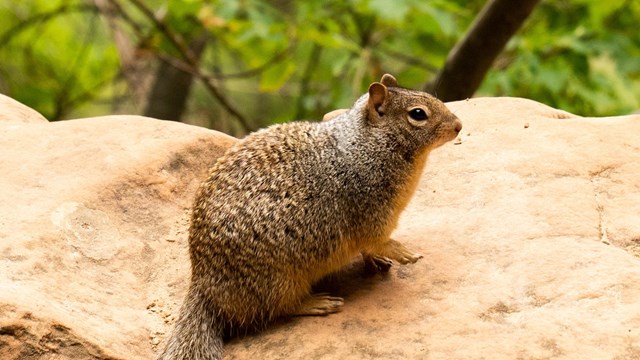
Squirrels may seem harmless, but can inflict serious injuries and transmit disease in a matter of seconds.
Risks of Wildlife Interaction
Risks to you include:
Bites, scratches, and/or bruises
Infectious diseases such as tetanus, rabies, bubonic plague, and hantavirus
Damage to your vehicle or belongings
Animal waste in or on your belongings (or you)
Pesky and persistent animals that could become aggressive
Internet/media fame for a very undesirable reason
Have you seen the number of YouTube videos and news reports of people getting attacked by wild animals because they got too close?
In rare cases, severe injuries or even death
Risks to wildlife include:
Diseases and parasites
Poor health and illness
Injuries
Increased likelihood of being killed by vehicle traffic
Abandonment of young wildlife
Euthanasia when wildlife become aggressive or harmful to visitors
Your safety is your responsibility! Learn about common hazards and how to avoid them.
Last updated: May 15, 2026
Park footer
Contact Info
Mailing Address:
Zion National Park
1 Zion Park Blvd.
Springdale,
UT
84767
Phone:
435-772-3256
If you have questions, please email zion_park_information@nps.gov. You can also listen to pre-recorded information by calling at any time. Rangers answer phone calls from 10 am to 5 pm Mountain Time, but a ranger may not answer if they are already speaking with someone else.