An official website of the United States government
Here's how you know
Official websites use .gov A
.gov website belongs to an official government
organization in the United States.
Secure .gov websites use HTTPS A
lock (
) or https:// means you've safely connected to
the .gov website. Share sensitive information only on official,
secure websites.
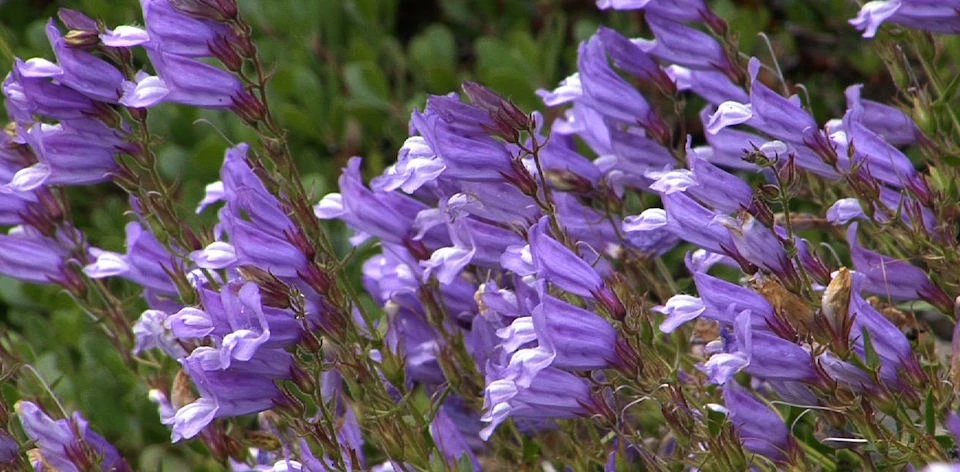
Penstemon wildflowers growing along the road to Sunrise.
NPS Photo
Mount Rainer's renowned wildflowers bloom for a limited amount of time every year. The "peak" bloom for wildflowers is heavily dependent on weather and precipitation patterns, so accurate predictions are difficult. In most years, many flowers will be blooming by mid-July, and by the first of August the meadows should be very impressive. Frost can occur by late August, but even after light frosts the meadows continue to be very beautiful, thanks to changing leaf colors and seed pod development that take the place of colorful blossoms.
For a better idea of what the wildflowers are doing this year, please see the Currently Blooming section below, which summarizes what's blooming where.
Explore further:
Wildflower Guide - Unfamiliar with Mount Rainier's wildflowers? Photos and brief descriptions of some of the common wildflower species can be found in the park's online wildflower guide.
Ecological Restoration - Watch short videos about the Ecological Restoration program's work in the park.
NPS Photo of a glacier lily at Paradise, 6/4/26.
NPS Photo
Currently Blooming
Last Updated: June 15, 2026
Subalpine meadows like Paradise still have significant snow cover, but snow is melting out fast. Glacier lilies (Erythronium grandiflorum) are some of the earliest subalpine wildflowers to start blooming, sometimes even pushing through snow! This head start gives glacier lilies an advantage in pollinating and reproducing before other wildflowers have even started growing. The closely related avalanche lilies, which have white petals with a yellow center, also bloom early in the season. Look for these lilies throughout the subalpine areas of the park.
As snow continues to melt away, it may be tempting to skirt remaining patches of snow or mud that are covering trails. However, by going off trail you are walking on and damaging the wildflowers that you may be coming to see! It is better to stay on the trail even if that means crossing snow, particularly in the high-visitation meadows around Paradise and Sunrise. Also, there are plenty of opportunities for the perfect mountain + wildflower photo from the trails! No need to step off trail and crush other flowers in your quest for the perfect shot.
Wildflower Reports
Longmire Area
Paradise Area
Trail of the Shadows and around Longmire (6/11) - three-leaf anemone, piggyback plant, bunchberry, trailing blackberry, thimbleberry, whitebark raspberry, leafy mitrewort, rusty saxifrage, littleleaf miner's-lettuce, smooth alumroot, lupine, spotted coralroot, western coralroot, pinesap, star-flowered false Solomon's seal, five leafed bramble, thyme-leaf speedwell, devil's club, slender bog orchid, pink wintergreen (early), starflower, bear grass, largeleaf avens, Alaska violet, foam flower, small-flowered buttercup
Paradise Meadows (6/4) - Still mostly snow-covered at higher elevations, but early season wildflowers emerging in melted areas include: marsh marigold, subalpine buttercup, avalanche lily, glacier lily, magenta paintbrush, pasqueflower, yellow violets, cinquefoil (early)
Not yet open for the season. Check back for updates later in the summer!
Red Columbine Flower
NPS Photo / Filo Merid
Wildflower Photos
The photos featured here are usually taken by park staff and volunteers from all over the park. Share your own wildflower photos in the Mount Rainier Flickr group! Higher resolution versions of wildflower photos are available on Mount Rainier's Flickr page.
Plan Your Visit
Paradise andSunrise are two of the main visitor center areas at Mount Rainier National Park. Both areas are well known for their impressive wildflower meadows. The park also maintains dozens of trails perfect for wildflower viewing.