



News Release
You are viewing ARCHIVED content
This content was published online before January 20, 2025. Please note that this content is NOT UPDATED, and links may not work. For current information, visit https://www.nps.gov/aboutus/news/index.htm.
USFWS Photo/G. Castle
News Release Date: December 8, 2022
Contact:
Valerie Gohlke, 307-739-3393
Contact:
C.J. Adams, 307-739-3431
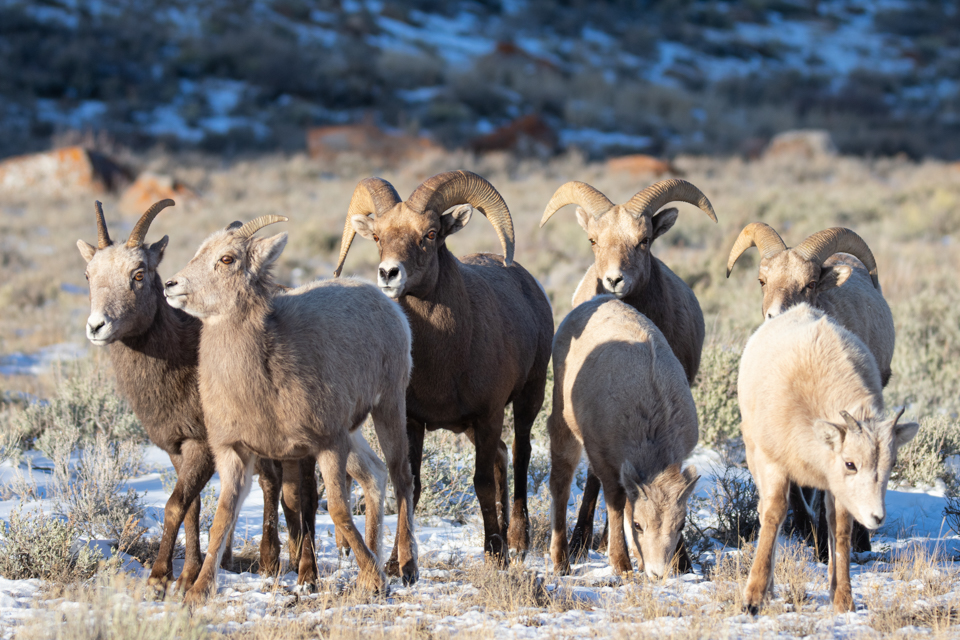
Conserving energy is especially challenging for wildlife as temperatures plummet, snow buries food and travel is difficult. Animals like bighorn sheep, bison, deer, elk and moose survive the winter by using the least amount of energy so they can maintain fat reserves, which is especially crucial for females to successfully produce young in the spring.
“Bighorn sheep in the Teton Range are particularly susceptible to winter disturbances. The park is asking skiers and snowboarders to voluntarily avoid sensitive bighorn sheep winter habitat. Please help spread the word to conserve these iconic animals,” said Chip Jenkins, Superintendent of Grand Teton National Park.
A georeferenced map of bighorn sheep winter zones is available for download at tetonsheep.org. Areas closed to the public to protect important ungulate winter range include:
- Summits of Mount Hunt, Prospectors Mountain, and Static Peak: Dec. 1 through Apr. 30
- Areas around the Snake River, Buffalo Fork River and Kelly Hill: Dec. 15 through Apr. 1
- Northern portion of Blacktail Butte (the open slopes on the southwest side of Blacktail Butte and the Practice Rocks climbing area at the northern tip of the butte remain open): Dec. 15 through Apr. 30
- Wolff Ridge and a portion of the Spread Creek drainage: Dec. 15 through Apr. 30
Last updated: December 8, 2022