



News Release
You are viewing ARCHIVED content
This content was published online before January 20, 2025. Please note that this content is NOT UPDATED, and links may not work. For current information, visit https://www.nps.gov/aboutus/news/index.htm.
NPS Photo
News Release Date: July 7, 2021
Contact:
Dr. Doug Wilson, (360) 816-6251
Historically, the Columbia River was the main route to Fort Vancouver, and the waterfront formed the southern boundary of the Fort Vancouver Village - a multicultural settlement where employees of the HBC and their families lived. Native Americans from many different tribes, Native Hawaiians, Europeans, and other people from around the world lived in the Village. In addition to the Village, waterfront development during this era included a wharf, shipyard, boat shed, salmon salting and packing warehouse, distillery, tanning pits, and dwellings.
One of the important sites that the field school will explore this summer is a hospital that was tied to one of the first recorded epidemics that swept the Lower Columbia River between 1830 and 1833. Believed to be malaria, in an unimaginable tragedy the disease killed over 90% of the tribal peoples living along the Lower Columbia River.
The site of the hospital was first located during excavations in the 1970s. Archaeologist Caroline Carley, who has studied this site the most extensively, theorized that the HBC built the hospital because of the high number of people affected by the epidemics. A palisade wall around the hospital was used to quarantine patients and may also have excluded people when the hospital was at capacity. Carley also found evidence of fire pits, possibly due to the 19th century belief that contaminated air caused malaria and could be purified with smoke. The large fire pits may also be the result of cooking for so many, or they may have been used to dispose of bedding and clothing.
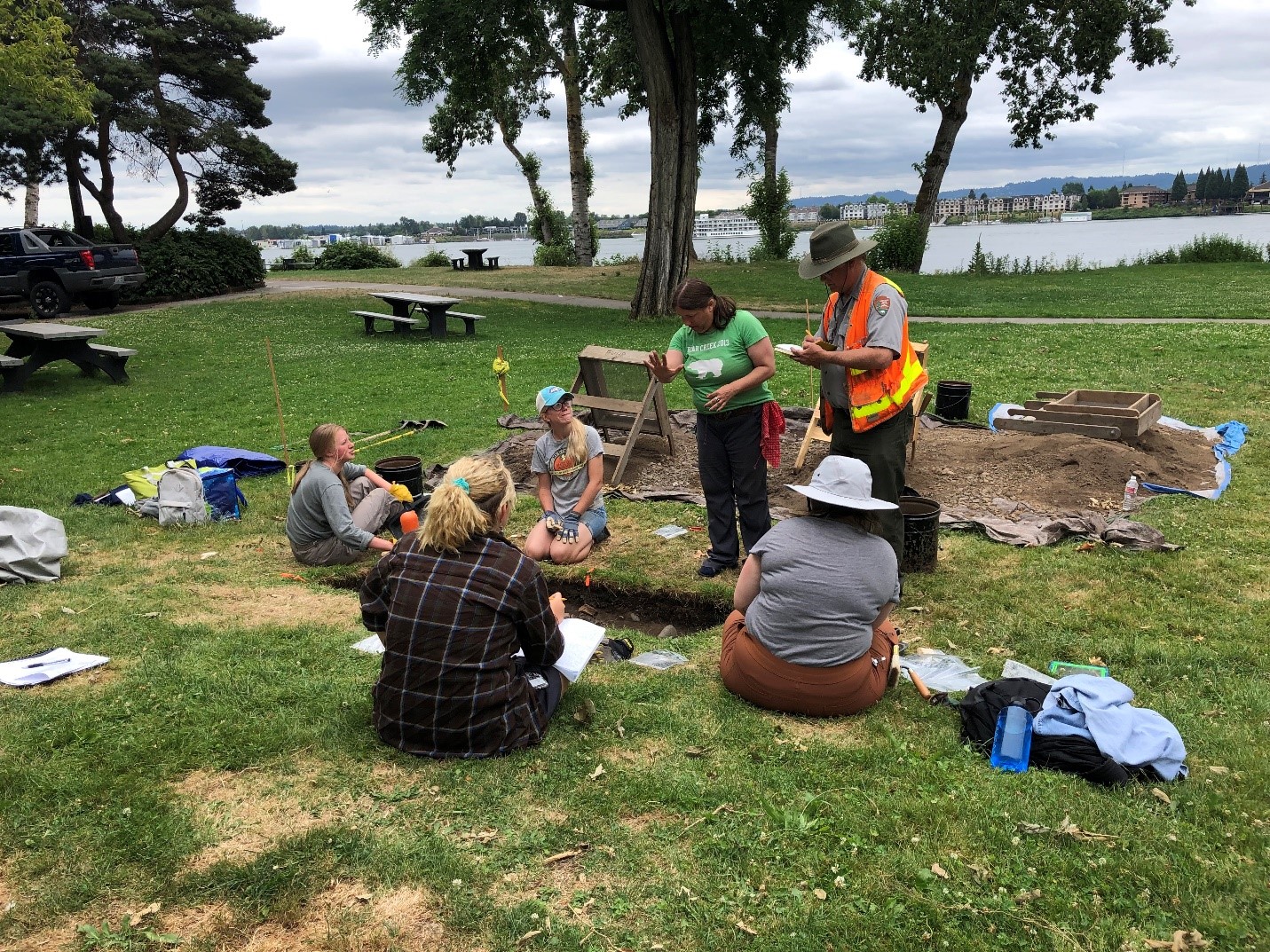
This summer's project will attempt to relocate the southern portion of the hospital as well as other evidence of 19th century development along the waterfront. Rediscovery of these sites will help in future rehabilitation of the Fort Vancouver waterfront and in the preservation and interpretation of these unique archaeological resources.
The public is invited to stop by the dig site to learn about archaeology at Fort Vancouver, Monday through Friday between 9 am and 3 pm.
Last updated: July 7, 2021