
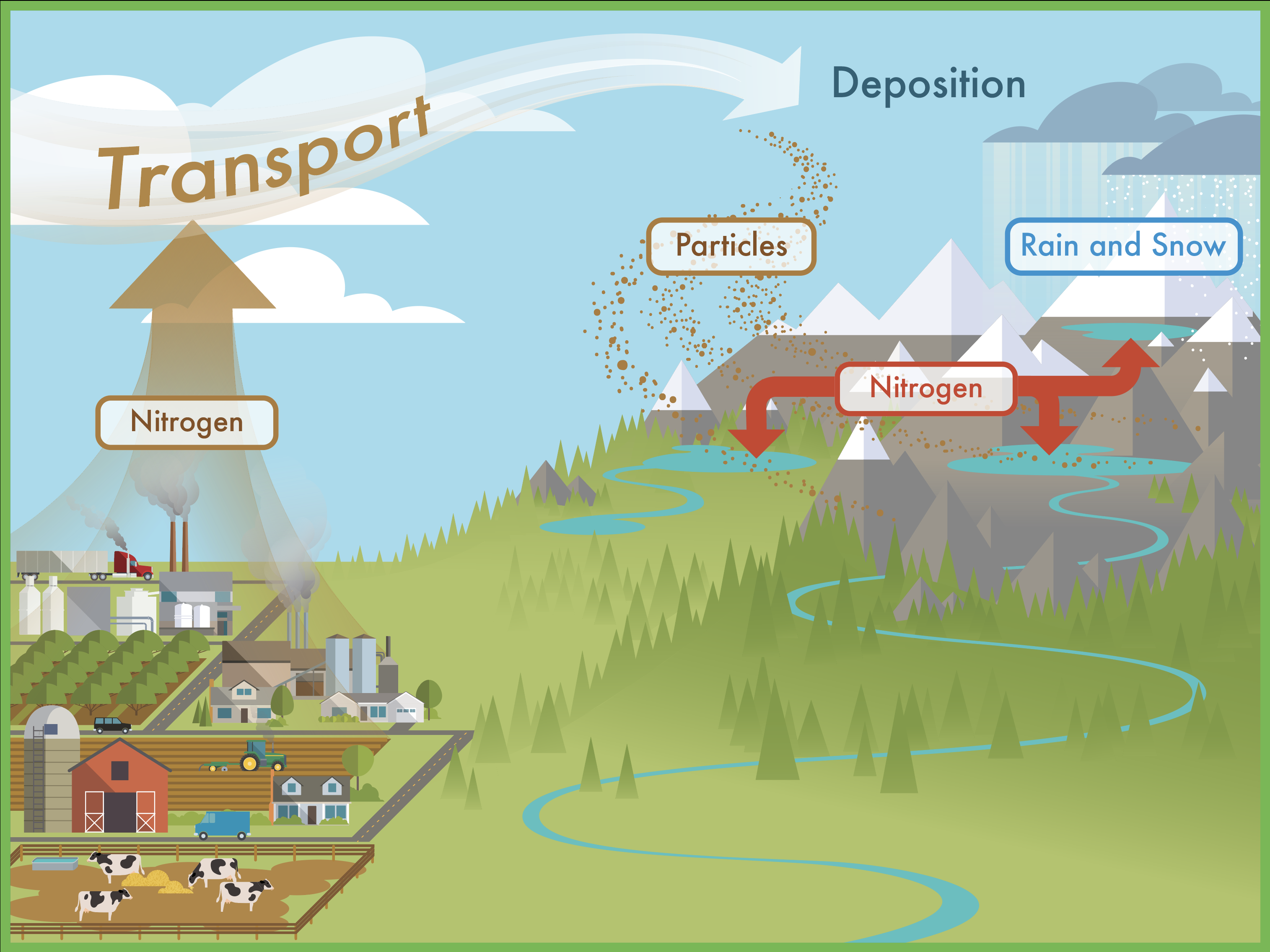
NPS / Michael Warner Air Pollution and ContaminantsBy far, the single biggest threat to the parks’ water quality is air pollution. Air pollution adds acidic deposition, nutrients, and other contaminants to the parks’ waters. Acidic deposition is most acute as episodic events during early snowmelt and during late-summer and fall thunderstorms. Fortunately, at current levels, the parks’ waters are not showing chronic acidification, but this could change because the waters are poorly buffered and therefore limited in their capacity to neutralize acids. Because the parks’ waters are naturally low in nutrients, the addition of airborne nitrates and ammonia can cause notable changes to some lakes, such as causing an increase in algae (small green aquatic plant) growth. Algae can reduce water clarity, and the amount of dissolved oxygen available for aquatic animals. 
NPS / Tony Caprio Climate ChangeA trend of increasing air temperature related to climate change is affecting river flow through its impact on snow accumulation and melt. Warmer air temperatures cause the rain-snow transition zone to move up in elevation, so more precipitation falls as rain, and less as snow. Less snow means less water storage in the snowpack, and reduced meltwater to feed water flows in rivers and streams. In addition, more erratic winter flows and extreme flood events, prolonged low summer flows, and reduced soil moisture are already being observed as we experience extremes of severe droughts to years of very high precipitation and flooding (such as 2023). See the Rivers, Snow, and Hydrology web page for more information. Alteration of Fire RegimeThe alteration of the historic fire regime by over a century of fire exclusion through grazing activity and fire suppression is another stressor to the parks’ waters. Fire affects the quantity of water in streams and its water chemistry. Sediment transport rates are different in burned and unburned watersheds. Fire affects nutrients, buffering capacity, water temperature, and other water characteristics. Visit our Fire Ecology & Research web page to learn more about fire history and fire effects monitoring. 
NPS / Marisa Monroe Human Use of Park WaterPark facilities generate sewage effluent. This water contains high concentrations of nutrients. In addition to sewage effluent, there are probably other unwanted chemicals entering the parks’ waters from roads and parking lots. These have not been investigated within the parks, but they are known to be serious problems in urban areas. Backcountry use is another source of pollutants in park waters. In areas that routinely see large concentrations of backcountry users, human feces can be a problem. Although human waste is required to be buried in the parks’ backcountry, in areas of high use, water percolating through the feces-contaminated soil eventually enters the streams and lakes. Other ways that backcountry visitors may be adding unwanted chemicals to water include misuse of soap or by swimming in lakes and streams when their bodies are covered in sunblock and insect repellent. Because the water contains so few natural dissolved constituents, the contribution of exotic chemicals on human bodies may be significant. Exotic SpeciesNon-native bullfrogs and numerous fish introduced to park lakes have had detrimental effects on many native aquatic wildlife species. |
Last updated: July 27, 2023