




NPS Photo / Wil Marischen Zion National Park enforces size and weight limits on the Zion-Mt. Carmel Highway (ZMCH) to protect visitors and park resources. This page explains who is affected, where the restrictions apply, and why restrictions are in place. 
NPS Photo What is a "large vehicle?"Your vehicle is considered a "large vehicle" if it exceeds any of the limits below. Please note: Measurements include mirrors, tires, and attachments such as AC units, bike racks, satellite dishes, or other after-market modifications. Single Vehicle Size LimitsFor single vehicles without trailers / "pull-behinds," the limits are as follows:
Combined Vehicle Size LimitsA combined vehicle is any motor vehicle configuration made up of two or more separate units that are physically connected at a pivot point and operate together (for example, a truck with a trailer).
What to expect at entrance stationsIf your vehicle exceeds the limits and you arrive at the park's South or East Entrances, you will be given instructions for turning around safely. The only exceptions will be those entering the park through the South Entrance who are:
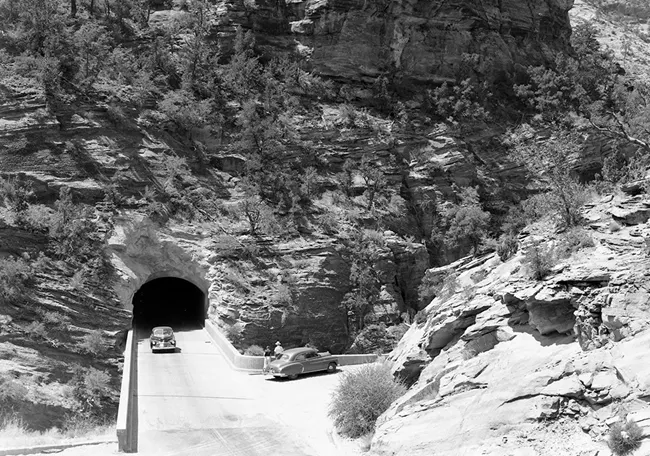
Zion Museum Catalog No. 10174 Why the restrictions are neededSafety on a historic roadThese limits are based on two safety studies conducted in 1989 and 2019 and validated by the U.S. Department of Transportation's Federal Highway Administration.
Protecting America's cultural historyCompleted in 1930, the Zion-Mt. Carmel Highway is listed on the National Register of Historic Places and is a Historic Civil Engineering Landmark. Its tunnels, bridges, and switchbacks were engineered for smaller, lighter vehicles, and large vehicles increase the risk of damage to historic infrastructure that was not designed to accommodate them. Improving visitor experienceUnder the current tunnel pass/escort system for large vehicles, one-way traffic creates significant delays: a 2016 study found there was an average of 19 minutes of free-flowing traffic through the tunnel out of each hour, with the busiest day having only eight minutes. Frequently Asked QuestionsThere are numerous state highways that bypass the Zion-Mt. Carmel Highway. Common routes to common desinations are as follows:
Other routes can be found on your navigation platform / app of choice. The majority of the ZMCH is adjacent to land federally protected under the Wilderness Act of 1964. Expanding or widening the road is not possible without harming the park’s wildlife, plant life, geological features, wilderness character, and historic resources. Yes. RVs that meet the limits may transit the ZMCH. If an RV exceeds limits, visitors can still access Zion through the South Entrance, where parking and camping options are available (as conditions allow). However, RVs exceeding limits will not be permitted past Canyon Junction.
Yes. The US Congress has designated Zion National Park as a US Fee Area. You are required to pay the entrance fee to enter the park. Fee exemptions are made for locals in surrounding communities who must meet certain criteria.
|
Last updated: September 2, 2026