



Much of the NPS and other stakeholder groups’ activities were documented and collected by the Yellowstone Wolf Project office, serving as evidence not only of Yellowstone’s wolf reintroduction but of a historic moment in wildlife management. In 2022 those documents, including memos, correspondence, meeting minutes, reports, newspaper clippings, 35mm slides and photographs, floppy disks, and analog video and audio tapes, were transferred from the Wolf Project office to the Heritage and Research Center (HRC) for archival processing.
Most people encounter archival collections when they are brought out into a research room, on display, or in an online catalog. You may know from reading the finding aid, exhibit signage, or placards where those collections come from, but chances are, how they got from office cabinets or someone’s attic to the archives is a complete mystery.
Processing is a major archival function where accessions, or materials selected for archival retention, are prepared for use (Society of American Archivists n.d.). This can include everything from arrangement- reviewing and developing an organizational structure of materials based on existing categories into groups -refoldering, flattening rolled materials, weeding, to boxing. Although simple in theory a lot of careful planning and review needs to be done to accomplish the job efficiently and to each collection’s unique needs. For example, a significant portion of the Wolf Project records were audiovisual or magnetic media. As such, part of processing this collection was migrating, either in-house or by a contractor service, records from their original casings and formats for future preservation and access.
When the Wolf Project Records Collection arrived at the HRC it was in 64 banker’s boxes worth of materials. Each box was reviewed carefully to find any immediate preservation concerns, such as mold, while still not disrupting the original order. Once a preliminary inventory was made the Wolf Project Records were set aside until this year, when I was tasked with processing this collection.
We started by making a processing plan where basic information was gathered about the collection, such as its extent, date ranges, and types of materials. A arrangement and processing timeline was determined at this time. For the Wolf Project records one of the seven series was an administrative one, but while processing we realized that the original order had certain ‘eras’ of the Wolf Project and decided to change the arrangement to reflect that. The adjustment was documented on May 6th, 2025, and proposed the arrangement that the collection has today in the processor log. A processor log is a document where a processing archivist notes certain processing milestones, issues, and rationale for certain interventions to answer questions future archivists and researchers may have about a decision made during processing.
For example, on April 16th, the following three notes were made:
4/16
On folders, are titles going to include “wolf management committee”/”Wolf reintroduction” i.e. be redundant? More work/time so probably not. Need to standardize.
Box #36 is full of loose papers, I decided to sort through them once I reach the weeding portion of this project and create an artificial folder for them with what’s left.
Box #37 Split ‘Wolves 1968-1977' folder into ‘NRMWRT Memos etc.” and “Historical data and Research...”
In traditional processing each item in a folder may have staples removed, photographs put in mylar sleeves, and interleaving paper put between acidic items. The HRC uses the More Product, Less Process (MPLP) method of processing, formally developed by archivists Mark Greene and Dennis Meisner, which prioritizes making collections’ available to researchers as soon as possible by doing minimal processing (Greene and Meissner 2005). Even so, I still had to go through each file and review the collection carefully to ensure the files were accurately describing the contents and to alphabetize folder titles.
Processing started on April 1st and finished in 7 weeks, beating the recommended MPLP processing time by around 50%!
Some of highlights from this collection were the following:
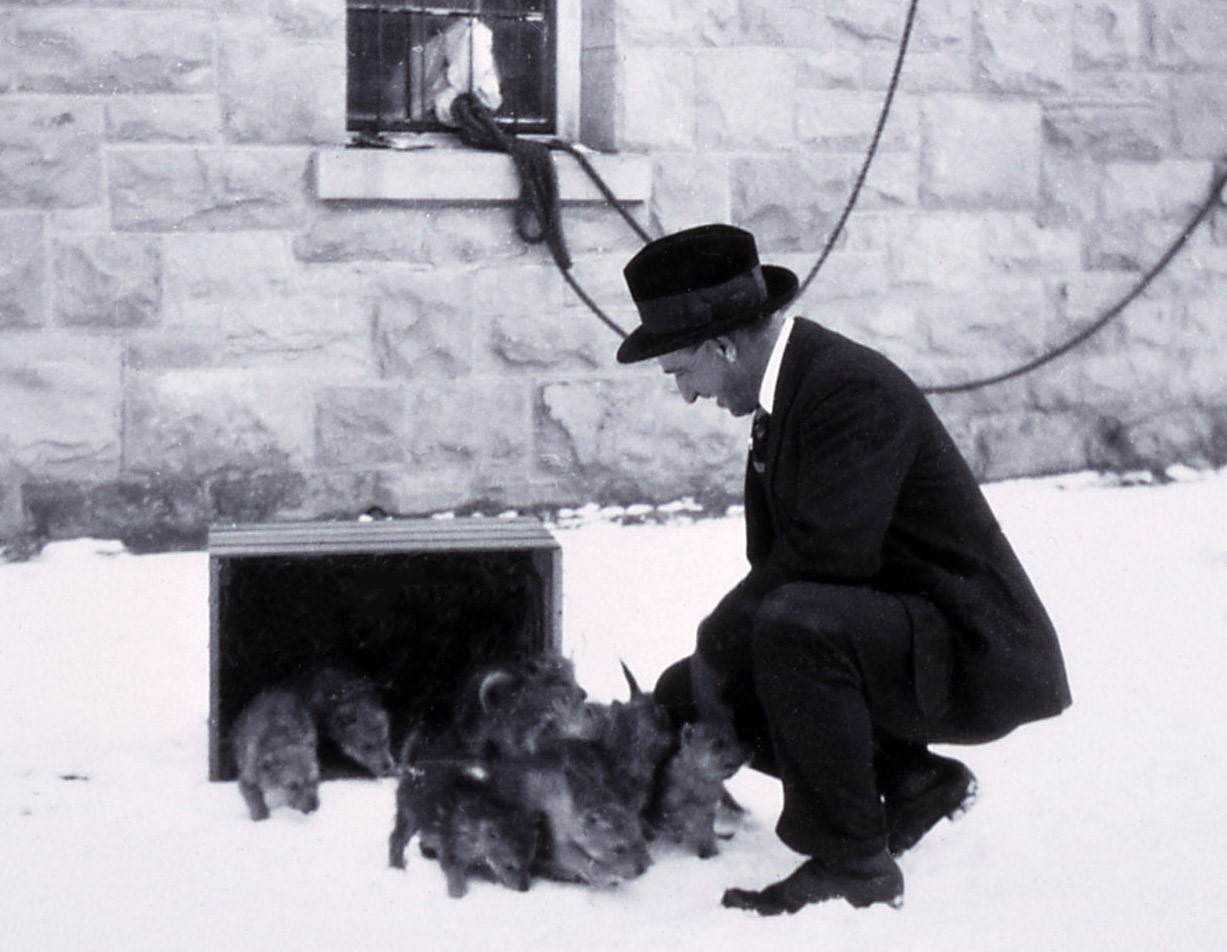
Photo: A photograph from 1922 of Chief Ranger Sam Woodring crouching besides a box of wolf. The U.S. Army and early National Park Service members would destroy wolf dens soon after pups were born, an extremely effective techniques at eradicating wolves in the park.

Photo: A colorful Valentine’s Day card addressed to the future wolves of Yellowstone.
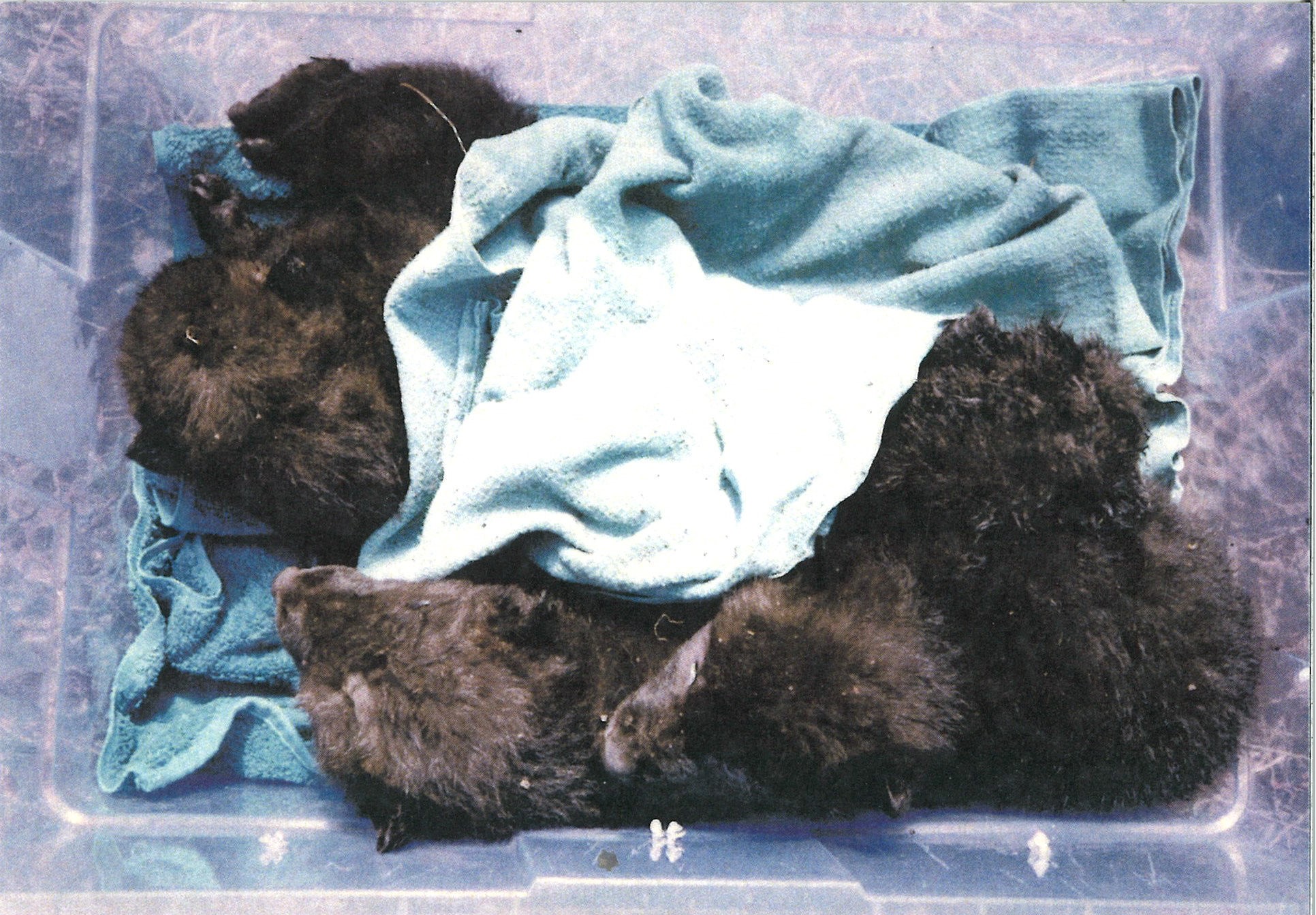
Photo: A picture of one of the first reintroduced wolves, Number Nine’s, pups who were retrieved and safely returned to the park after she made her den near her slain mate Number Ten near Red Lodge, Montana.
Interested in our collections? For more information, or the plan a visit, please contact us at yell_research_library@nps.gov.
Sources:
- Fischer, Hank. 1995. Wolf Wars: The Remarkable Inside Story of the Restoration of Wolves to Yellowstone. Helena, Montana: Falcon Press.
- Greene, Mark, and Dennis Meissner. 2005. "More Product, Less Process: Revamping Traditional Archival Processing." The American Archivist.
- Schullery, Paul. 2003. The Yellowstone Wolf: A Guide and Sourcebook. University of Oklahoma Press.
- Society of American Archivists. n.d. Dictionary of Archives Terminology. Accessed 10 2, 2025. https://dictionary.archivists.org/entry/processing.html.