An official website of the United States government
Here's how you know
Official websites use .gov A
.gov website belongs to an official government
organization in the United States.
Secure .gov websites use HTTPS A
lock (
) or https:// means you've safely connected to
the .gov website. Share sensitive information only on official,
secure websites.
The standard group size for wilderness backpacking in Olympic National Park is 1-6 people. When traveling with a large group (7-12 people), careful planning along with exercising care will help preserve the wild character of the Olympic Wilderness for future generations of hikers, campers, backpackers, horse-back riders, wildlife and plants.
Please read through the information below if you plan to travel with a large group.
Responsibilities of the Group Leader
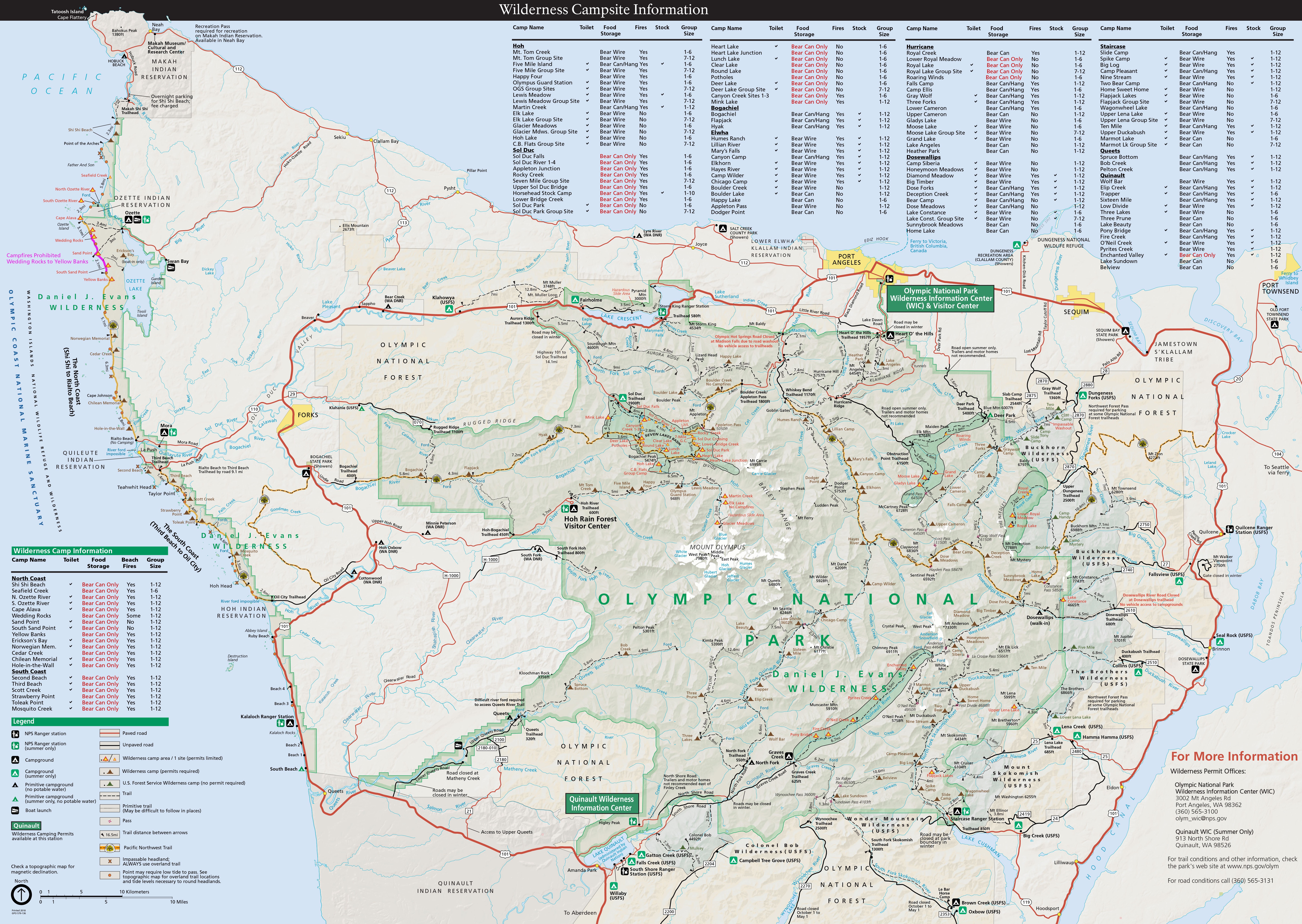
Many camp areas can only accomodate the standard group size of 1-6 people. Check the interactive map/campsite list to see if desired camping areas can accommodate large groups of 7-12 people.
Group leader should educate all group members on Leave No Trace Camping methods.
Larger groups tend to make more noise. Please keep voices and other noises to a minimum. Many hikers visit the wilderness seeking solitude, peace and quiet and to listen to natures sounds. Please be sure your group respects other campers.
Know the area and what to expect, including regulations and potential risks.
Bring proper clothing and equipment, including the Ten Essentials.
If you have any questions, contact the Wilderness Information Center prior to your trip for information about permits, group site reservations, group size regulations, special group camps and food storage requirements.
Group Size
Maximum Large Group size to travel and camp together is 12 people.
Affiliated groups may not combine to form a group of more than 12 people at any time and must camp and travel at least 1 mile apart.
Large Group Campsites
Large groups camping in the Sol Duc/Seven Lakes Basin, Hoh Lake Trail, Hoh River Valley, Grand Valley, Royal Basin, Flapjack Lakes, Lake Constance and Upper Lena Lake areas must camp in designated “group sites.”
Early reservations are recommended for group sites in the following areas:
Sol Duc group sites are located at Deer Lake, Sol Duc Park, and 7-mile Camp.
Hoh group sites are located at Mt. Tom Creek, 5-mile Island, Olympus Guard Station (2 group sites), Lewis Meadow, Elk Lake, Glacier Meadows and C.B. Flats (Hoh Lake area).
Grand Valley group site is located at Moose Lake has 1 group site.
Royal Basin group site is located at Royal Lake has 1 group site.
In other high-use areas that allow groups of 1-12:
Camp in preexisting campsites or on bare ground large enough to accomodate your group size.
To keep areas pristine, avoid camping on or trampling vegetation.
Minimize impact by concentrating camping activities within the site. Congregate on bare ground and not on vegetation.
Stick to already established trails within camp as much as possible to gather water and firewood. This will help prevent any new trails from forming.
Hike on existing trails in single file whenever possible. Walking in the middle of the path, even when there is mud, puddles, and/or snow, will help preserve wilderness character by not widening the trail.
If traveling off-trail/cross-country, spread out your group and avoid walking in single file. Avoid fragile vegetation in the high country, such as heather and huckleberry. These slow growing plants may never recover from being walked on.
Avoid building rock cairns and using flagging in wilderness.
Always pick a site that will accomodate your group without pitching tents on vegetation!
Sarah Bouska, NPS
Minimize Impacts of Campfires
Be sure to check if there is a park wide fire ban in place, especially in the summer months. Campfires are always banned above 3,500' in elevation and at a few specific sites in the backcountry year round. Check the Wilderness Trip Planner Map to see if your campsite allows fires.
Only have a fire if you can find an established fire ring at your campsite. Minimize impacts and help maintain wilderness character by keeping rings small and not adding new rocks. Before leaving your campsite or sleeping, make sure your fire is completely out.
Keep fires small. Gather only loose, small dead and down wood, no larger than an adult’s wrist.
Sanitation / Garbage
Follow good Leave No Trace practices and pack out all items that you pack in.
Protect wildlife and yourself by using bear canisters to secure your food from bears and other wildlife.
Use backcountry toilets whenever your group is within 1/4 of a mile from one.
If no backcountry toilet is available, dig a cathole 6 to 8 inches deep at least 200 feet from campsites, water, and trails.
Use toilet paper sparingly and pack it out.
Avoid urinating on fragile plants in the high country and aim for rocks or in the trail, away from campsites or water.
To wash yourself and/or your dishes, carry water 200 feet away from streams or lakes. Use biodegradable soap minimally and never directly in water sources. Strain and scatter dish water.
Bury fish entrails in catholes 200 feet away from a campsites or water.
The Campsite Check
Many wilderness travelers perform "the campsite check" before they leave their campsite. This activity allows groups to take a look and check to see if their actions have had a negative impact on wildlife, plant life or other visitors.
See if there are any learning takeaways with how the group did with Leaving No Trace. Are there signs that somebody has camped there such as flattened flowers or plants, overturned rocks, and bits of garbage and/or food? If so, are there ways to improve it in the moment or ways to do better next time?
Always leave the wilderness as you found it, or better.