Previous Projects
Road and Parking Rehabilitation
The National Park Service (NPS), in cooperation with the Federal Highway Administration (FHWA), completed a project to rehabilitate the Scenic Drive and multiple parking lots in Capitol Reef National Park.
Many of the park’s parking lots were originally designed and built in the 1960s when the park received about 160,000 visitors per year. Currently, more than 1.2 million visitors experience Capitol Reef National Park annually and improvements were needed for park infrastructure to accommodate the increased visitation. Parking lots are routinely overcrowded, resulting in visitors parking along adjacent roadways causing resource and safety concerns. The parking lot at Chimney Rock Trailhead and Scenic Drive showed signs of pavement cracking, shoulder erosion, and damage to various drainage structures.
The project expanded parking capacity and delineation of parking spots; improved drainage due to the area’s flood-prone landscape; widened roads especially in tight curve areas; and made accessibility improvements including additional accessible parking spaces, sidewalks, and low-slope grading.
The public can learn more about this project on the PEPC site.
Orchard Rehabilitation Project
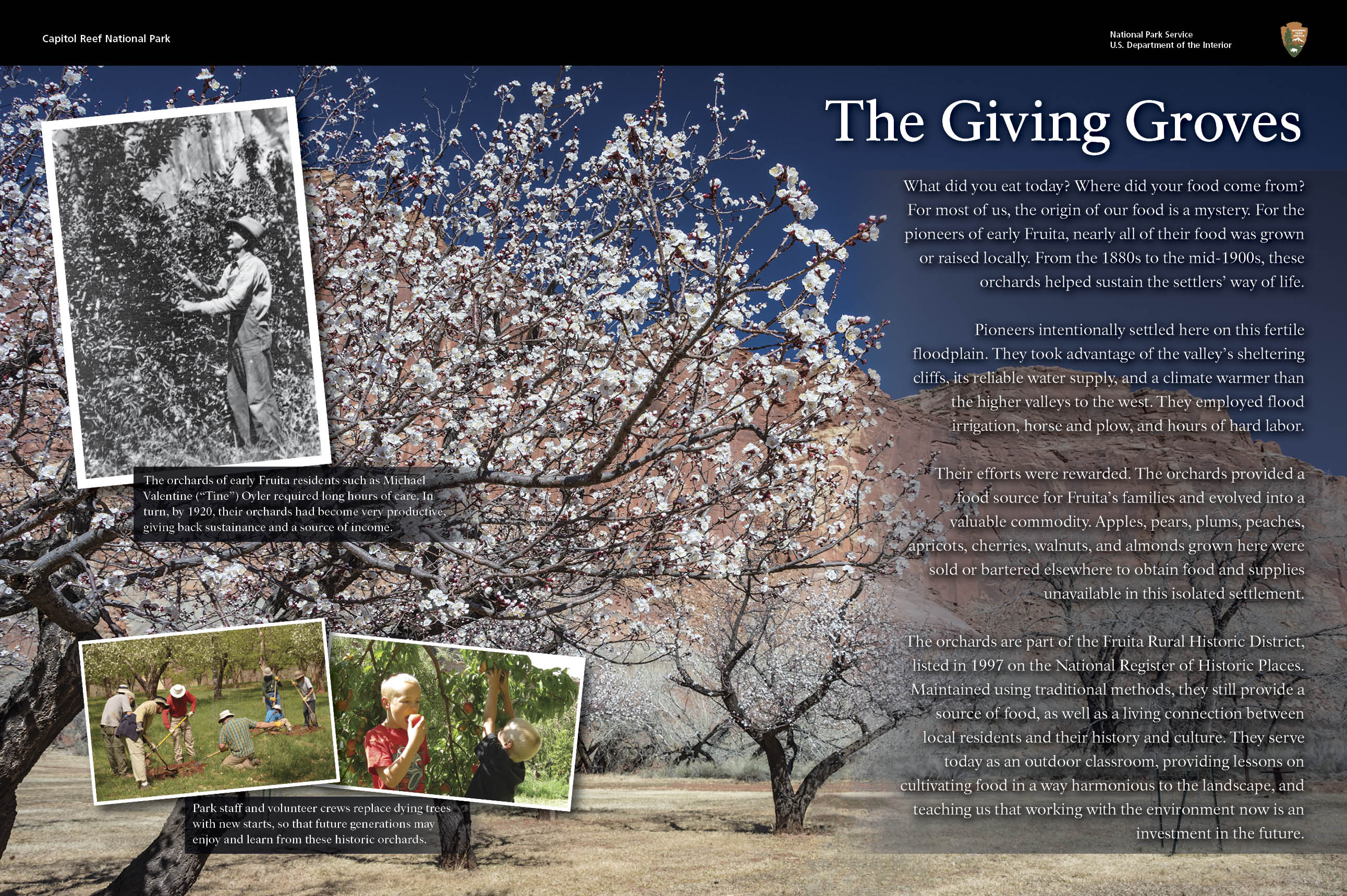
The orchards of the Fruita Rural Historic District are one of the largest in the U.S. National Park System and are significant to the park’s history and cultural heritage. They provide valuable fruit harvest and educational opportunities that can be enjoyed by all visitors.
The first orchards were planted in the 1880s by Latter-Day Saint pioneers. Thousands of fruit trees were planted in the fertile Fremont River Valley. Until the 1960s, these trees provided food and income to the families who called Fruita home. Apples, apricots, cherries, peaches, pears, and plums dotted each family’s orchards.
Park staff maintain the historic character of these extensive orchards using heritage techniques. The same flood irrigation ditches pioneers dug in the 1880s water the trees today. Pioneers sometimes lost trees and entire orchards to floods and droughts. Today, the orchards are preserved and protected as part of the Fruita Rural Historic Landscape listed on the National Register of Historic Places. The orchards contain approximately 1,900 trees. Several orchards have lost most of their original trees and with continued losses expected, replanting is needed to maintain their historic integrity.
The project is part of long-term rehabilitation plans for several historic Fruita orchards. The public can learn more about the Orchard Rehabilitation Project on the PEPC site.