National Park Service LogoU.S. Department of the InteriorNational Park ServiceNational Park Service
National Park Service:  U.S. Department of the InteriorNational Park Service Arrowhead
Chesapeake & Ohio Canal National Historical ParkPhoto of fanlight window at Great Falls Tavern.
view map
text size:largestlargernormal
printer friendly
Chesapeake & Ohio Canal National Historical Park
Places
 

There are over 1,300 historical structures along the C&O Canal. Lockhouses, aqueducts, dams and pumphouses are just a few of the engineering marvels of the 19th Century found on the canal.

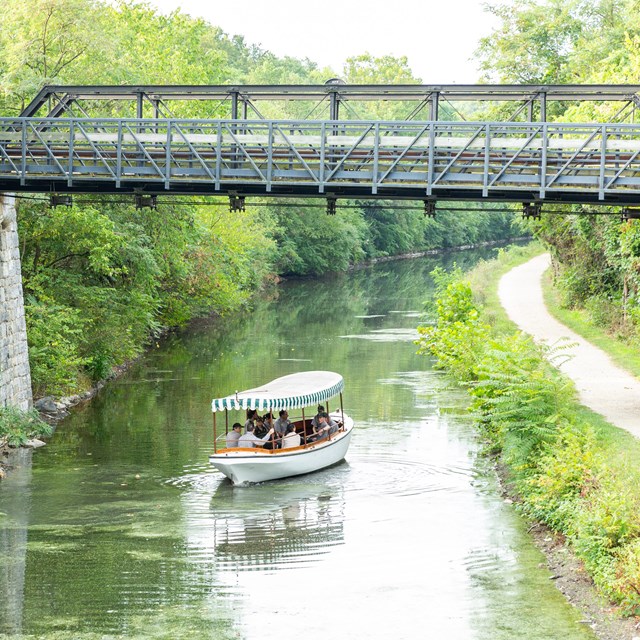
The canal was literally a man-made river.  To make the canal work a complex system of hydrology was constructed.  To supply water for the canal seven feeder dams were built on the Potomac River from Cumberland to Little Falls.  To control the water, seventy-four lift locks were placed in the canal.  Each lock raised or lowered a boat approximately eight feet.  The locks allowed boats to travel upstream or downstream and made it possible to overcome the elevation difference of 605 feet between Georgetown and Cumberland.  Waste Weirs and culverts were added to the canal to divert off excess water.  In case of a flood, stop locks were constructed to direct flood waters back into the Potomac River. 

Maximum speed for canal boats was four miles an hour.  Slow speeds allowed for less erosion problems and helped maintain the banks of the canal. 

Most of the original structures still exist today.  They are a silent testimony to those who used to work and live here on the C&O Canal. 

Photo Maryland Gold Mine.  

Did You Know?
There are several gold mines in the Great Falls area. The largest of these is the Maryland Mine located at the intersection of Falls Road and MacArthur Boulevard near Potomac, Maryland. Gold was first discovered here by a Union soldier from Pennsylvania during the Civil War.

Last Updated: January 26, 2007 at 18:06 EST