



Last updated: June 10, 2026
Place
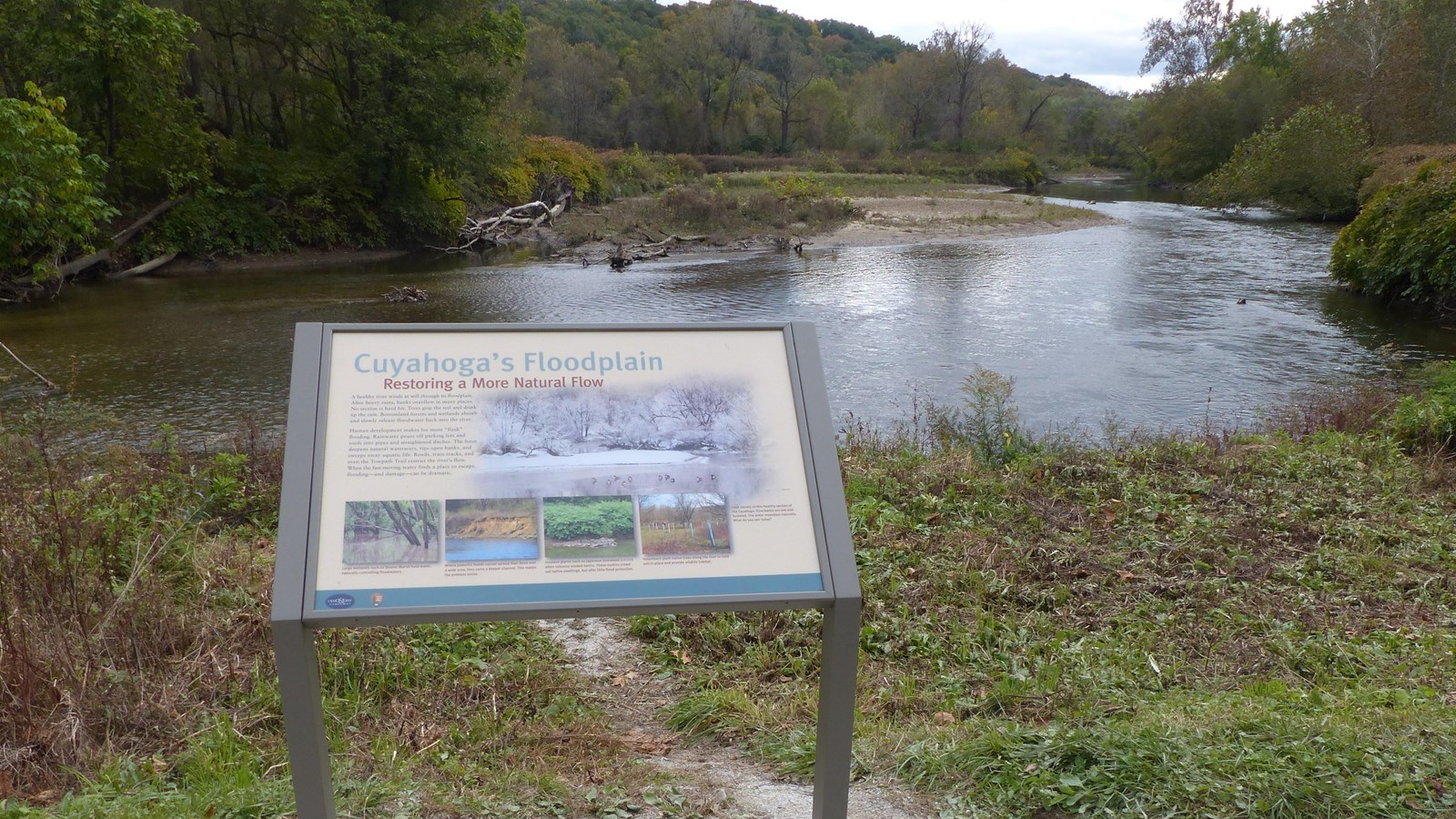
Cuyahoga’s Floodplain Panel
NPS/Arrye Rosser
Quick Facts
Location:
Park at Ira Trailhead, 3801 Riverview Road, Peninsula, Ohio 44264. Turn left and walk north on the Towpath Trail, past the boardwalk.
Significance:
This overlook provides a scenic view of the Cuyahoga. It gives an example of what a meander looks like and an opportunity to consider the characteristics of a healthier river.
Designation:
Ohio and Erie Canal District; Valley Railway Historic District; Ohio and Erie Canalway National Heritage Area; Ohio to Erie Trail; National American Heritage River; Industrial Heartland Trail Network; National Recreation Trail
Amenities
5 listed
Audio Description, Benches/Seating, Historical/Interpretive Information/Exhibits, Scenic View/Photo Spot, Wheelchair Accessible
Pause at this overlook panel just north of Beaver Marsh and ponder. What does a healthy river look like? The Cuyahoga River is healthier now than it has been in over a century. Several dams have been removed, allowing water to flow more freely. Here in the national park, protected wetlands hold water and lessen flooding impacts. Fish have returned to the river. Forests are regrowing along the edges. They hold onto vital soil and drop leaves to provide cover and nutrients for aquatic insects.
The Cuyahoga got its name from an Iroquoian word for crooked or jawbone. Any healthy river is worthy of that name. They meander back and forth, twisting across their floodplains. When it floods, water disperses along the meanders. Trees and other plants absorb the excess and keep soil from washing away. When rivers are channelized, flash floods become more common, as the water has nowhere to go. Here in Cuyahoga Valley, the railroad tracks, roads, and even the Towpath Trail constrain the river at times.
The National Park Service, along with many volunteers, works to improve the habitat. This may be by planting native trees, reducing invasive plants, restoring wetlands, removing barriers, cleaning up toxic waste, or even introducing meanders to slow the river down. The results include a more vibrant Cuyahoga River, with more wildlife and less flood damage.
The Cuyahoga got its name from an Iroquoian word for crooked or jawbone. Any healthy river is worthy of that name. They meander back and forth, twisting across their floodplains. When it floods, water disperses along the meanders. Trees and other plants absorb the excess and keep soil from washing away. When rivers are channelized, flash floods become more common, as the water has nowhere to go. Here in Cuyahoga Valley, the railroad tracks, roads, and even the Towpath Trail constrain the river at times.
The National Park Service, along with many volunteers, works to improve the habitat. This may be by planting native trees, reducing invasive plants, restoring wetlands, removing barriers, cleaning up toxic waste, or even introducing meanders to slow the river down. The results include a more vibrant Cuyahoga River, with more wildlife and less flood damage.