




NPS / Terry Adams The ApproachwayThe grand entrance to the Lincoln Memorial begins at the edge of the Reflecting Pool, and rises up to the former roadbed of the circular roadway that surrounded the memorial - now a plaza. The steps then continue upward toward the memorial entrance. Flanking the steps, two buttresses each crowned with an 11-foot-tall "tripod" carved from pink Tennessee marble rise above those who ascend the stairs. The Lincoln Memorial steps have been the site of many history-making moments such as Martin Luther King's 'I Have a Dream' speech in 1963, and Marian Anderson's concert in 1939. 
NPS / Laurel Brodsky Monumental urnsFlanking the stairs leading up to the memorial, two interesting sculptures stand on the end of the walls. These are decorative, monumental urns that are typical for the neoclassical and Beaux-Arts architecture style of the Lincoln Memorial.While the urns evoke the image of a sacrificial tripod from ancient Greece, which would have been metal, these stone sculptures actually have a central stem along with three supporting legs. Look for depictions of lions, eagles, pine cones and corn carved into these ornamental features. 
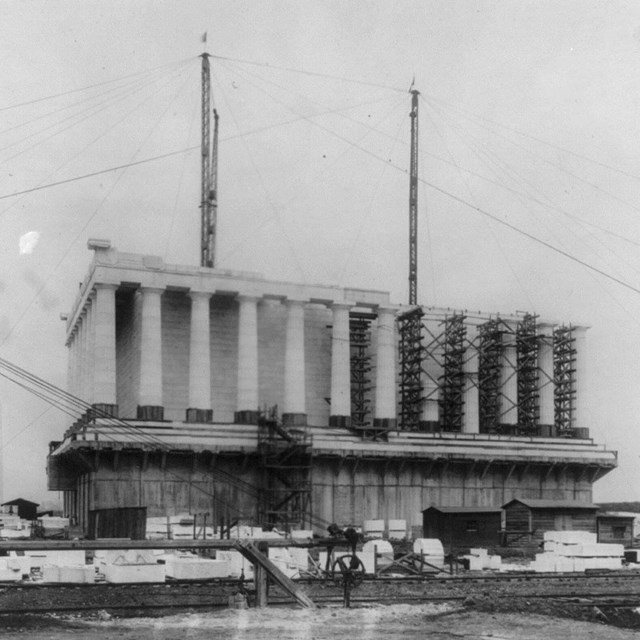
NPS / Liz Macro ColumnsThe memorial is surrounded by 36 fluted Doric columns, one for each of the 36 states in the Union at the time of Lincoln's death. Two additional columns are located at the entrance behind the colonnade.The columns are 44 feet tall with a base diameter of seven feet and five inches. Each column is composed of 12 individual drums. The columns, like the exterior walls and facades, slant slightly inward. Counterintuitively, this slight visual trick makes the memorial appear more symmetrical and square than it would appear if the columns were truly straight. 
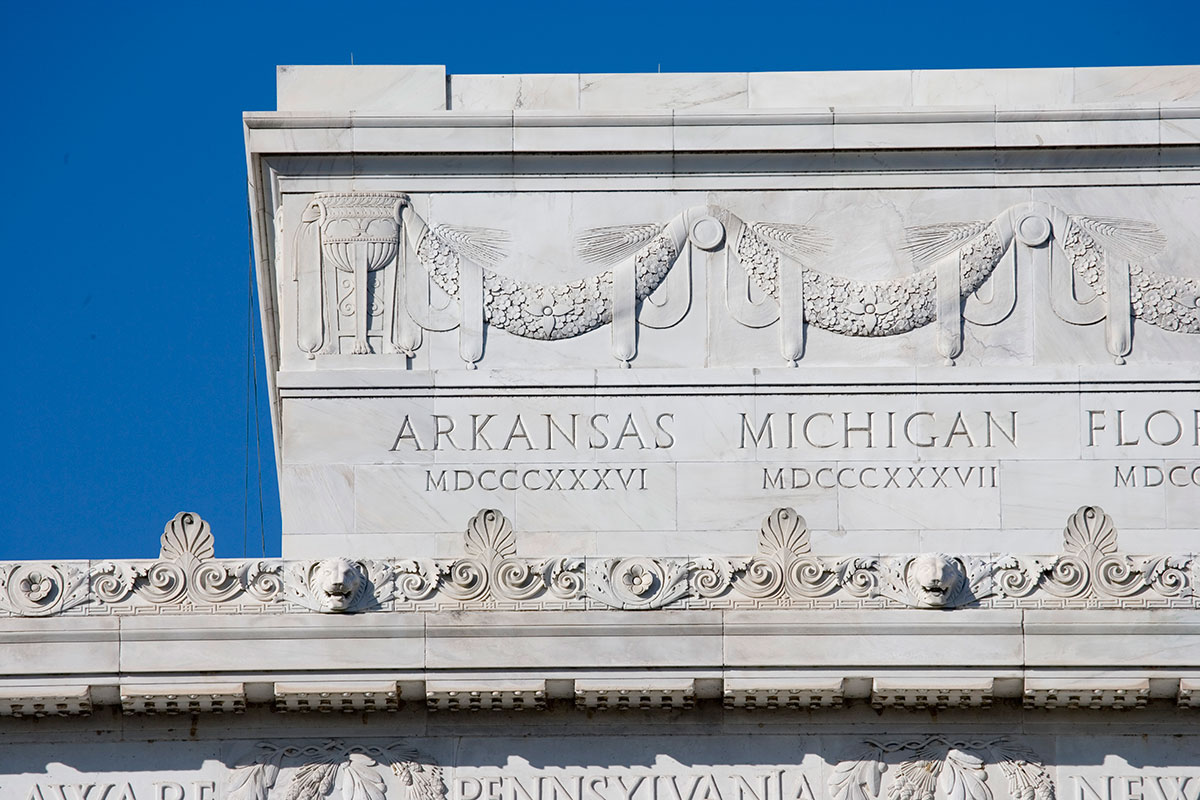
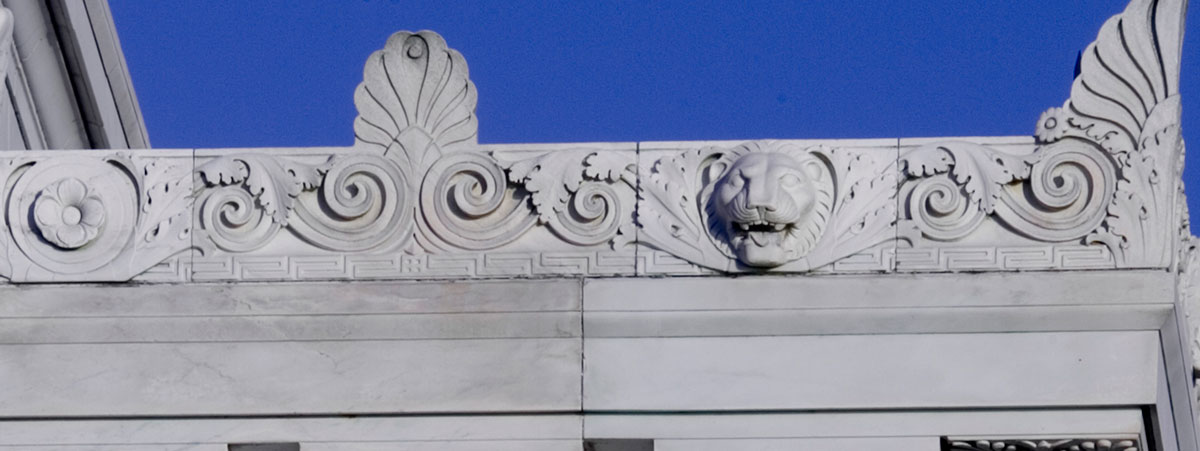
DOI / Kelsey Graczyk Frieze and CorniceAbove the colonnade inscribed on the frieze are the names of 36 states and the dates in which they entered the Union. Their names are separated by double wreath medallions in bas-relief. The cornice is composed of a carved scroll with lions' heads in between them and ornamented with palmetto. The next step up on the memorial above the colonnade is called the attic frieze. Here, at the top of the memorial, the names of the 48 states present at the time of the dedication are inscribed (Alaska and Hawaii are acknowledged with a plaque on the plaza). A bit higher is a garland joined by ribbons and palm leaves, supported by the wings of eagles. Ernest C. Bairstow created the friezes and cornices. 
NPS 
NPS 
NPS Explore more
|
Last updated: May 28, 2026