



News Release
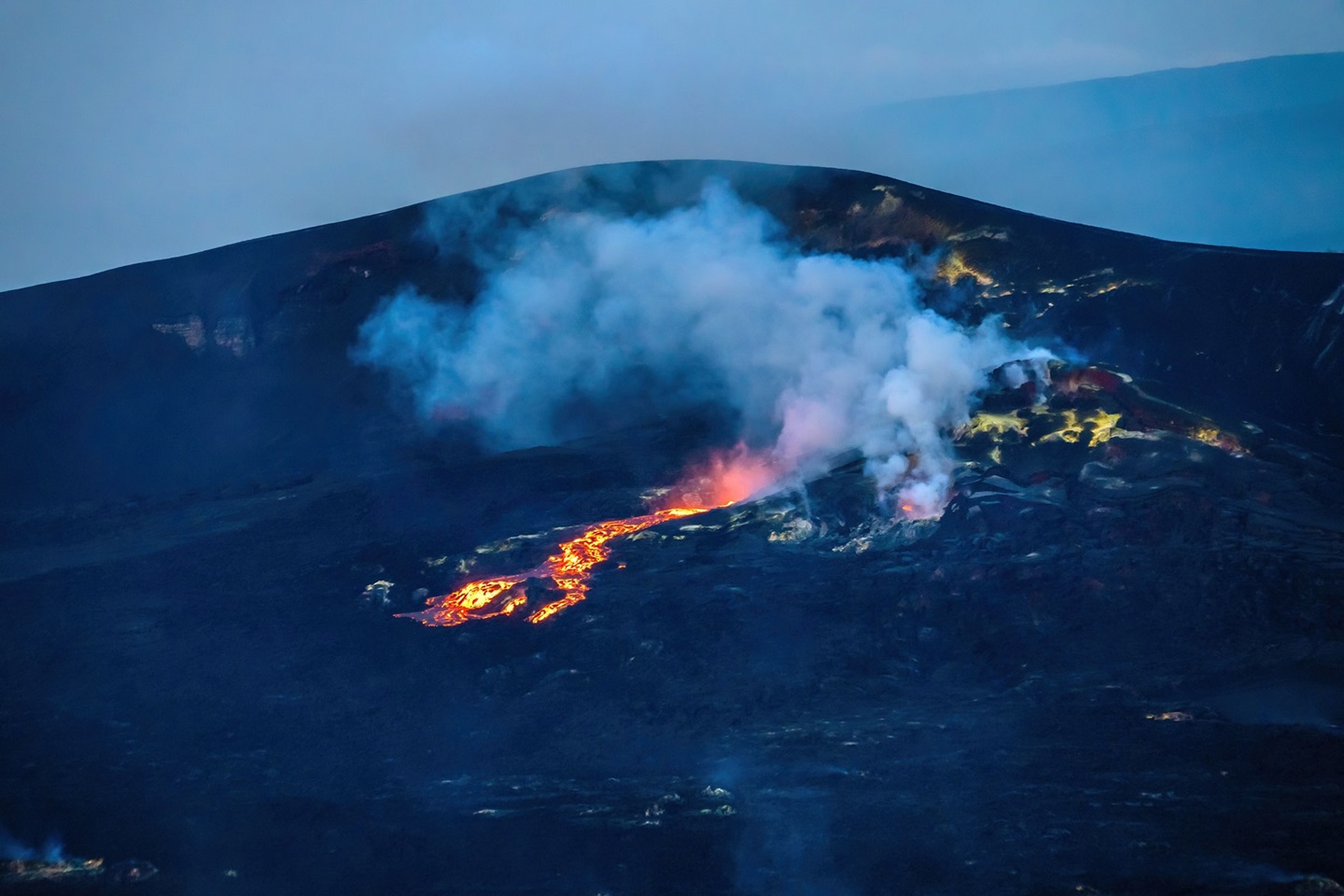
NPS Photo/J.Wei
News Release Date: April 3, 2026
Contact:
HAVO Public Affairs
The National Weather Service issued a special weather statement Friday, April 3. Weather forecasts indicate a shift from northeasterly tradewinds to southerly winds by the middle of next week. If Kīlauea erupts during southerly winds, it could cause volcanic gas (vog) and tephra to blanket the summit similar to March 10 during episode 43. According to USGS Hawaiian Volcano Observatory, lava fountains from episode 44 are expected to begin between Monday, April 6 and Tuesday, April 14.
Vog is hazardous to everyone, and high levels can cause respiratory distress and illness, especially for sensitive individuals. Tephra (small glassy volcanic fragments including ash, pumice, Pele hair and reticulite) is an irritant and increases driving hazards. Extreme fallout during episode 43 due to southerly winds and high lava fountains prompted park and Highway 11 closures.
Visitation and traffic soar during eruptions, and the park also anticipates participants of the annual Merrie Monarch Festival to visit Kīlauea during the week ahead. Everyone is urged to make safety their highest priority and take the following precautions:
Monitor park air quality at https://www.nps.gov/havo/air-quality-alert.htm. If vog levels are unhealthy or tephra is falling, leave the area.
Protect yourself from tephra. Eye protection, a hat, long sleeves, long pants and gloves are recommended. A dust mask will protect you from inhaling tephra but not vog.
If hazardous conditions persist, the park may temporarily close impacted areas until it is safe to reopen.
Park managers are monitoring conditions and working closely with USGS Hawaiian Volcano Observatory, Hawaiʻi County Civil Defense and the National Weather Service.
The south vent spattered and slowly oozed lava onto Halemaʻumaʻu crater floor off and on Friday, April 3, marking the start of the precursory eruption activity.
For more information about eruption viewing, safety tips and links to the USGS Hawaiian Volcano Observatory livestream summit cameras, go to the park website: https://www.nps.gov/havo/planyourvisit/eruption-viewing.htm.
###
About the National Park Service. The National Park Service preserves America’s most treasured natural and cultural places for the enjoyment, education and inspiration of this and future generations. Learn more at nps.gov. Last updated: April 3, 2026