



News Release
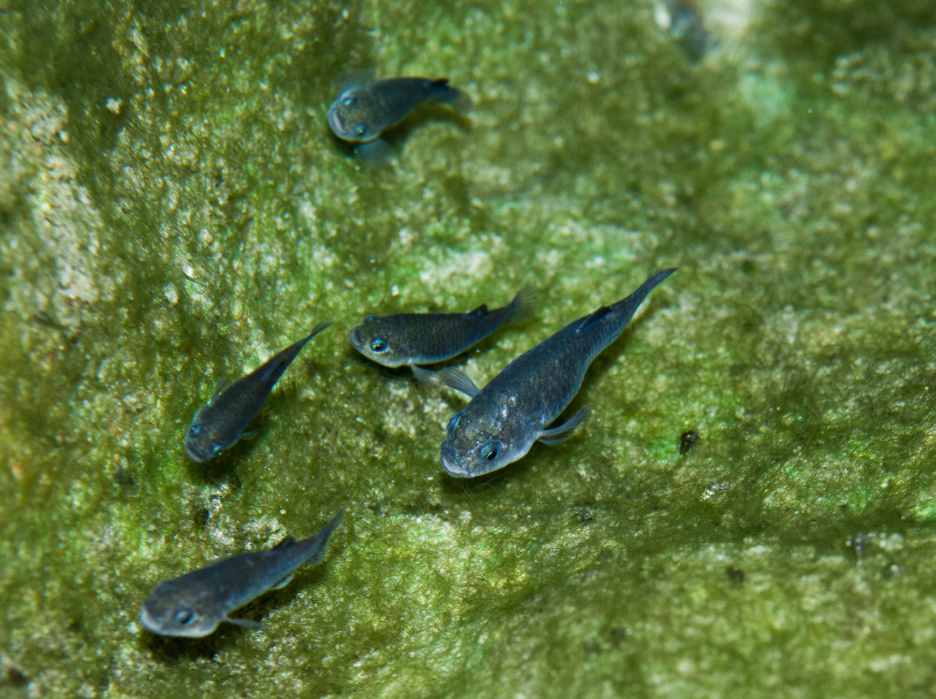
US Fish and Wildlife Service/Olin Feuerbacher
News Release Date: November 3, 2026
Contact:
deva_news@nps.gov
DEATH VALLEY, Calif. — The National Park Service counted 137 endangered Devils Hole pupfish during an Oct. 10 population survey, nearly double the 77 fish observed in spring 2026 and more than double the 69 recorded in fall 2025.
The increase is an encouraging sign for one of the world's rarest fish, which lives exclusively in Devils Hole, a deep, water-filled cavern within Death Valley National Park.
During the fall survey, scuba divers and surface counters from the National Park Service and U.S. Fish and Wildlife Service observed fish in the cavern's depths and along the shallow limestone shelf where they feed and spawn. Biologists from the two agencies have monitored the population using these methods since 1972.
"It's exciting to see Devils Hole pupfish numbers increase so significantly over the past year," said Death Valley National Park Superintendent Mike Reynolds. "These results reflect the dedication of our scientists and conservation partners working to protect this extraordinary species. While challenges remain, we're encouraged by this progress and committed to its long-term survival."
The population remains highly vulnerable to environmental disturbances, particularly earthquakes that can generate waves inside Devils Hole and dislodge algae and other food sources from the shallow limestone shelf. Two earthquakes in 2025 disrupted the habitat and contributed to population declines. Following an Oct. 9, 2026, earthquake in Panama, nearly 3,000 miles away, biologists initially observed signs of stress in the fish but found them in healthier condition during a subsequent visit.
To support the population's recovery, scientists released 72 captive-raised pupfish into Devils Hole between March 2025 and February 2026. Given the species' average lifespan of just 10 to 14 months, biologists believe most of the 137 fish observed during the fall survey hatched and grew in Devils Hole.
Conservation teams also provided supplemental feeding while algae recovered, using data from the U.S. Fish and Wildlife Service's Ash Meadows Fish Conservation Facility and the National Park Service's ongoing monitoring program to guide their efforts.
Although Devils Hole pupfish populations naturally fluctuate, the latest count represents encouraging progress in efforts to protect one of the world's rarest fish. Continued monitoring, research and habitat management remain essential to the species' long-term survival.
Last updated: November 6, 2026