



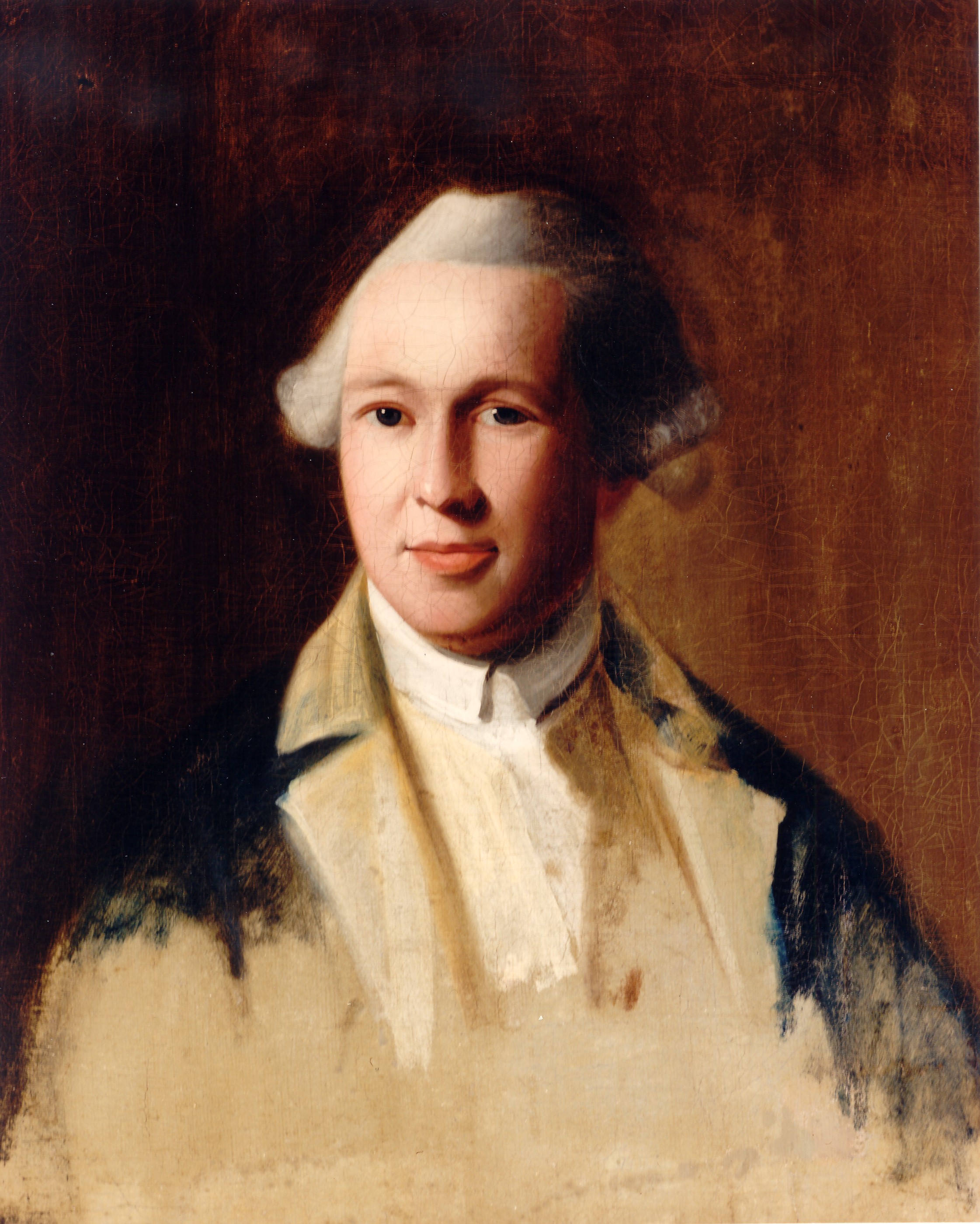
 Joseph Warren was an important leader and soldier during the early part of the American Revolution. He was born on June 11, 1741, in Roxbury, Massachusetts. He studied medicine at Harvard College and later became a doctor in Boston. In 1764, he ran a smallpox clinic during an outbreak and even gave John Adams a smallpox inoculation. This meeting began a lifelong friendship between them.
In 1767 and 1768, Britain created new taxes called the Townshend Acts. Many colonists disliked these laws, so Warren wrote articles in the Boston Gazette under the fake name “A True Patriot” to speak out against them. The Royal Governor wanted to charge him and the newspaper with libel for criticizing British rule. In 1770, Warren was present at the Boston Massacre and helped treat the wounded afterward.
On June 14, 1775, the Provincial Congress made Warren the second-highest leader of the Massachusetts forces. When the British attacked the colonial defenses at Breed’s Hill, Warren chose to fight as a regular soldier instead of taking command. He helped the troops retreat safely but unfortunately was killed by a musket ball. The British buried him in a common grave. Nine months later, Paul Revere identified Warren’s body by the dental work he had done for him.
Warren was also the personal doctor of the Adams family. John Quincy Adams later said that Dr. Warren saved his broken finger from being amputated.
Left: Portrait of General Joseph Warren by John Singleton Copley, 1772-1774.
John Quincy wrote, to English Quaker, Joseph Sturge, his memories of the revolution and of Dr. Warren:
March 1846:
“My father was separated from his family, on his way to attend the same continental Congress, and there my mother, with her children lived in unintermitted danger of being consumed with them all in a conflagration kindled by a torch in the same hands which on the 17th. of June lighted the fires in Charlestown. I saw with my own eyes those fires and heard Britannia's thunders in the Battle of Bunker's hill and witnessed the tears of my mother and mingled with them my own, at the fall of Warren a dear friend of my father, and a beloved Physician to me. He had been our family physician and surgeon and had saved my fore finger from amputation under a very bad fracture.... “
Abigail wrote about the death of Warren to John at the Continental Congress:
Sunday June 18, 1775:
“The Day; perhaps the decisive Day is come on which the fate of America depends. My bursting Heart must find vent at my pen. I have just heard that our dear Friend Dr. Warren is no more but fell gloriously fighting for his Country—saying better to die honourably in the field than ignominiously hang upon the Gallows. Great is our Loss. He has distinguished himself in every engagement, by his courage and fortitude, by animating the Soldiers and leading them on by his own example. A particuliar account of these dreadful, but I hope Glorious Days will be transmitted you, no doubt in the exactest manner.”
Abigail continued to write to John days later about the loss of Joseph Warren:
June 20th, 1775:
“I wish I could contradict the report of the Doctors Death, but tis a lamentable Truth, and the tears of multitudes pay tribute to his memory. Those favorite lines of Collin continually sound in my Ears
How sleep the Brave who sink to rest,
By all their Countrys wishes blest?
When Spring with dew'ey fingers cold…And freedom shall a while repair Dwell a weeping Hermit there….”
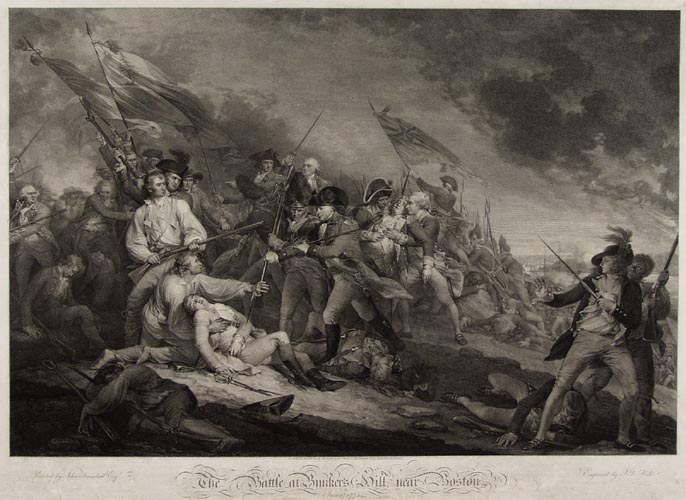
Right: Engraving of The Death of General Warren at the Battle of Bunker's Hill by John Trumbull, 1786.
After his presidency John Adams wrote in his autobiography about his esteem for Warren:
“I have always imputed the Loss of Charleston, and of the brave Officers and Men who fell there, and the Loss of an Hero of more Worth than all the Town, I mean General Warren, to Mr. Dickinsons petition to the King, and the Loss of Quebec and Mongomery to his subsequent unceasing though finally unavailing Efforts against Independence.”
Nine years after the Battle of Bunker Hill, John Quincy attended a celebration of the battle filled with fun and excitement. Later that night John Quincy wrote about the day in his Diary, June 17, 1786:
“Dinner was provided for 600 People, on Bunker's hill: the havoc of oxen, sheep, and fowls of all kinds, was I suppose as great today, as that of men upon the former occasion and I dare say, there was as much wine drank now, as there was blood spilt then, and to crown the whole, The head of the table, was I hear placed on the very spot 51where the immortal Warren fell. I think however, that the ground which had been the scene, of such an awful Day, should not, be made a scene, of revels, and feasting. What must be the feelings of a man of Sensibility, who, would naturally say to himself “perhaps, I am now seated on the grave of my dearest friend.”
The artist John Trumbull immortalized General Warren’s death in his painting “Death of Joseph Warren at Bunker Hill." Trumbull used heroic iconography and artistic preferences to show nobility and heroism. An engraving of the “Death of Joseph Warren at Bunker Hill” after the Trumbull painting is on exhibit at the Adams National Historical Park at Peace field.
Dimensions: Joseph Warren’s portrait framed is 62.0 cm tall and 50.0 cm wide.
At time of posting, this object is available to view on a guided tour of Peace field. Tours are offered during our season (May 1 – October 31) and ticket reservations must be made in-person at the Adams NHP Visitor Center.
“Adams Papers Digital Edition - Massachusetts Historical Society.” 2026. Masshist.org. 2026. (Abigal’s letter to John and John Quincy remembering Dr. Warren and the Battle of Bunker Hill)
"Dr. Joseph Warren (U.S. National Park Service).” 2018. Nps.gov. 2018.
“John Adams Autobiography, Part 1, ‘John Adams,’ through 1776.” 2026. Masshist.org. 2026.
Harris, Wilhemina. 1966-1968. Historic Furnishings Report of the Old House, Adams National Historic Site, Quincy Massachusetts, Volume III, p. 334.