



|
Counterbalancing often fails in these parks. The bears have learned to defeat it, and many areas do not have trees that are the right size and shape to use it. Please consider using a canister. Note: Canisters are required in several locations and strongly encouraged throughout the wilderness. If you do choose to hang food in a tree, any method other than counterbalancing will probably not protect it. Hang food only when storage boxes or canisters are not available. (You will receive a copy of this information when you pick up your wilderness permit.) 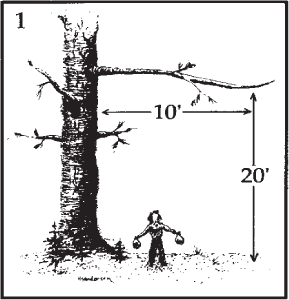
National Park Service Find a tree with an appropriate live, downsloping branch, even if you must select a different campsite. Approximately 10 feet away from the trunk, the branch should still be approximately 20 feet off the ground. Divide food into two balanced bags. Store soap, sunscreen, deodorant, toothpaste and garbage in the same way as food, since bears are attracted to anything with an odor. 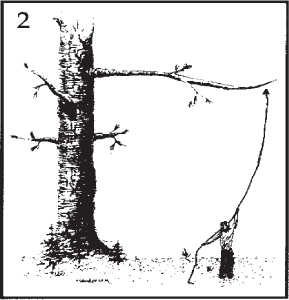
National Park Service Use enough rope to go over the branch and back to the ground. Toss the rope over the branch where the branch is about 20 feet off the ground and at least 10 feet away from the trunk (to where the branch is strong enough to support the weight of the food but not the weight of a bear cub). 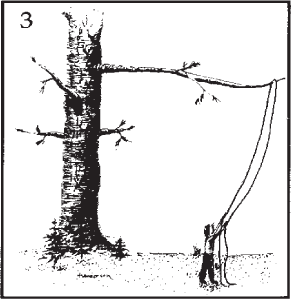
National Park Service . 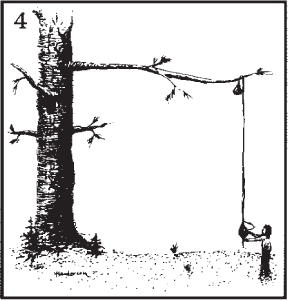
National Park Service Tie one end of the rope to the first sack and pull it up to the branch. Tie the second sack as high as you can on the rope; put the excess rope in the sack, leaving a loop out so you can retrieve it. 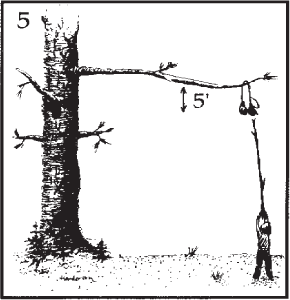
National Park Service Toss or push the lower sack until both sacks are at equal height at least 12 feet off the ground. This minimizes the chance of a bear reaching down for the bags from above, reaching up to them from the ground, or reaching over to them from the trunk. 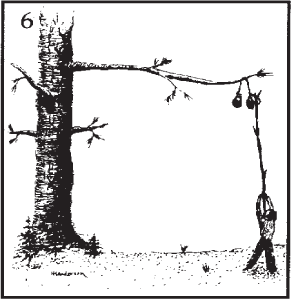
National Park Service To retrieve the sacks, hook a long stick through the loop of excess rope. Pull slowly to avoid tangles. By making loud noises and throwing objects you can often scare bears away before they get to your food. Be bold, but keep a safe distance and use good judgment. Never attempt to retrieve food from a bear. Never approach a bear or get near a cub. Bears are active both day and night. At night and any time you are away from camp, remove all food from your pack and store it properly. Leave your pack on the ground with flaps and pockets open. If a bear does get your food, you are responsible for cleaning up and packing out all debris, and for reporting it to the nearest ranger. Note: These regulations and precautions help decrease the chance of personal injury or property damage. However, bear damage and confrontations are still possible, even when all guidelines are followed. All bears in the Sierra Nevada are American black bears, Ursus americanus. This name can be misleading, as they may be black, brown, cinnamon, or even blonde in color. The last grizzly bear (Ursus arctos) in California was killed near Sequoia National Park in 1922. This information does not apply to parks inhabited by grizzly bears. |
Last updated: September 27, 2013