• Giant Sequoia Trees

    Sequoia & Kings Canyon

    National Parks California

There are park alerts in effect.
show Alerts »
  • Parks Institute Stage 1 Fire Restrictions June 1, 2013

    Due to high fire danger, Sequoia & Kings Canyon National Parks are instituting fire restrictions inside the parks. More »

  • Road Construction Delays (if Entering/Exiting Hwy. 198)

    Expect minimal construction delays on main road through parks (Generals Hwy) through June 2013 on weekdays generally from 7 a.m.-6 p.m. See link for schedule. Call for 24-hour road conditions info: 559-565-3341 (press 1, 1, 1). More »

  • Vehicle Length Limits Have Changed in Sequoia NP (if Entering/Exiting Hwy 198)

    Planning to see the "Big Trees" in Sequoia National Park? If you enter/exit via Hwy. 198, please pay close attention to new vehicle length advisories for your safety and the safety of others. More »

  • Some Opening/Closing Dates for Services and Facilities May Change – Check Back for Updates

    Some opening/closing dates for facilities and visitor services in the parks may change due to weather or other circumstances. Call 559-565-3341 or send us an email using the "Contact Us" link below the main menu (bottom left, this page).

  • You May Have Trouble Calling Us. Use the "Contact Us" Link (Bottom Left) to Send an E-mail.

    We are experiencing technical problems receiving some incoming phone calls at the parks. We apologize for the inconvenience. Please keep trying to reach us or check this website for frequently-asked questions. The search box (top, right) may be helpful.

Nature & Science

Please read important park alerts by clicking the red tab above before you come to the parks.

Scientific Research & Collection Permits

ATTENTION! White Nose Syndrome Affecting Bats (Download Poster PDF)
A serious problem is affecting and killing bats in caves in the eastern portion of the United States. Although Crystal Cave tours are not affected at this time, anyone who has been caving in other caves, especially in the eastern U.S. must not wear the same clothing or equipment when visiting Crystal Cave. This will reduce the spread of the problem. For more information please visit the following pages: 
White Nose Syndrome
White Nose Syndrome.org
Crystal Cave

 
Park worker helps revegetate a site by planting a tree.
Restoration and revegetation is just one way the park fulfills its mission: to preserve and protect park resources.

Welcome to the natural resources webpages for Sequoia and Kings Canyon National Parks. Here you will find descriptions of natural resources in these two parks, as well as introductions to different components of the Science and Natural Resources Management program (SNRM). Links are provided above to other webpages on various aspects of the SNRM program: air resources, geology, vegetation, water, wildlife, and inventory & monitoring. They provide more information about park resources and management, along with species lists, reports, and links to related sites.

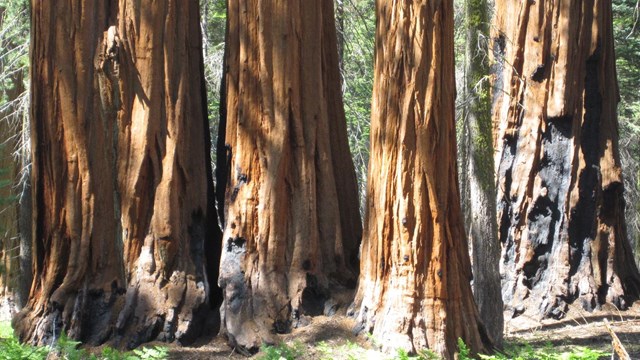
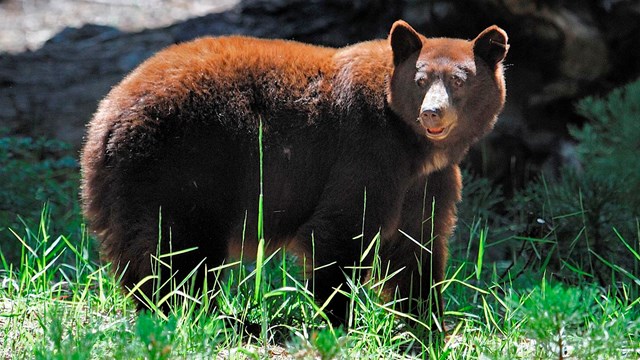
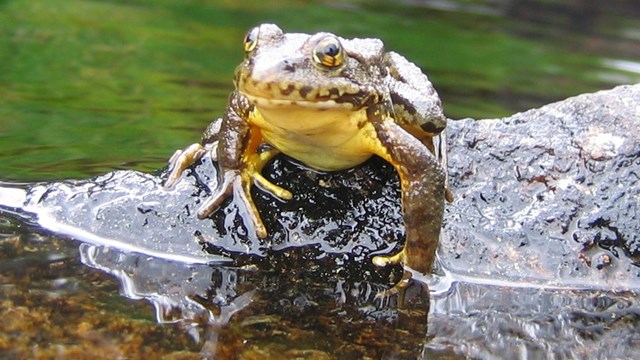
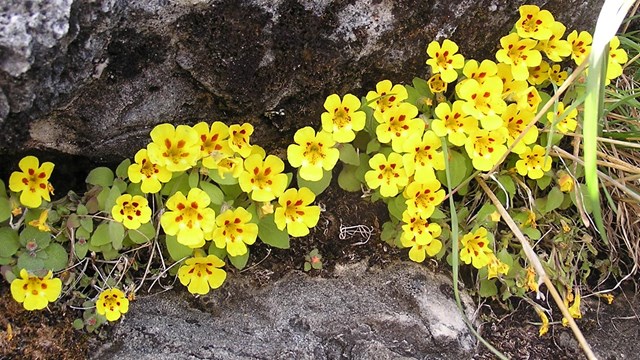
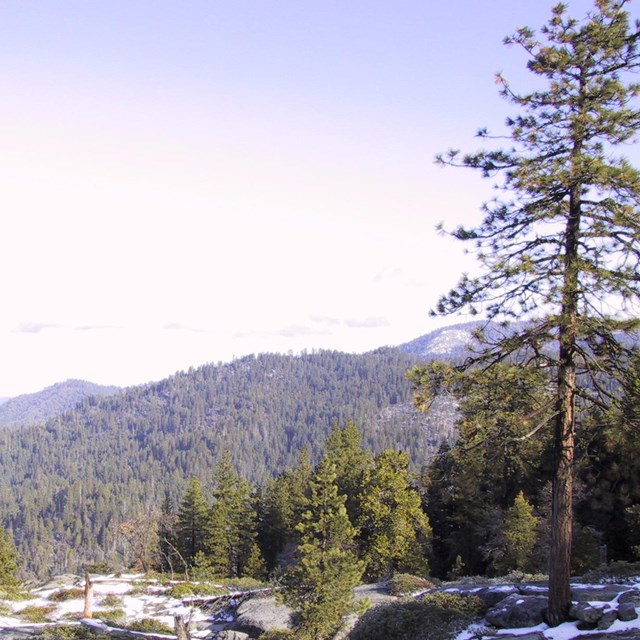
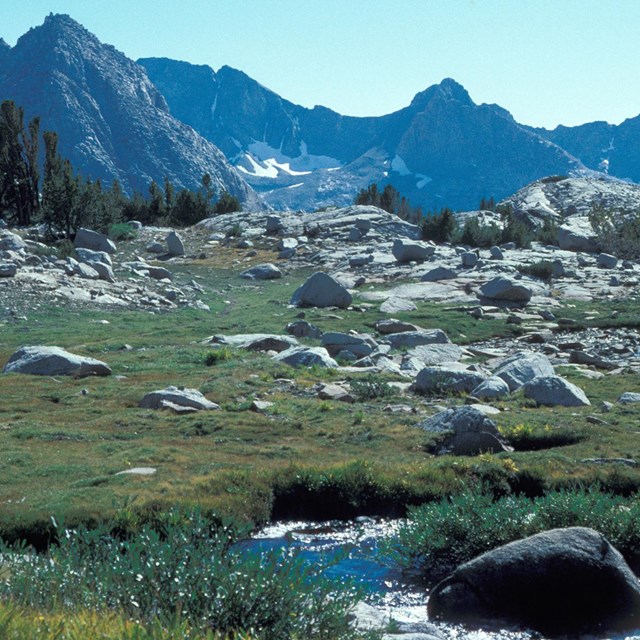
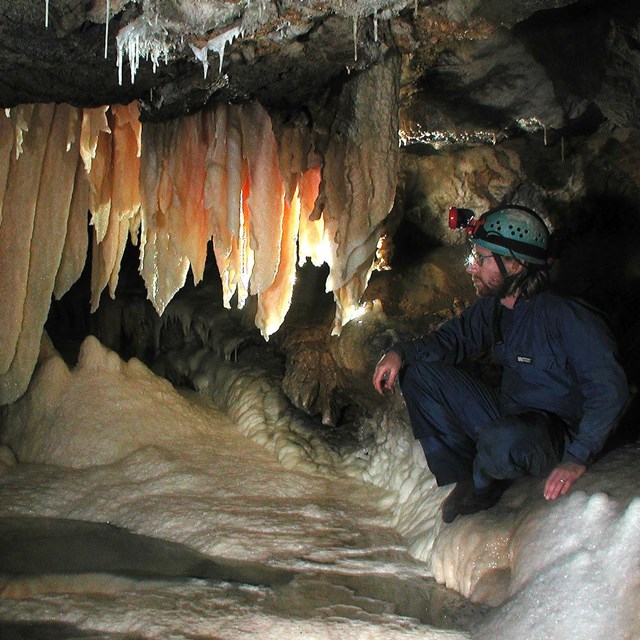
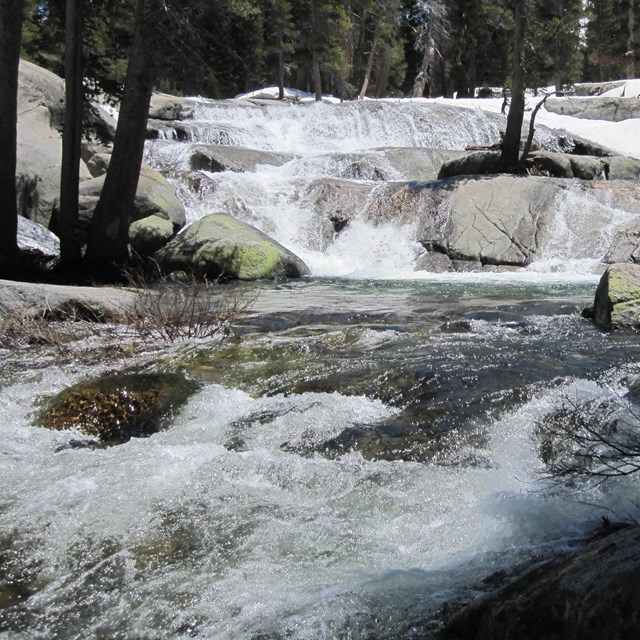
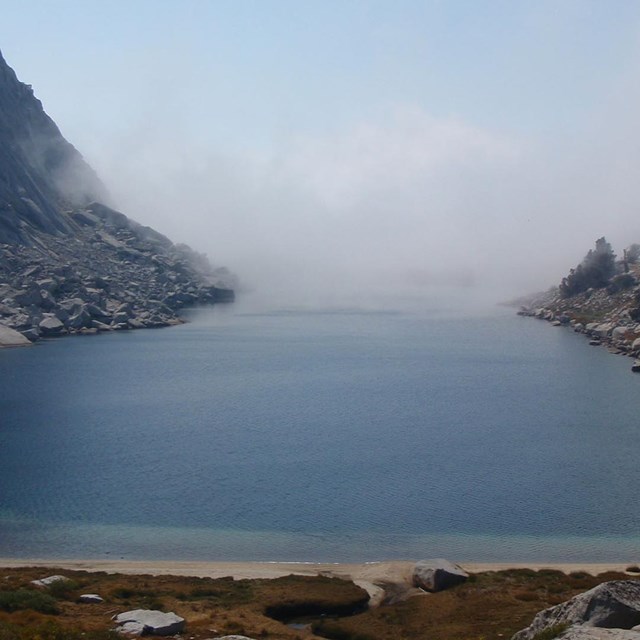
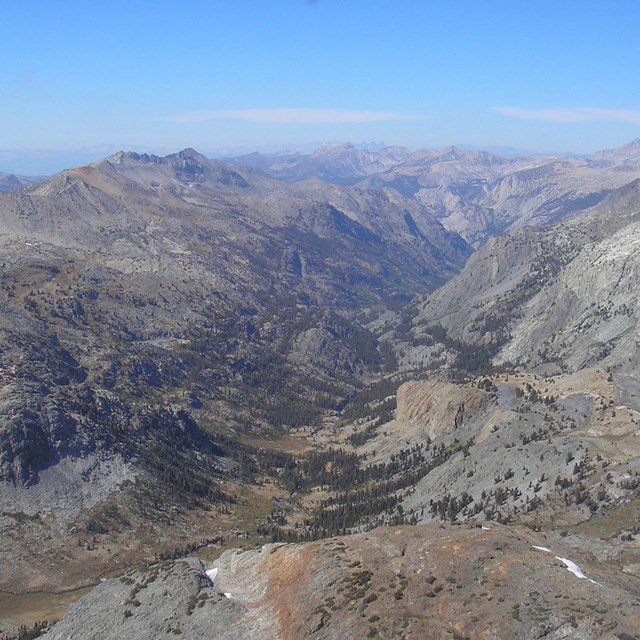
Sequoia and Kings Canyon National Parks contain big trees, high peaks, and deep canyons, but the diversity goes far beyond that. Located in the southern Sierra Nevada range, the parks' elevations extend from 1,300 feet (418m) in the foothills to 14,491 feet (4,417m) at the summit of Mount Whitney, the highest mountain in the contiguous 48 states. Plunging in the opposite direction far below the surface are over 200 marble caverns, many with endemic cave fauna. This huge variation in the landscape contributes to the collage of habitats that create a rich assemblage of terrestrial, aquatic and subterranean ecosystems. Here one can observe a vast diversity of plants and animals representing an array of adaptations.

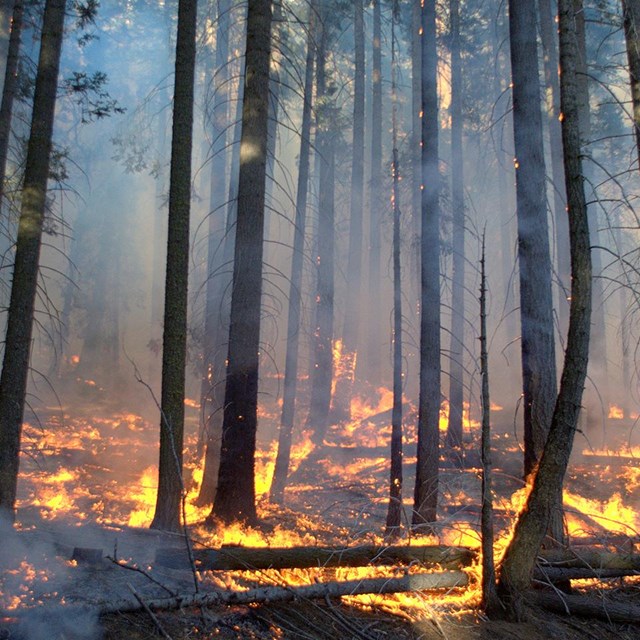
Despite the protected status of resources within park boundaries, many threats to park resources exist. These include air pollutants, invasion by alien species, loss of natural fire regimes, habitat fragmentation, and rapid human-caused climatic change.

The Division of Natural Resources strives to:

  • Understand natural processes (such as fire) and human-induced effects on ecosystems (such as effects of air pollution).
  • Mitigate for the existing and potential human effects on ecosystems (for example, restoring previously developed areas using re-vegetation, re-introducing fire to areas where it has been suppressed for decades).
  • Monitor for ongoing or future trends in key ecosystem components.
  • Protect existing natural species, populations, communities, systems, and processes.
  • Interpret these organisms, systems, and processes to park visitors and to visitor center staffs so they may provide current information to the public.

More information on the Sierra Nevada Network for Inventory and Monitoring.

Did You Know?

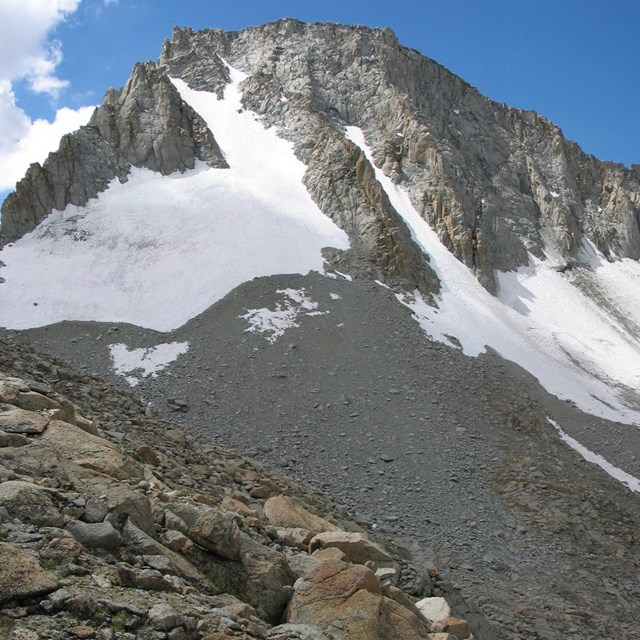
Sharp, rocky crest of the Sierra Nevada.

The Sierra Nevada is still growing today. The mountains gain height during earthquakes on the east side of the range. But the mountains are being shortened by erosion almost as quickly as they grow. This erosion has deposited sediments thousands of feet thick on the floor of the San Joaquin Valley.