




Photo courtesy of Kiel Maddox A forest with giant sequoias, the largest trees in the world, is a feast for the senses. The giant sequoias’ red/orange bark is distinct among the grey and brown bark of other trees. And if you stand beneath one of these giants, you can gaze all the way up its tall trunk and through its high branches to see sky above. The treetop is often hidden above the highest branches. If you are quiet and listen, you may hear a breeze rustling the foliage of smaller trees – the sugar pines, white and red firs, or incense-cedar. Or perhaps you’ll hear a woodpecker calling and tapping against a tree, seeking insects. If you have time to take a walk, you may see a giant sequoia along the trail – try to press your fingers against its spongy, thick bark. Take the time to experience the beauty of these trees and the other plants and animals that live in these forests. 
Photo courtesy of Wendy Baxter, University of California, Berkeley Sequoias and ClimateGiant sequoias have survived a varied climate over the past two to three thousand years. For many years, we believed that giant sequoias died by falling over, or having extensive crown scorch from a fire. Standing death from disease or insects (unrelated to crown scorch) was rarely observed by scientists and managers who have worked for decades in the Sierra Nevada.A hotter drought occurred in 2012-2016. Higher temperatures intensified the effects of low precipitation, causing greater water loss and low moisture availability for trees. Although non-sequoia conifers suffered extensive mortality, sequoias mostly did not. However, during 2014, scientists observed extensive sequoia foliage dieback. During and after this drought, they documented 33 giant sequoias that died standing, associated with native bark beetle activity and fire-caused damage around the base of the tree. Scientists and managers are gathering information to better understand the responses of giant sequoia to drought and to characterize landscape-scale patterns of vulnerability to hotter drought. Learn more about giant sequoias, climate, and on-going research. 
NPS Photo - Anthony Caprio Sequoias and FireFire plays a crucial role in the giant sequoia ecosystem. Toward summer's end in the dry season forest conditions favor fire, and lightning storms are not uncommon in the mountains. Fire scars in tree rings dating back 2,000 years show that widespread fires occurred naturally at intervals ranging from 6 to 35 years in these forests. Sequoia Cones, Seeds, and FireThe sequoia's cone-and-seed strategy evolved with fire. Sequoia cones retain their seeds – unlike other trees in their forest environs – in closed cones for perhaps 20 years. When fire burns through the forest the hot air dries out older cones. They open up and, within one to two weeks, begin to rain down their seeds loads onto fire-swept, bare soil. Learn More about Fire, Climate, and Recent Threats to SequoiasExplore the links below to learn more about the role fire plays in sequoia groves, long-term and recent effects of climate on giant sequoias, and threats these historically resilient trees now face. 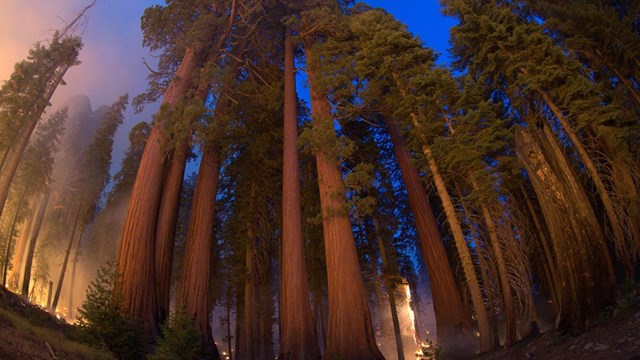
Giant Sequoias and Fire
Learn more about the role fire plays in giant sequoia groves, and the impacts recent higher severity fires have had on sequoia trees.. 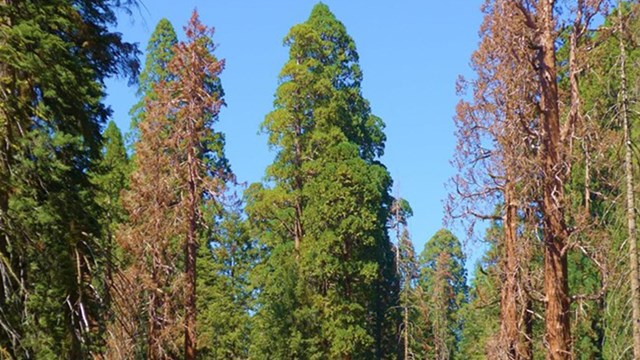
Giant Sequoias and Climate
Climate plays a key role in giant sequoia groves, and scientists have observed unanticipated impacts from hotter drought. 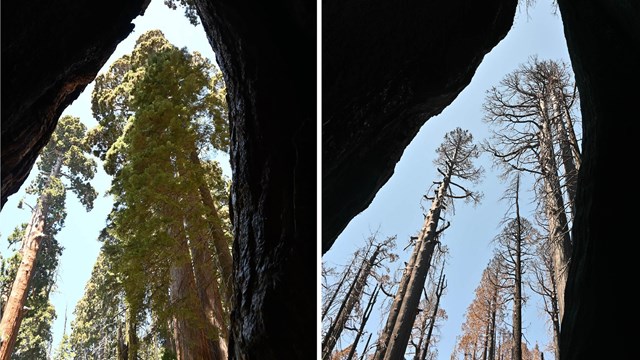
Two Groves and a Wildfire
Learn about contrasting KNP Complex Fire effects within Redwood Mountain Grove and between Redwood Mountain and Giant Forest groves. Pay a Visit to a Giant Sequoia GroveWhether from your car or on a trail, there are so many opportunities to experience a sequoia grove and marvel at the beauty, the size, and the variety of giant sequoia trees. Explore the links below to learn more about the most famous trees — the General Sherman and General Grant trees — and the variety of groves in these parks. 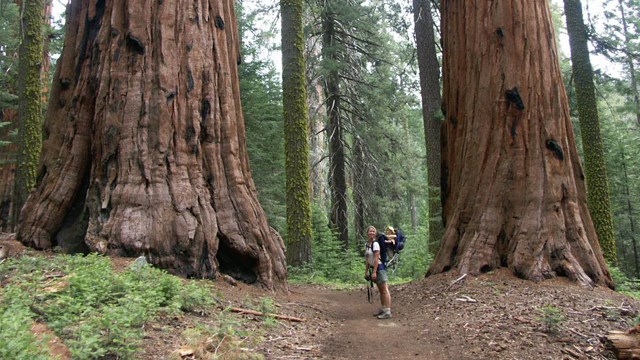
Explore Sequoia Groves
Whether you see them from your car or hike to a remote grove, giant sequoias inspire awe and wonder. 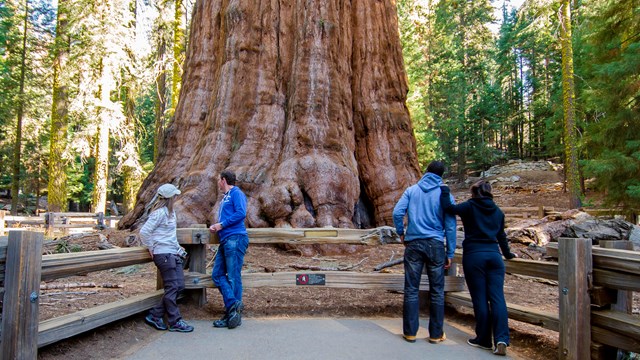
Visit the General Sherman Tree
The General Sherman Tree is the world's largest tree, measured by volume. Enjoy a short hike to this tree in Giant Forest. 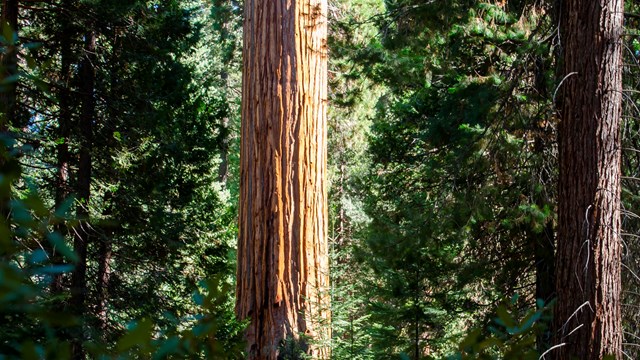
Visit the General Grant Tree
You can hike a 1/3-mile (05. km) paved loop trail to see this tree and other named trees in Grant Grove, Kings Canyon National Park. |
Last updated: October 16, 2023