National Park Service LogoU.S. Department of the InteriorNational Park ServiceNational Park Service
National Park Service:  U.S. Department of the InteriorNational Park Service Arrowhead
Pictured Rocks National Lakeshore A waterfall trickles over the escarpment as the Pictured Rocks cliffs rise again after Miners Beach.
view map
text size: largest larger normal
printer friendly
Pictured Rocks National Lakeshore
Your Safety
 
Rockfall from the Pictured Rocks cliffs can happen at any time.  Be careful on the water and on the cliff top.
Photo courtesy of Craig Blacklock
Rockfall can occur at any time.
 
When you visit the lakeshore come prepared for a variety of weather, terrain, and unexpected situations.
 
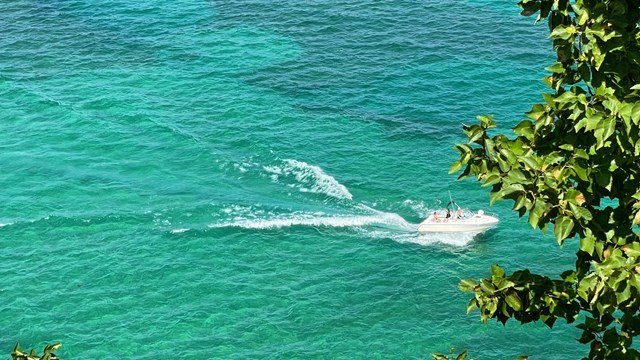
This boater on Beaver Lake plays it safe by always wearing a PDf.

NPS photo by Lora Loope

Always wear your PDF when boating.

The Pictured Rocks cliffs are spectacular but can be dangerous to the careless hiker.  Fifteen miles of the North Country Trail are atop 50-200 foot high cliffs. Cliff tops are covered with loose sand and gravel.  Unsupported overhangs of soft sandstone are common.  For your safety, stay away from the cliff edge. 

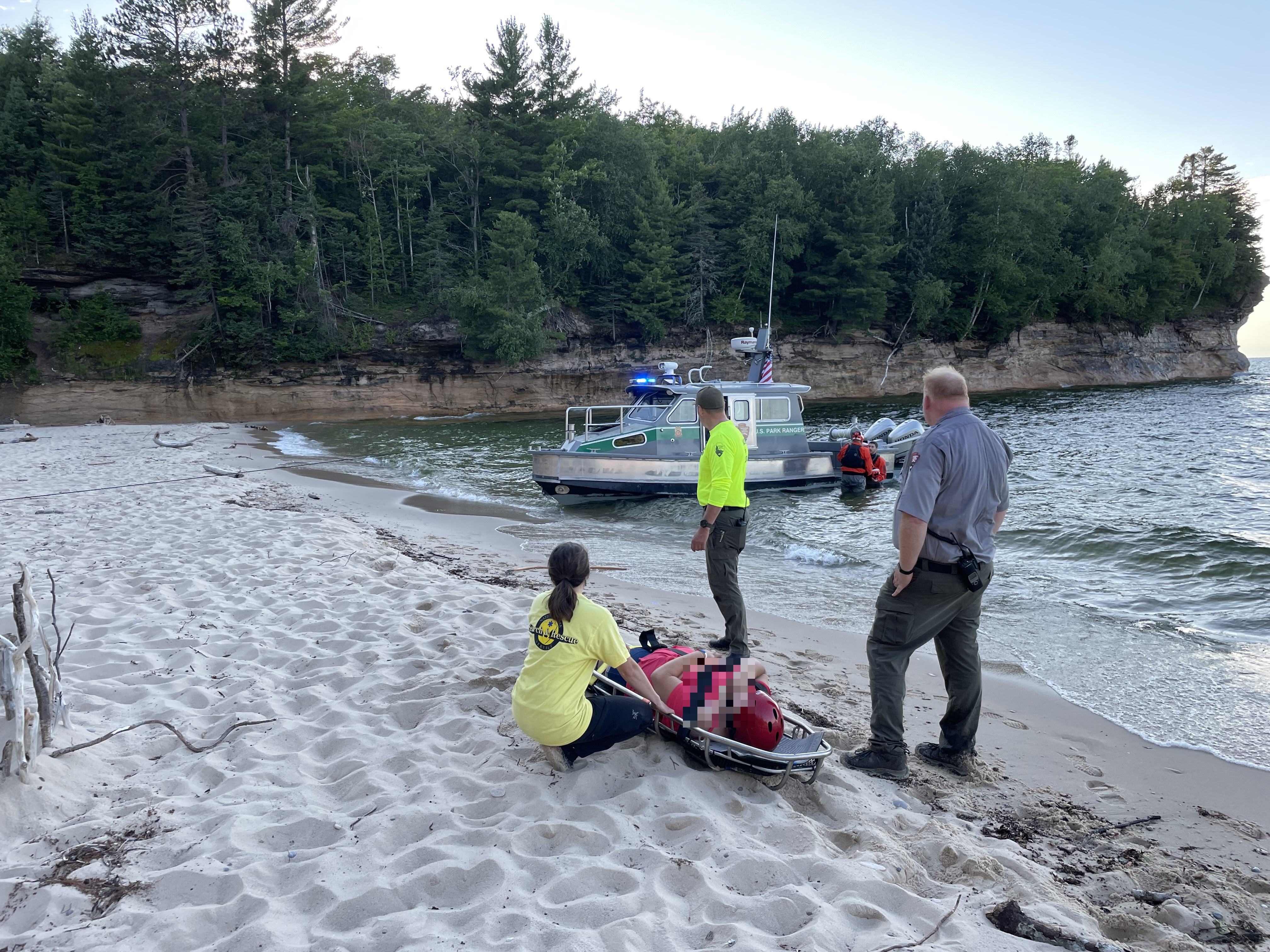
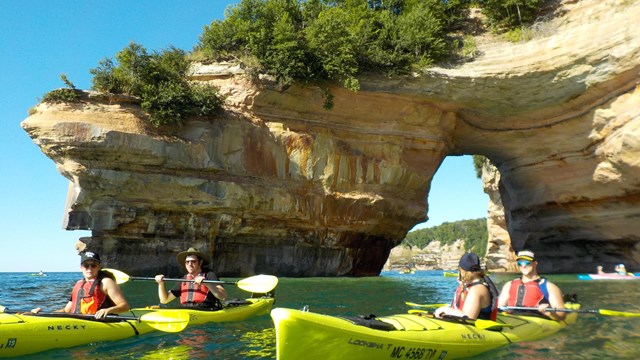
Canoeing and kayaking are great ways to see the Pictured Rocks, but can be extremely dangerous due to rapidly changing weather and lake conditions. Only experienced boaters with appropriate skills and equipment should canoe or kayak Lake Superior. 

The weather near Lake Superior is very changeable. Summers are often warm but be prepared for cool, rainy, windy weather. Hypothermia can occur at any time; know the symptoms. Use a layered clothing system.

Cold related emergencies (pdf)
Heat related emergencies (pdf)

 
Sand tunnels may collapse!

Sand tunnels may collapse!

Swimmers should be aware of rip currents.

Sand is unstable and may collapse. Do not build sand tunnels.

Be conservative with your trip itinerary so you can safely reach your next campsite. Always let someone know when you will return, whether for an extended backcountry trip or a day hike.

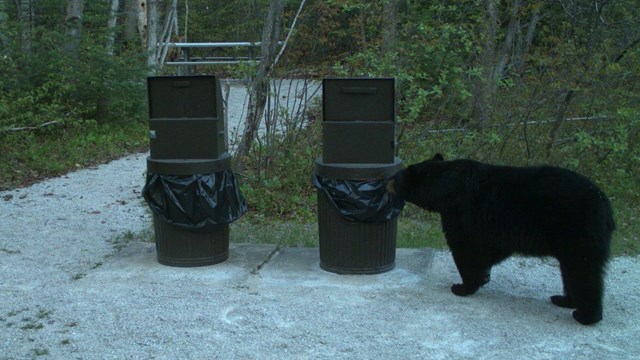
Bears and other wildlife may be encountered in the backcountry. Keep a clean camp and exercise caution.

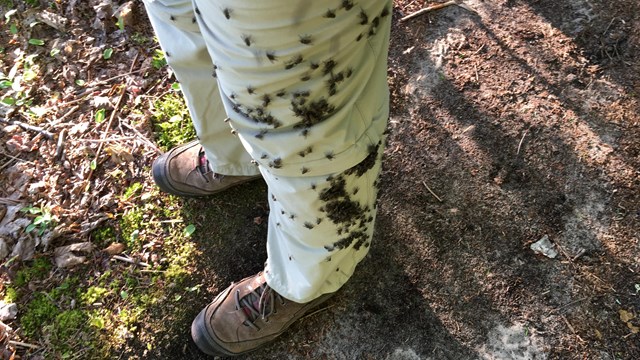
Black flies, mosquitoes, and stable flies can be a nuisance between late May and early September. Long pants and shirts and insect repellant are recommended.

The lakeshore is closed to hunting April 1 through Labor Day, but is open to hunting the rest of the year during small and large game seasons. A Michigan hunting license is required; state and federal regulations apply. Wear "hunter orange" during hunting seasons.

Do not count on your cell phone. Many areas of Pictured Rocks National Lakeshore do not have cellular coverage.

 
Important Warning - Falling Trees and Branches

Beech Bark Disease has spread throughout the National Lakeshore, resulting in many dead and dying beech trees. Be aware of these trees and the potential for falling branches and trees.

This disease is initiated by a non-native insect accidentally introduced into the United States. Secondary attack by both native and non-native fungi further stresses American beech trees and causes an unusually large number of weakened and dead beech trees. The insect and fungus pose no direct threat to humans. There is no practical control method in large natural forests.

The National Park Service is making every effort to identify and remove dying and dead trees from developed areas as quickly as possible. However, all park visitors - but particularly hikers and overnight backcountry campers - should be alert for trees that are weakened, have large dead limbs or are completely dead, especially in windy conditions.

Be alert. Look up. Choose your campsite carefully.
 
Leaves of three ... let them be.  (Photo by Jennifer Anderson,USDA-NRCS Plants Database
Poison ivy
is found at several places within the lakeshore.
more...
A small creek drops over a ledge at Miners Beach.
Water, water everywhere
Is it safe to drink?
more...
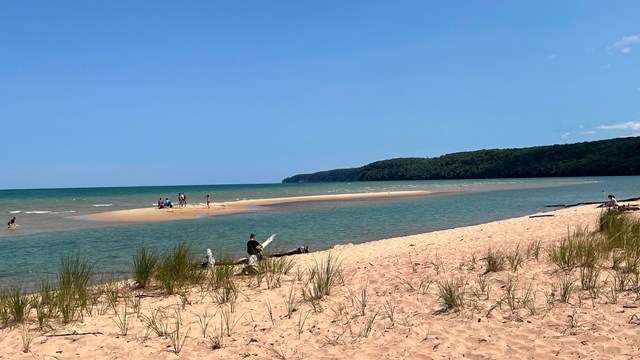
This visitor enjoys wading along the Lake Superior beach, but needs to be wary of rip currents.
Rip currents
powerful currents of water moving away from shore.
more...
Boat anchored off Chapel Beach.
Boating safety
information from U.S. Coast Guard
more...
Small gray gun
Firearms
carefully follow federal and state laws
more...

You are exiting the National Park Service website

Thank you for visiting our site.

You will now be redirected to:

We hope your visit was informative and enjoyable.

Mineral seepage creates the vibrant colors shown on this close-up photo of the Pictured Rocks cliffs.

Did You Know?
Mineral stains give color to the famous cliffs of Pictured Rocks National Lakeshore. Red and orange colors are iron, black is manganese, white is limonite, and green is a trace of copper. There are no pictographs or petroglyphs on the Pictured Rocks cliffs (that we know of).
more...

Last Updated: July 11, 2011 at 14:17 MST