



|
Two great mountain ranges intersect in Lake Clark National Park and Preserve, the Neacolas and the Chigmits. 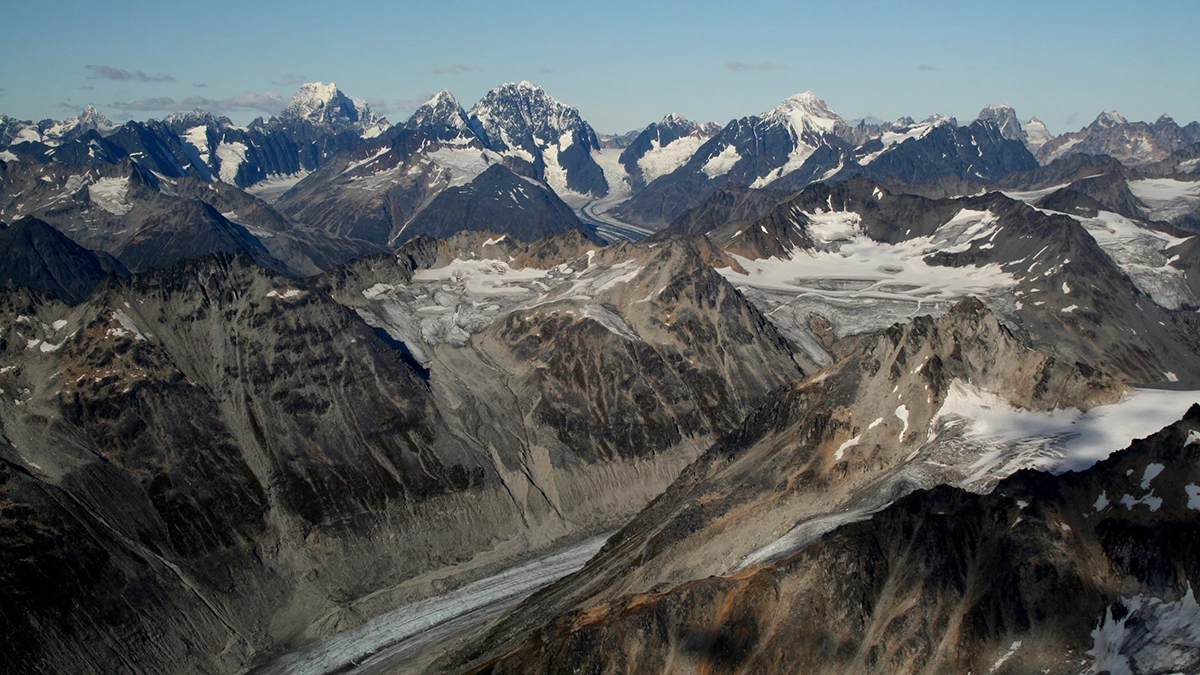
NPS Photo / Chuck Lindsay 
The Neacola Mountains in the north central part of the park are the southern most extension of the Alaska Range. The Alaska Range extends far north of the park boundary and includes Mt. Denali, the tallest mountain in North America and the heart of Denali National Park. The Chigmit Mountains in the south and west part of the park are part of the Aleutian Range, which contains dozens of volcanoes and extends out the Aleutian Islands. Lake Clark Pass separates the Neacola and Chigmit ranges. The pass is at an elevation of 1,050 feet above sea level, and is more than 9,000 feet below the peak of Mt. Redoubt, which towers over the pass to the south. Lake Clark Pass is the primary aviation route between southcentral Alaska (and Anchorage) and western Alaska. The tallest mountains in the park are both active volcanoes: Mount Redoubt, at 10,197 feet, and Mount Iliamna, at 10,016 feet. More information on the park's volcanoes can be found on the volcano page. Fire and IceLake Clark's Volcanoes |
 |
|
Last updated: July 5, 2022