










Missions of San Antonio
San Antonio, Texas
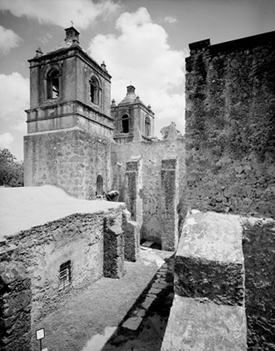
Beginning in the sixteenth century, Franciscan missionaries and Spanish soldiers began exploring and colonizing the river valleys north of Mexico. San Antonio exists today as a result of five thriving missions erected between 1718 and 1731. This chain includes San Antonio de Valero (The Alamo), Concepción, San José y San Miguel de Aguayo, San Juan de Capistrano, and San Francisco de la Espada. This concentration of Catholic missions represents some of the finest examples of Spanish art and architecture in North America.
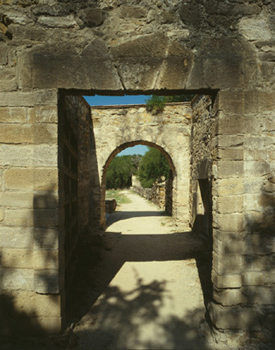
The Missions were important to the Spanish government to secure their claims to the vast frontier in North America from English and French encroachment. They influenced the area politically, religiously, and culturally, providing a safe, walled and fortified environment in which native peoples, soldiers, and settlers coexisted and thrived. Missions included a convento, workshops and storerooms, but the church was always the focal point. The Mission churches had elaborately- carved stone façades, sometimes brightly painted to inspire and inform the converts and parishioners. The educational and vocational aspects of the missions also impacted the area's agriculture and commerce.
Today, the four of the five Missions make up the San Antonio Missions National Historical Park. They were first documented by HABS in the 1930s. The documentation was expanded in the 1980s and continues to inform the maintenance and restoration of the Missions. San Antonio was connected to the Spanish colonial empire by caminos reales, or road networks. El Camino Real de los Tejas National Historic Trail was added to the National Trails System by act of Congress in 2004. This trail linked Mexico City through Texas and into Louisiana to the Spanish colonial capital at Los Adaes.
Learn More...
- HABS documentation of Mission San Antonio de Valero (The Alamo) (HABS TX-318 series)
- HABS documentation of Mission Señora de la Purisima Concepción (HABS TX-319 series)
- HABS documentation of Mission San Francisco de la Espada (HABS TX-320 series)
- HABS documentation of Mission San Juan de Capistrano (HABS TX-321 series)
- HABS documentation of Mission San José y San Miguel de Aguayo (HABS TX-333 series)
- San Antonio Missions National Historical Park
- El Camino Real de los Tejas National Historic Trail
- Teaching with Historic Places lesson plan on San Antonio Missions
- Spanish Missions website at the Library of Congress
- Federal website for National Hispanic Heritage Month
- National Register of Historic Places celebrates National Hispanic Heritage Month
- HDP Hispanic Heritage Month homepage


