



NPS 
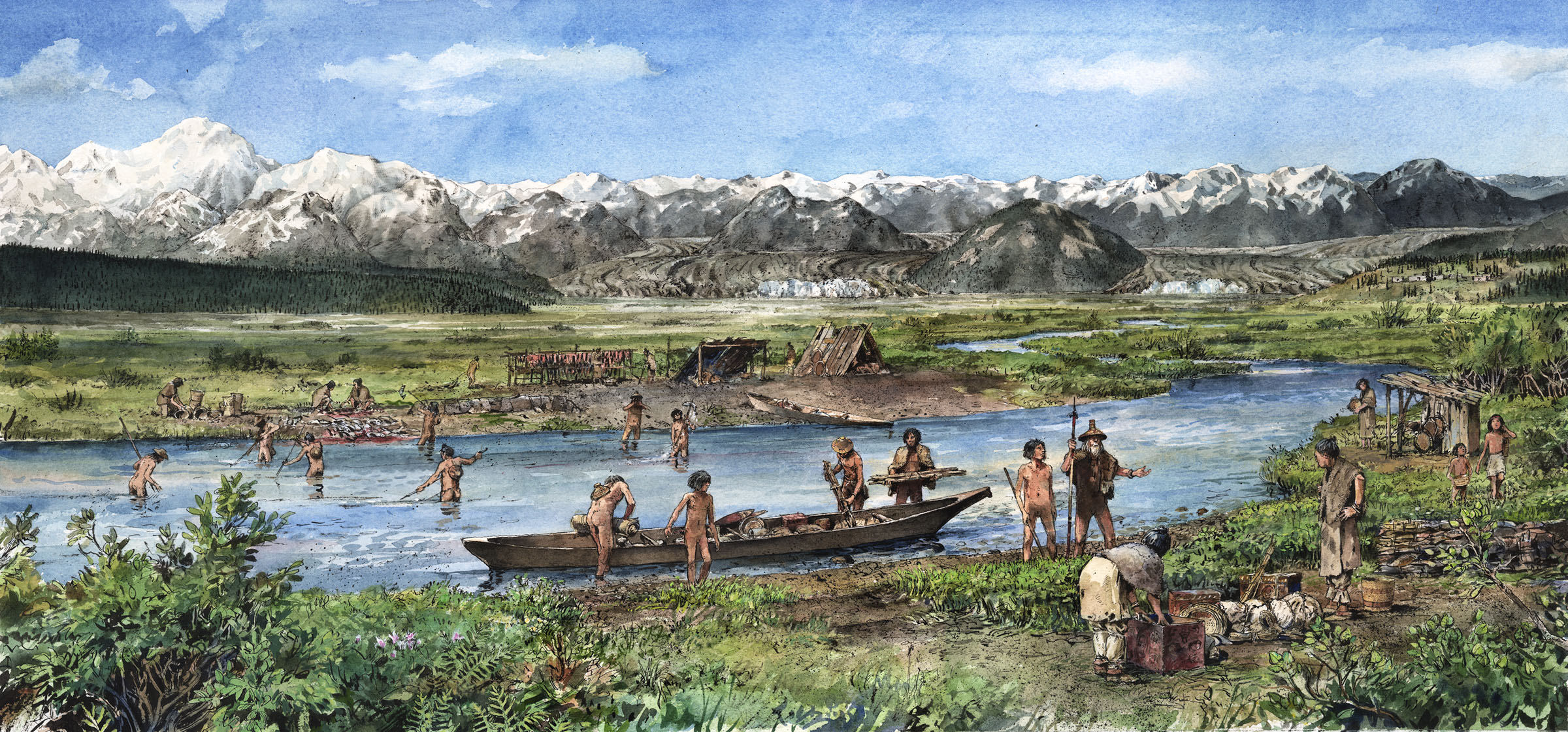
Early PeoplesLt. Whidbey was not the first to see Glacier Bay. His record includes mention of the indigenous people who paddled out in their canoes from what is now Pt. Carolus to meet his boats and offer to trade. Were these descendents of the people who once lived in the Bay but were forced out by the advancing glacier? Lingít oral history is corroborated by modern science -- it appears that lower Glacier Bay was habitable for many centuries up until about 300 years ago, when a final glacial surge would have forced the human habitants to flee their Homeland. A rich oral tradition and detailed place names speak volumes of the history of the area. How long they might have been there is unknown. There were people living over 9,000 years ago at nearby Groundhog Bay, but we may never know who they were. A site on Baranof Island shows that people with an unmistakable northwest coast culture have been in the region for at least the last 3,000 years. Even as Glacier Bay itself lay encased in ice, indigenous people carried on their activities in many places along the nearby coast, places that may have been free of ice for as long as 13,000 years. The oldest known site in Glacier Bay National Park, located in Dundas Bay, is about 800 years old. Indigenous people were in Lituya Bay, on the park's wild outer coast, to greet French explorer La Pérouse in 1786. Although a series of earthquake-triggered tidal waves, the latest in 1959, devastated most of the shoreline of Lituya Bay, a pocket of undisturbed forest still harbors archeological evidence of their life there. 
The Huna Lingít TodayThe Lingít have traditionally occupied much of Southeast Alaska, from Yakutat in the North to Ketchikan in the South. Oral history and scientific findings corroborate that the ancestors of the Huna Lingít occupied Glacier Bay long before the last glacier advance. This place was their home and was known as S'e Shuyee or "edge of the glacial silt." Beginning around 1700, the long-stationary glacier surged forward and overran their settlements. The clans survived this time of extreme hardship by dispersing throughout the Icy Strait, Excursion Inlet, and northern Chichagof Island areas. Eventually they settled in the village of Xunniyaa "shelter from the north wind", today known as Hoonah. Later, as the ice retreated they returned to their Ancestral Homeland, it had been transformed and scraped clean by the glacier. Now it was known as Sit' Eeti Gheeyi or, "The bay in place of the glacier." Through glacial advance and western expansion, the Huna Lingít have experienced setbacks, sadness, and cultural loss. Despite these changes, the Huna Lingít persevere and embrace a sense of renewal. Today, the Huna Lingít enjoy a modern life, while also embracing their Homeland, its resources, and retaining strong connections to their culture and tradition. Efforts to resume traditional harvesting of gull eggs, and the recently completed Huna Tribal House in Bartlett Cove are examples of a new era of cooperation between the Huna Lingít and the National Park Service. 
What's In A Name?Lingít Place names of the Huna Káawu. Learn the original Lingít names of Glacier Bay's special places. |
Last updated: September 22, 2025