Skip to SearchSkip to NavigationSkip to BodySkip to Footer
National Park Service LogoU.S. Department of the InteriorNational Park ServiceNational Park Service
National Park Service:  U.S. Department of the InteriorNational Park Service Arrowhead
Everglades National ParkRanger on Slough Slog
view map
text size:largestlargernormal
printer friendly

Welcome to Everglades National Park, the only one of its kind.

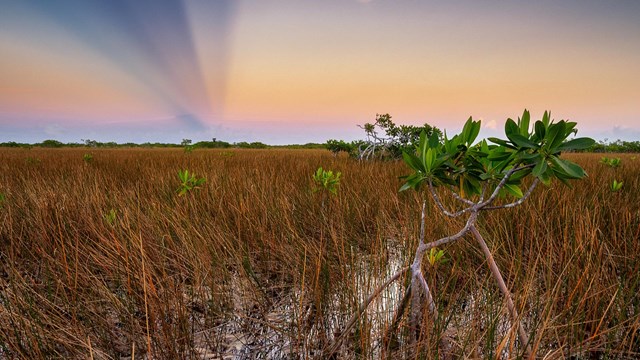
Everglades National Park, the largest subtropical wilderness in the United States, boasts rare and endangered species. It has been designated a World Heritage Site, International Biosphere Reserve, and Wetland of International Importance, significant to all people of the world.

Camping,  Trip Planner , Trail Guides

Información en español

 
Gator on Anhinga Trail

What's New!

There's always a lot going on at Everglades National Park! From awesome Ranger led activities for visitors, to great environmental education programs, to new scientific studies about this vast and unique ecosystem.

NEW TO DO
Virtual tours of the park
America's Best Idea - National Parks
Coe Visitor Center Art Exhibit
Ranger-led Programs

NEW TO KNOW
Burmese Pythons in the Everglades
Potential Impacts of Climate Change
American Alligator - in Depth

 
undefined

Planning a Visit to Everglades National Park

Try our new audio and video podcasts to assist in planning your visit or experiencing the Everglades through virtual programs around the park.

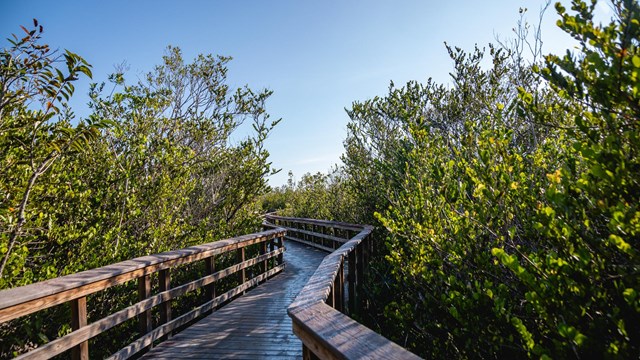
Whether you are coming for a few hours or a week and want a nice walk and picnic or more of a wilderness experience, you can find it all here. Camping, boating, hiking, and even a visit to a former missile base in the center of the park are all possible. Many have enjoyed exploring some of the 156 miles (251 km) of canoe/kayak and walking trails and 47 designated wilderness campsites opportunities for solitude. Current schedules and information can be found here on the park website.
more...

 
Burmese python

Burmese Pythons In Everglades National Park

One of the largest constrictors in the world, the proliferation of the introduced Burmese python presents a significant threat to the Everglades ecosystem. As is true of all invasive species, resource managers are committed to minimizing impacts through prevention, early detection, rapid response, and population control.
more...

 
undefined

Everglades National Park Planning

Everglades National Park has a number of planning, environmental assessments, and environmental impact studies that are underway. Our planning and science staff are continually updating the information available on these projects.

New Document for Comment:
Everglades National Park will be holding public meetings November 9 and 10 on the proposed document linked below.

Proposed Florida Bay Pole and Troll Zone

Current projects of interest are:
Cape Sable Canals Dam Restoration Project EA
FPL Right Of Way Proposed Land Acqusition EA
Flamingo Commercial Services Plan
Tamiami Trail Modifications: Next Steps
Everglades General Management Plan

more...


Write to

40001 State Road 9336
Homestead, Florida 33034-6733

E-mail Us

Phone

Visitor Information
(305) 242-7700

Emergencies in Park
(305) 242-7740

Fax

(305) 242-7711

Climate

The Everglades is mild and pleasant from December through April, though rare cold fronts may create near freezing conditions. Average temperatures in winter - High 77°F (25°C); Low 53°F (12°C). Summers are hot and humid, with temperatures around 90°F (32°C) and humidity over 90%. Afternoon thunderstorms are common and mosquitoes are abundant. The Atlantic Hurricane Season is June-November. Tropical storms or hurricanes may affect the area. Average Rainfall: 60 inches (152 cm) per year. The rainy season is June through October (mosquito season coincides with the rainy season).
Skip to SearchSkip to NavigationSkip to BodySkip to Footer
Fire in Pinelands  

Did You Know?
Lightning-ignited fires are a natural part of the Everglades ecosystems. They aid in the recycling of nutrients through the ecosystem.

Last Updated: November 12, 2009 at 08:19 EST