



Last updated: March 18, 2026
Thing to Do
Become a Saratoga B.A.R.K. Ranger
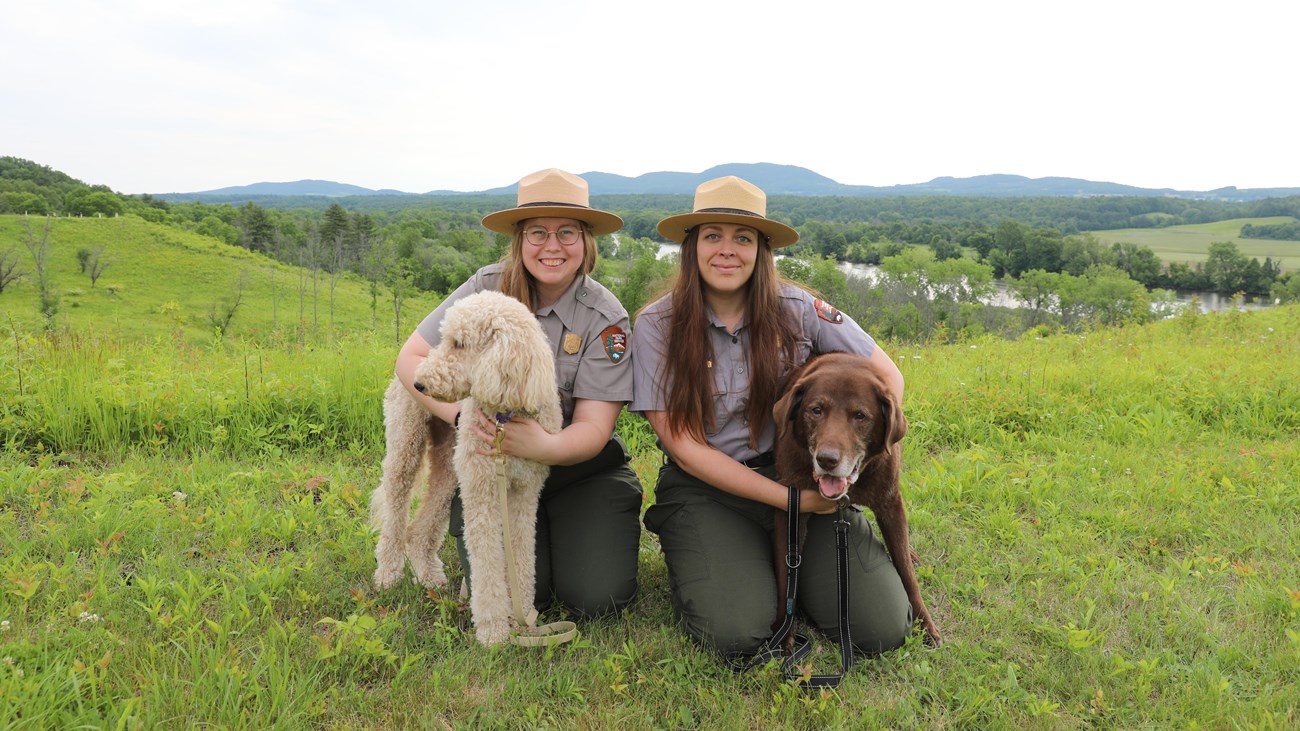
NPS Photo/S. Muldoon
Welcome B.A.R.K. Rangers!
Here at Saratoga National Historical Park, we want you and your family's visit with us to be memorable, enjoyable and educational. For many, pets are an important member of our families. If you are planning to bring a furry family member on your trip to Saratoga, make sure you are prepared and are following the B.A.R.K. Ranger code. The code helps protect you, your pet, and the park while you are here.Enjoying the scenic and open spaces of the park is just as enjoyable for our four-legged best friends as it is for us. So, in order to help you get the most out of your visit to the park's sites, here are some tips on how to make your experience a pleasant and enjoyable one for you, your pets and other park guests.
Details
Activity
Hiking
Pets Allowed
Yes
Activity Fee
No
Entrance fees may apply, see Fees & Passes information.
Reservations
No
Season
Year Round
Accessibility Information
The park trails are NOT accessible.
The trail consists of various terrain including grass, gravel, stone steps, and wooded pathways.Tour Road
Restroom facilities are available at Stop 2 and Stop 7, but no water is available. Picnic areas are available at Stop 7 and Stop 9. Each stop has accessible paved walkways leading to interpretive waysides that describe the locations.
Visitor Center
Parking: two spaces available in main parking lot at bottom of ramp. Ramp has a steep incline to visitor center; additional parking is available on Roosevelt Rd.
Restrooms: partially accessible indoor restrooms are available in the visitor center - a handicap stall is available, but there is no automatic door. A partially accessible outdoor portable toilet is available in the lower level of the visitor center parking area near the tour road entrance.
Water: water fountains located inside visitor center between restrooms and one located outside off ramp from main parking lot. Water contains sodium in excess of 20 mg/L
Services are limited during the winter.
Visit our keyboard shortcuts docs for details
- Duration:
- 3 minutes, 35 seconds
Watch this video to learn about visiting Saratoga National Historical Park with your pets. Find out about the park's B.A.R.K. Ranger program. Don't forget to ask a ranger about how to certify your pet as an official B.A.R.K. Ranger!

NPS Photo/K. Vinduska
Follow the B.A.R.K. Principles:
B = Bag Your Pet's Waste
Help keep Saratoga NHP clean by collecting and disposing of all pet waste. Be sure to carry poop bags off the trail and dispose of it. Do not throw them into the woods or hang from trees. Dog waste is not a natural fertilizer. Dogs can carry disease such as parvovirus, giardia, and roundworms. This can be harmful if introduced to the park's wildlife populations. Water sources may also be polluted by dog poop.
Public garbage cans are located throughout the park. Poop bag dispensers and additional trashcans are located at the beginning of the Park Tour Road, the Wilkinson Trail, and the Horse trail, and along canal trails by the Schuyler House.
A = Always Leash Your Pet
Pets must be on a leash no longer than 6 feet (2 m); retractable leashes extended beyond this limit are prohibited. Unleashed pets can stress or injure wildlife, scare other visitors, and are more likely to have a dangerous encounter. Keep your pet, wildlife, and other people safe by using a leash. Leashes protect dogs from becoming lost and from wilderness hazards.
R = Respect Wildlife
Dogs can chase and threaten wildlife, scaring birds and other animals away from nesting, feeding, and resting sites. The scent left behind by a dog can signal the presence of a predator, disrupting or altering the behavior of park wildlife. Small animals may hide in their burrow the entire day after smelling a dog and may not venture out to feed. Please keep your dog at a distance from any animals you may encounter. A respectful pet keeps clear of wildlife, stays on trails, and out of wildlife’s natural habitats.
K = Know Where You Can Go
Pets should not be left unattended including in personal vehicles. Summer sunshine poses a threat to pets in vehicles. They are allowed on park trails and in the bike/pedestrian lane on the park tour road. Pets are allowed to be left for a short time at the pet tie-post installed in front of the Visitor Center. They are not allowed in any park buildings or visitor centers in compliance with federal regulations.

NPS Graphic/K. Vinduska
Complete this checklist to earn your B.A.R.K. Ranger tag and certificate:
-
Take a photo of your pet on a park trail on leash to show a ranger. Bonus: Post your photo on social media with the hashtag, #SaratogaBARKRanger
-
Ask a ranger where dog waste stations are located (at the beginning of the Park Tour Road, Wilkinson Trail, Horse Trail, and along the canal trails in front of the Schuyler House)
-
Know your pet’s limits. Check surfaces to make sure they are not too hot for your pet to walk on and check the weather before hiking.
-
Complete a tick and invasive species check on your pet after finishing your hike to make sure they did not pick up any hitchhikers!

NPS Photo/K. Vinduska