



Last updated: December 12, 2025
Lesson Plan
Stories From the Clinch River Valley
Lesson Three: Community
Download Lesson Plan
276KB
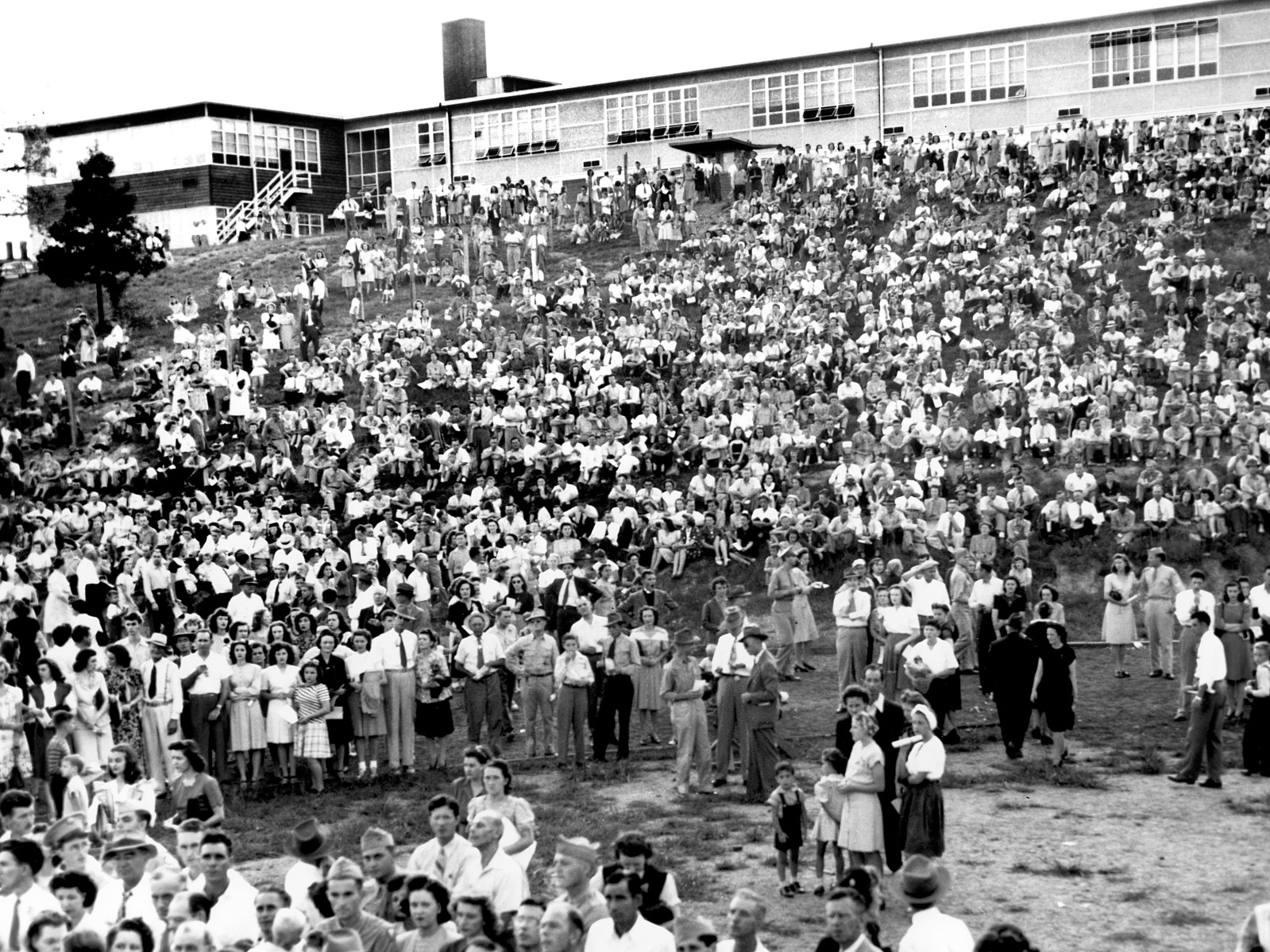
Communities can come together in times of struggle and celebration.
US Department of Energy/Ed Westcott
- Grade Level:
- Upper Elementary: Third Grade through Fifth Grade
- Subject:
- Literacy and Language Arts,Social Studies
- Lesson Duration:
- 60 Minutes
- Common Core Standards:
- 3.L.4, 4.L.4, 4.L.4.c, 5.L.4, 5.L.4.c, 3.RI.2, 4.RI.2, 4.SL.1.c, 4.SL.1.d, 5.SL.1.d
- State Standards:
- Tennessee State Social Studies Standards
•5.24
•5.48
•5.49
•5.50 - Additional Standards:
- National Social Studies Standards
•Thematic Strand 2
•Thematic Strand 3
•Thematic Strand 5
•Thematic Strand 8
National Geography Standards
•Essential Element 1
Essential Question
What is a community?
How is my community unique? Similar to or different from other communities?
What are the community's responsibilities to its citizens?
What are the roles within a community? What impact do individuals have within the community?
Do communities change or do they stay the same?
Objective
Students will:
•describe the functions and features of community in society.
•compare and contrast one's own community with those highlighted in the Clinch River Valley.
•participate in classroom jobs that contribute to the classroom community.
•locate the Clinch River Valley in East Tennessee, comparing and contrasting its physical and cultural features to those of their own community.
Preparation
Prior to teaching this lesson, gather library books on Norris Dam, Oak Ridge, TN and the Clinton 12.
Materials
Download E-Book: Stories From the Clinch River, Book 3 Community
Procedure
1. Display and locate the Clinch River Valley on a map, globe, or digital resource. Highlight geographic concepts including the concept of a river valley.
2. Explain that we will be learning about three communities of the Clinch River Valley, answering the following questions:
- What makes my school and community unique?
- What activities do children and adults like to do in our community? Work and play?
- What is important to the school? To the community?
- How do we interact and share with each other in our community?
4. During and following the reading, engage children in sharing their reactions and learning through questions such as:
- Why do people live in river valleys?
- What examples of community were shown in the book?
- How were communities in the book similar to ours? Different?
- What roles do people have in their communities?
6. Using ideas generated from the reading and class discussion, place on the concept map related subtopics such as common habitat; sharing, communal, neighborhood; traditions, cooperation, citizen; sense of belonging. For younger learners, choose topics such as where we live, where children go to school, where neighbors help one another, etc.
7. During the brainstorming, reinforce different types of communities, such as classroom and school communities and neighborhood communities. All types of communities, however, have similar characteristics or features that make them work.
8. Lastly, create a shared class definition of community. Have students to work in small groups to write one or two sentences or simple words describing a community. Afterwards, write each group's definition or list of words on the board. As a class, create an agreed-upon definition of community using the words or sentences chosen by the students.
9. Examples include:
- A group of people with common interests living in the same area.
- People who have a shared history and who work together on common goals.
- A group of people living, working, or going to school in the same area.
- A group of neighbors, children, or people.
11. Ask students to draw a picture of themselves in the community and/or to write one or two sentences about what makes their community special.
12. Encourage students to consider how they can contribute positively to the functioning of their school and larger community.
13. As a class, determine roles that students play in the classroom community. Ideas include:
- Classroom greeter
- Line leader
- Mail distributor
Vocabulary
- Community: a group of people who share common interests, beliefs, and/or cultural background
- Neighbor: the person or people who reside near you
- Cooperation: working together with others
- Tennessee Valley Authority: The letters TVA stand for Tennessee Valley Authority. TVA was created in 1933 during the Great Depression by President Franklin Roosevelt's administration. TVA built hydroelectric dams that generates electricity, controlled flooding, creates recreation and made rivers deeper for larger boats. TVA sells its energy to smaller local distributers.
- Desegregation: the elimination of laws, customs, or practices under which people from different religions, ancestries, ethnic groups, etc., are restricted to specific or separate public facilities, neighborhoods, schools, organizations, or the like.
- Home Guard: a force organized often on a volunteer basis for local defense or home protection.
- Curfew: an official regulation setting restrictions on movement, especially after a specific time at night.
- Public Assembly: A group of persons gathered together for a common reason.
Enrichment Activities
- Have your students research and create a list of their community's elected leaders and discuss each person's role.
- Identify ways you and your class can contribute to your community by doing a service project.
- Have the students create a map of their community. This map should highlight their home, school, and other important features.
Related Lessons or Education Materials
Stories From the Clinch River Valley Lesson One: Change
Stories From the Clinch River Valley Lesson Two: Displacement
Stories From the Clinch River Valley Teacher's Packet
Contact Information
Email us about this lesson plan
Tags: clinch river valley