



Last updated: July 25, 2026
Place
Willow Island
NPS Photo
Quick Facts
Location:
Veterans Memorial Park, approx. 201 E 9th St., Cozad, NE GPS 40.8607666667 -99.98385 (PX station) and GPS 40.8766333333 -100.0714555528 (Willow Island State Wildlife Management Area)
Significance:
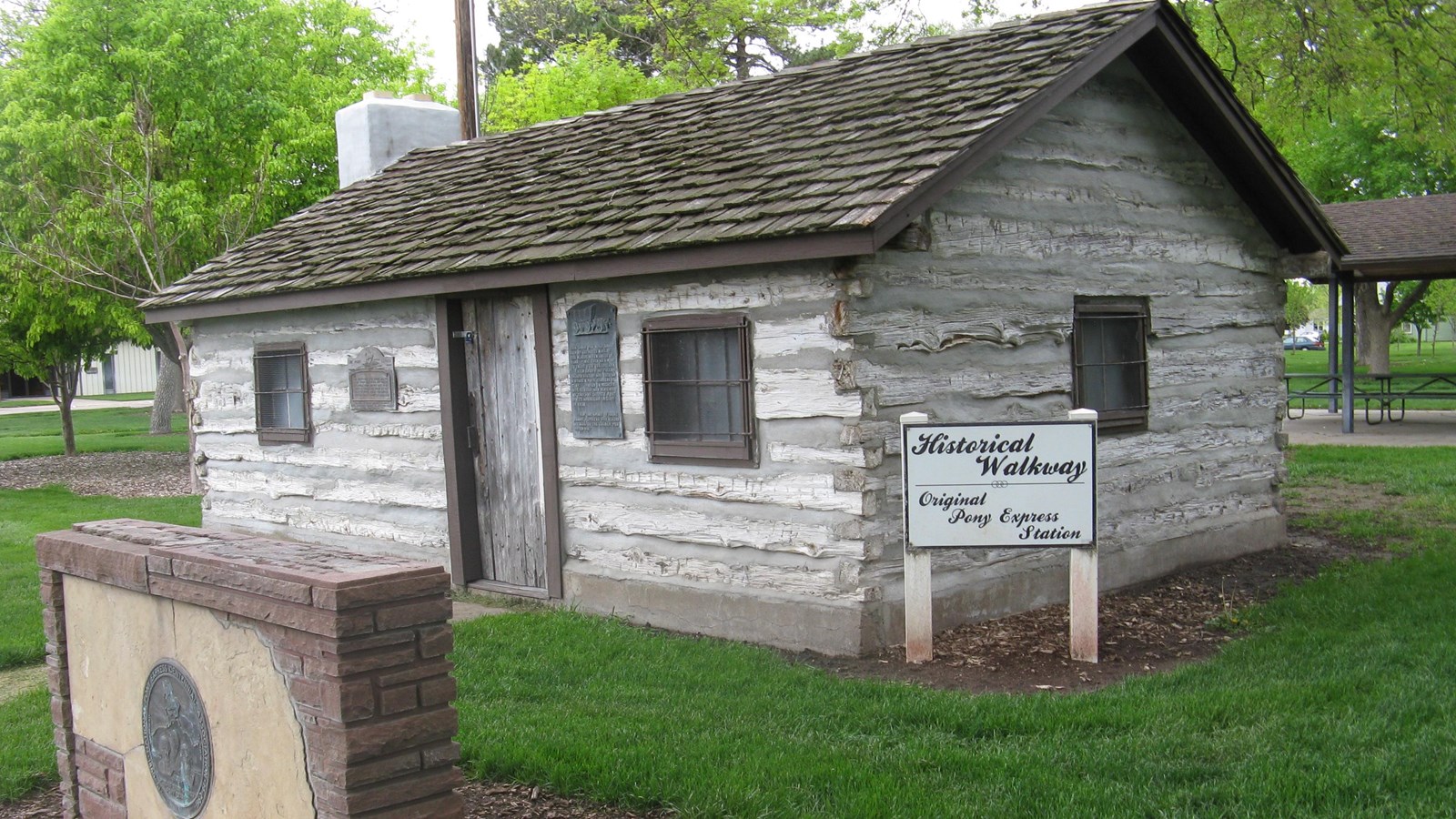
Brigham Young’s 1847 vanguard company of Latter-day Saints encountered vast herds of bison between present-day Cozad and Gothenburg, NE, and experienced trouble when their cattle ran among the buffalo. Cozad’s Veterans Memorial Park exhibits an original Pony Express/stage station building from Willow Island Station, which operated for 4 ½ months in 1861.
Designation:
Historic site on the Mormon Pioneer and Pony Express National Historic Trails.
Amenities
6 listed
Cellular Signal, Historical/Interpretive Information/Exhibits, Picnic Shelter/Pavilion, Picnic Table, Playground, Restroom
As the 1847 vanguard of Latter-day Saints moved up the Platte River beyond the 100th Meridian, they found themselves surrounded by immense herds of bison. Camp scribe William Clayton wrote on May 6, “The prairie looks black with [buffalo], both on this and the other side of the river. Some think we have past fifty, and some even a hundred thousand during the day, or have seen them.” Because there was enough meat in camp, Brigham Young ordered that no more game should be killed—a tough directive for those men who had not yet slain their first buffalo, especially with the animals so near and numerous. But the great bison herds proved troublesome, crowding the wagons and blocking the trail. “Young buffalo calves frequently came in the way,” reported Orson Pratt, “and we had to carry them to a distance from the camp to prevent them from following us, and being in our way.”
More serious trouble came that day when the men assigned to herd the company’s livestock allowed their attention to wander. Unguarded, the cattle mixed in among the buffalo and tried to avoid recapture. All available hands, including Brigham Young, rode in to separate them from the wild herd—difficult work, for cattle can be wily and are unexpectedly agile. Young lost his valuable spyglass in the ruckus and rode back to the wagons, highly displeased with the events of the day. That evening’s campsite, located south of Cozad in the middle of present-day I-80 near Exit 222, is known as “Spyglass Camp.”
The next morning, May 7, the still-simmering Young publicly chastised the man he held responsible for the escaped cattle and the loss of his spyglass. The company waited in camp as several men rode back to search for the lost item, which they found and returned to Young. Due to the late start, the company traveled only 7 miles that day and camped in the vicinity of present-day Gothenburg Municipal Airport, north of the Platte River and US-30. Appleton Milo Harmon wrote that the May 7 camp lay “opposite a considerable sized island on which were scattered cottonwoods and willows grew. From this island we obtained our wood, it being separated from the mainland by a small channel only two rods wide and very shallow.” The island he described, today called Willow Island, stretches nearly 9 miles between Cozad and Gothenburg, NE.
The Mormon Pioneer Trail stays north of the river, but westbound I-80 crosses the north channel of the Platte west of Cozad and runs the length of Willow Island before returning to the mainland at Gothenburg. In 1861, 14 years after the Latter-day Saints vanguard passage, the Pony Express established Willow Island Station at an existing ranch on the south side of the Platte about 6 miles southeast of Cozad. An original log cabin from the station, which operated July 1-Nov. 20, 1861, now stands in Cozad’s Veterans Memorial Park. There is no historical or interpretive information about the Latter-day Saints emigration.
Site Information
Location (Veterans Memorial Park, approx. 201 E 9th St., Cozad, NE GPS 40.8607666667 -99.98385 (PX station) and GPS 40.8766333333 -100.0714555528 (Willow Island State Wildlife Management Area) )