



Last updated: August 20, 2026
Place
Warm Springs
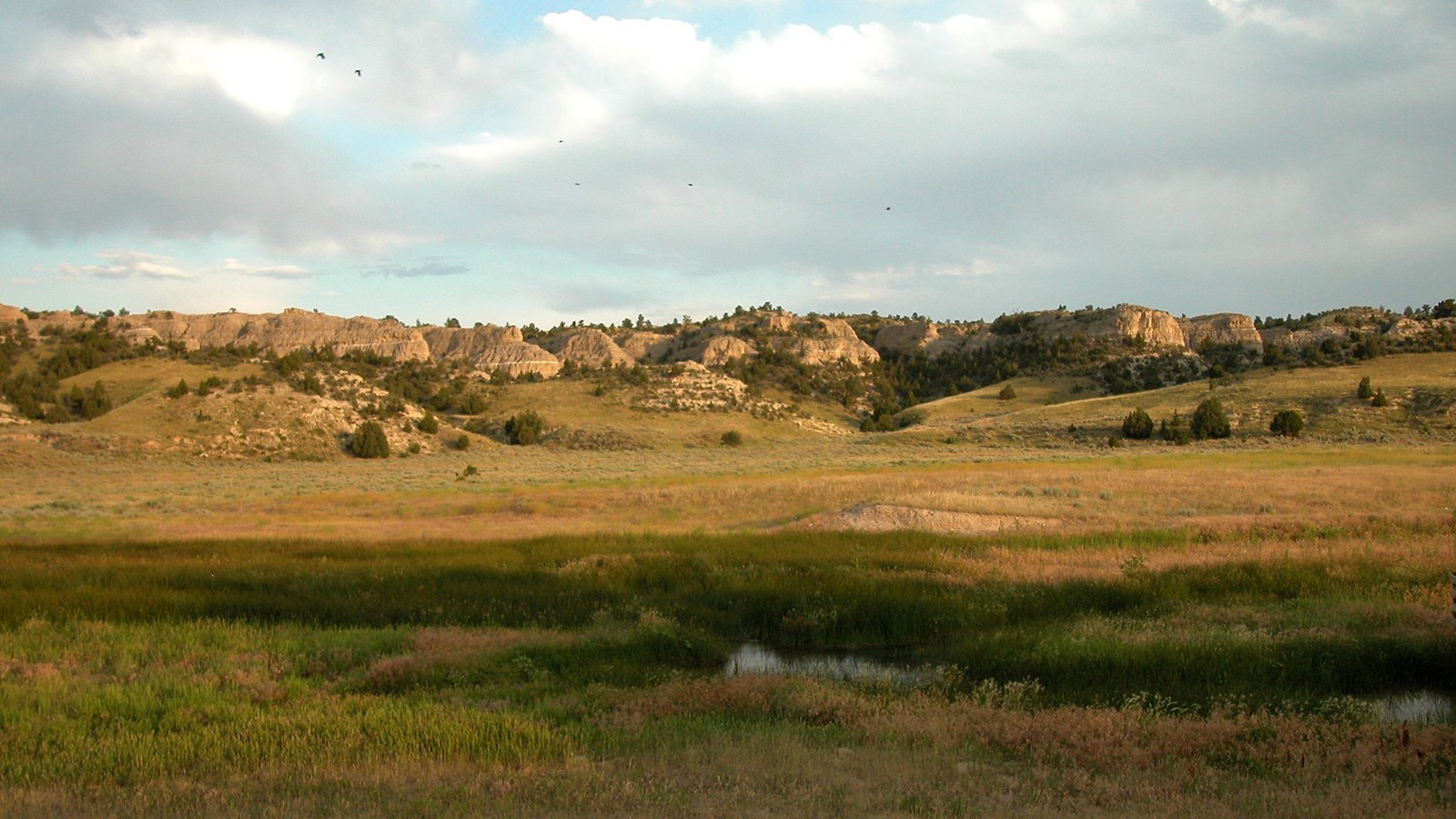
NPS Photo
Quick Facts
Location:
Warm Springs is on Camp Guernsey State Military Reservation, Warm Springs Canyon, 1.6 mi SW of Guernsey, WY. Permission is required before accessing the site. GPS 42.249195 -104.781634
Significance:
Warm Springs, with both a warm and a cool spring, provided good, clear water for emigrants and livestock on the dry drive from the Platte River at present-day Guernsey, WY, to Cottonwood Creek. This was a particularly popular emigrant camping place, and some emigrants took advantage of the warm water there to wash their laundry.
Designation:
Historic site on the California, Mormon Pioneer, and Oregon NHTs.
OPEN TO PUBLIC:
No
MANAGED BY:
Camp Guernsey
Amenities
2 listed
Historical/Interpretive Information/Exhibits, Scenic View/Photo Spot
West of Fort Laramie near present-day Guernsey, WY, the North Platte River flows through several deep canyons that are impassable to wagons. To bypass the canyons, travelers on the south side of the river detoured into the foothills of the Laramie Range, which they called the Black Hills because of the dark pine forests that grew there. Overlanders noted their road growing rougher as they began the climb, but they felt exhilarated by the change of scenery and the area’s romantic desolation.
At the end of their first full day’s travel beyond Fort Laramie, barely into the Black Hills, many emigrants camped at Warm Springs (also called Big Springs) where two strands of the wagon trail merged. Travelers bound for Utah, California, and Oregon spent pleasant evenings exploring their surroundings and describing the oasis in their journals. Forty-niner John E. Banks called it “the most wonderful spring I have ever seen.” Fellow gold-seeker A. J. McCall also praised the “magnificent spring near the trail,” writing, “The water, pure and crystal, comes boiling up from a gravelly bed, sufficient in quantity to form a respectable brook. Its waters are soft and quite warm.” Another forty-niner, Joseph Warren Wood, observed that the water “is about the temperature of rain water on a hot day”—that is, lukewarm, not hot—and Thomas Bullock, of the 1847 Latter-day Saints vanguard, found the flow from Warm Spring “sufficient enough to turn a mill Wheel.” Many travelers washed their clothes in the 70° F water, lending the site a third name: “Emigrants’ Laundry Tub.”
About 100 yards east of the warm pool, another spring gushed sweet, cool drinking water from the base of a bluff, but some travelers noted that drinking too much could result in diarrhea. Latter-day Saints encountered several Oregon-bound wagon trains from Missouri while camping here in 1847. Taut nerves hummed on both sides, Mormon and Missourian, due to a history of conflict between the two groups, but all remained civil—even helpful to each other—on this day.
The following summer, as Brigham Young led another group of Latter-day Saints to the Great Salt Lake Valley, his wife Louisa Beaman Young gave birth to twin boys at Warm Springs. The Young family rejoiced at the arrival of these new lives, but some unfortunates departed the world here, too. Warm Springs was the end of the trail for some who arrived ill or injured, and at least six graves once lay along the south side of the Warm Springs wash. One was the resting place of 28-year-old “Dr. McDermott,” who died with symptoms of cholera on June 21, 1849. McDermott’s grave, originally outlined with rocks, has been moved by archeologists due to erosion. A historical sign southwest of the spring marks his original grave and a second sign marks his reburial site.
Today Warm Springs is managed by Wyoming’s Camp Guernsey military reservation. Visitors must request permission to visit the sites due to its proximity to active military training grounds.
Site Information
Location (Warm Springs is on Camp Guernsey State Military Reservation, Warm Springs Canyon, 1.6 mi SW of Guernsey, WY. Permission is required before accessing the site. GPS 42.249195 -104.781634 )