



Last updated: June 27, 2026
Place
Upper Platte (Mormon) Ferry 1847
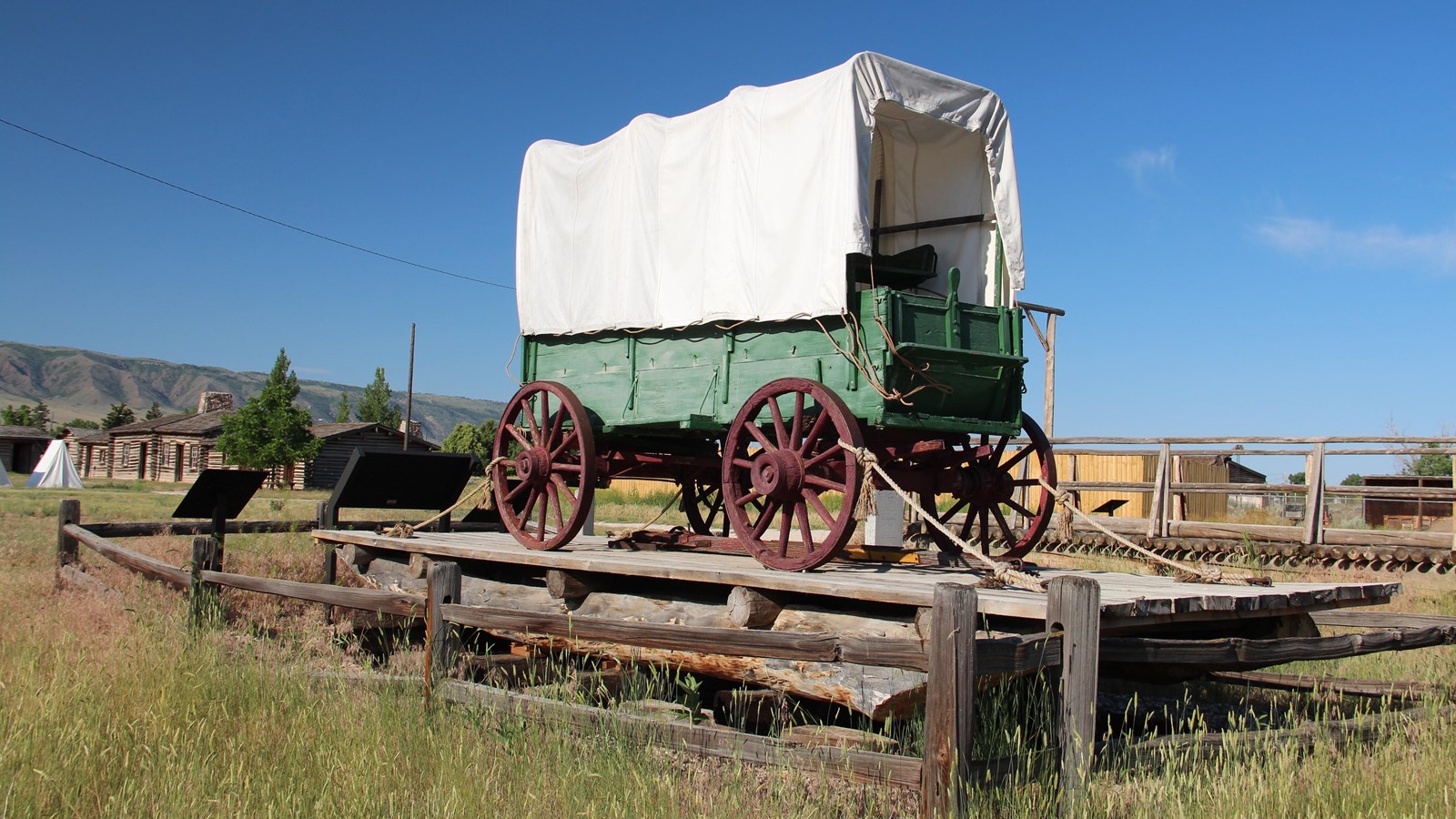
Photo/L. Kreutzer
Quick Facts
Location:
Fort Caspar Museum, 4001 Fort Caspar Rd., GPS parking 42.835986 -106.371615; GPS ferry replica 42.8376666667-106.3715333333
Significance:
Brigham Young’s vanguard company, reaching the North Platte River Ford in June 1847, found the river too high and dangerous to cross at the customary wagon ford. The vanguard established a ferry near the ford to carry across its own wagons as well as those of separate Oregon-bound companies, which paid for the service.
Designation:
Historic site on the Mormon Pioneer, California, and Oregon National Historic Trails.
Amenities
11 listed
Accessible Sites, Benches/Seating, Cellular Signal, Historical/Interpretive Information/Exhibits, Parking - Auto, Parking - Bus/RV, Playground, Restroom, Toilet - Flush, Trailhead, Wheelchair Accessible
A 40-man advance party for Brigham Young’s vanguard company reached the Oregon Trail wagon ford at present-day Casper, WY, on June 11, 1847. There they found a problem. The North Platte River surged 100 yards wide and 15 feet deep, wild and whitecapped from spring runoff and recent storms—dangerous crossing conditions for the 72 oncoming vanguard wagons. Two small companies of Missourians bound for Oregon soon joined the Latter-day Saints at river’s edge.
Keeping a wary eye on each other, the Latter-day Saints and Missourians studied the ferocious current as they weighed how to cross to the north bank. An emigrant from one of the Missouri companies nearly drowned while trying to swim the crossing, but some of the vanguard men rescued him using a sturdy leather boat, the Revenue Cutter, which they had brought from Winter Quarters. The two parties struck a deal: for a fee, the Latter-day Saints would use the boat to haul over the Missouri companies and the contents of their wagons, and the empty wagons would then be towed across with ropes. The Revenue Cutter safely transferred people and property, but several of the wagons rolled over in the current and had to be dragged ashore. By the time the operation was completed, everyone had laid aside their weapons and suspicions. William Clayton, of the vanguard group, observed, “The Missouri company seem to feel well towards us and express their joy at having got across the river so quick.”
The Missourians paid $34 in flour and other goods for the assistance, and all parted on friendly terms. Meanwhile, the main body of arriving Latter-day Saints camped nearby and spent Sunday, June 12, in religious observance and brushing away the huge “Mormon crickets” that swarmed the camp. On Monday they began experimenting with rafts and lashing wagons together in various configurations to be floated across the river. During that effort, Brigham Young appointed men to build a proper ferry. They cut cottonwood trees to fashion two 30-foot-long dugout canoes, then fastened a 30-foot plank along the top length of each canoe to receive the wagon wheels. They attached the dugouts side by side, wagon-width apart, and devised a rudder for steering.
Once the ferry was finished on June 17, the men crossed the remaining vanguard wagons two at a time and then began ferrying more arriving companies bound for Oregon. The ferry proved so profitable that Young appointed 9 men to stay behind to earn money while the rest of the company proceeded west. Latter-day Saints continued operating the “Upper Platte Ferry,” located near the future site of Fort Caspar, for a couple of years. In 1849 they moved the operation six miles downstream near today’s North Casper Sports Complex, where it was called the “Mormon Ferry.” Today’s visitors to historic Fort Caspar can see a replica wagon ferry outside the fort museum (4001 Fort Caspar Rd) and a model of the Revenue Cutter inside.
Site Information
Location (Fort Caspar Museum, 4001 Fort Caspar Rd., GPS parking 42.835986 -106.371615; GPS ferry replica 42.8376666667-106.3715333333)