



Last updated: December 31, 2025
Place
Franklin County Courthouse
NPS/BURGHART
Quick Facts
Location:
Pasco, WA
MANAGED BY:
Amenities
3 listed
Benches/Seating, Restroom - Accessible, Wheelchair Accessible
In the mid-1880s, the bankrupt Northern Pacific Railway was acquired by Portland-based interests who owned the Oregon Railroad and Navigation Company. Their goal was to relocate the western terminus of the Northern Pacific railroad from Tacoma to Portland. A depot-construction camp called Ainsworth was built on the west bank of the Snake River just north of where Sacajawea Historical State Park now sits. A railroad bridge was also built over the Snake River allowing them to connect to their existing railroad from Portland to the rail line at Wallula, 11 miles (18 km) to the south.
Ainsworth was the base of railroad operations for the Northern Pacific Railroad during construction of a railroad bridge across the Snake River. After the bridge’s completion, the Northern Pacific decided to relocate its local facilities and founded the town of Pasco to serve as a construction, freight, and repair hub.
Pasco’s first residents included Chinese Americans who worked for the railroad. As Pasco developed, more Chinese railroad workers moved to the community and a Chinatown rapidly developed between the railroad tracks and Clark Street featuring businesses that catered to the needs of this overwhelmingly male, Chinese community. In the 1880s, the Northern Pacific paid Chinese workers about half of what White workers earned, contributing to racial tensions in the new town.
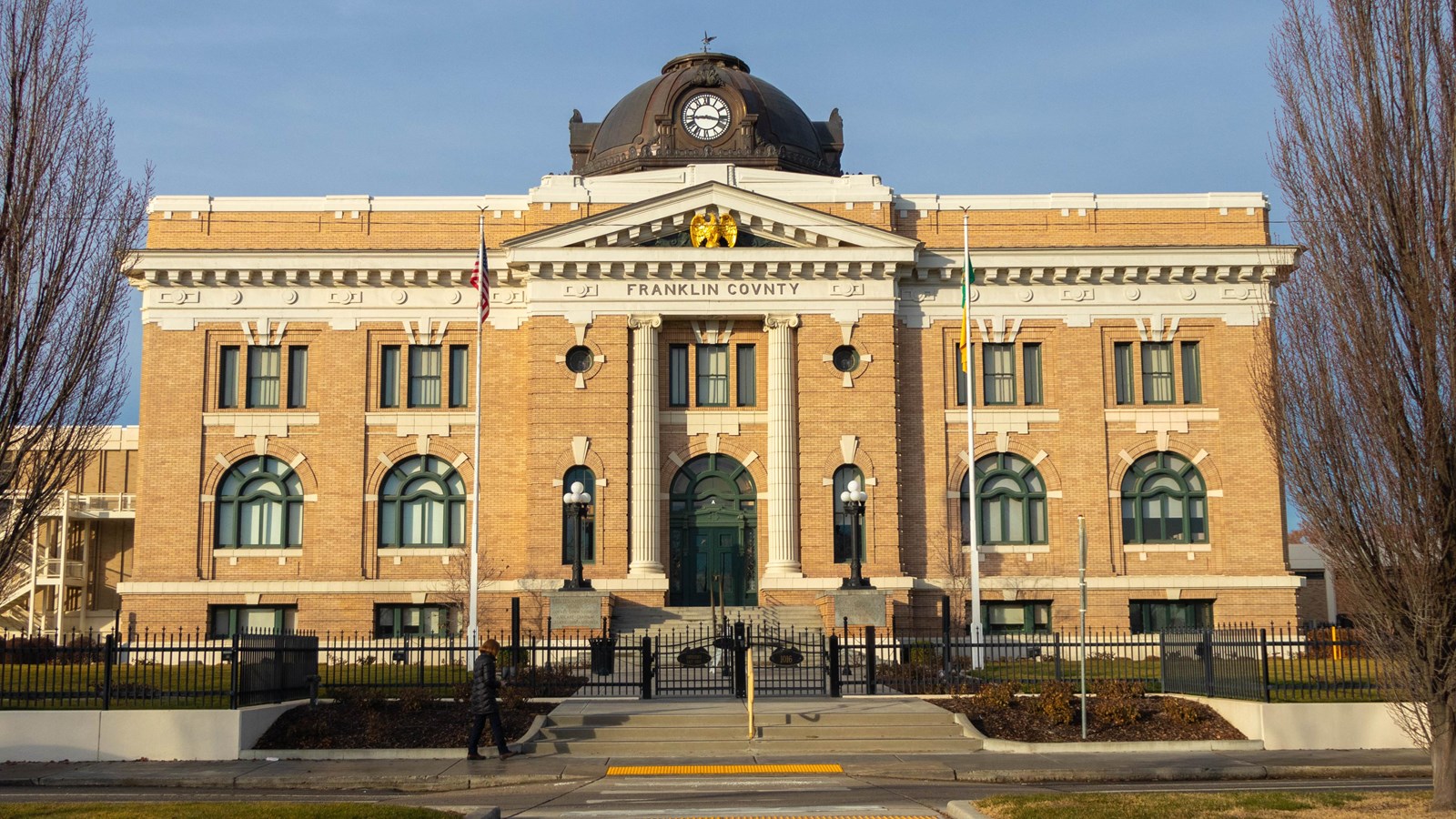
The Franklin County Courthouse was constructed in 1912-1913 when Pasco’s population was about 2,500 people. This $82,000 structure, a very expensive building for the time demonstrated local officials’ belief that even as railroad construction was over, Pasco would continue to grow and prosper as a transportation, agriculture, and shipping hub. The 1907 locomotive located across the street from the courthouse in Volunteer Park speaks to this local aspiration.
While the railroad and agriculture sustained Pasco’s businesses and people in the early 1900s, World War II really spurred massive local population increases. Naval Air Station Pasco, a major training facility and defensive air base, constructed in 1942, brought approximately 4,000 airmen to Pasco. Big Pasco, one of the largest military freight depots in the United States, constructed in 1942, brought additional workers and military personnel to Pasco. The Manhattan Project’s Hanford Site, which began construction in 1943, used Pasco as the receiving site for the workers, equipment, and building materials who arrived by rail.
Continue Your Journey
Nearby are numerous sites where you can learn more about life in the Pasco during World War II. Big Pasco was the site of a major logistics and transportation hub for the wartime US military. During the Manhattan Project racist policies effectively segregated the Tri-Cities. In East Pasco you can visit Kurtzman Park, a local recreation area created by the local community to serve their needs, and Morningstar Baptist Church, the center of the African American community in Pasco.
Ainsworth was the base of railroad operations for the Northern Pacific Railroad during construction of a railroad bridge across the Snake River. After the bridge’s completion, the Northern Pacific decided to relocate its local facilities and founded the town of Pasco to serve as a construction, freight, and repair hub.
Pasco’s first residents included Chinese Americans who worked for the railroad. As Pasco developed, more Chinese railroad workers moved to the community and a Chinatown rapidly developed between the railroad tracks and Clark Street featuring businesses that catered to the needs of this overwhelmingly male, Chinese community. In the 1880s, the Northern Pacific paid Chinese workers about half of what White workers earned, contributing to racial tensions in the new town.
The Franklin County Courthouse was constructed in 1912-1913 when Pasco’s population was about 2,500 people. This $82,000 structure, a very expensive building for the time demonstrated local officials’ belief that even as railroad construction was over, Pasco would continue to grow and prosper as a transportation, agriculture, and shipping hub. The 1907 locomotive located across the street from the courthouse in Volunteer Park speaks to this local aspiration.
While the railroad and agriculture sustained Pasco’s businesses and people in the early 1900s, World War II really spurred massive local population increases. Naval Air Station Pasco, a major training facility and defensive air base, constructed in 1942, brought approximately 4,000 airmen to Pasco. Big Pasco, one of the largest military freight depots in the United States, constructed in 1942, brought additional workers and military personnel to Pasco. The Manhattan Project’s Hanford Site, which began construction in 1943, used Pasco as the receiving site for the workers, equipment, and building materials who arrived by rail.
Continue Your Journey
Nearby are numerous sites where you can learn more about life in the Pasco during World War II. Big Pasco was the site of a major logistics and transportation hub for the wartime US military. During the Manhattan Project racist policies effectively segregated the Tri-Cities. In East Pasco you can visit Kurtzman Park, a local recreation area created by the local community to serve their needs, and Morningstar Baptist Church, the center of the African American community in Pasco.