



Last updated: June 9, 2026
Place
Beaver Marsh Viewing Platform
© J.J. Prekop, Jr.
Quick Facts
Location:
Park at Ira Trailhead, 3801 Riverview Road, Peninsula, Ohio 44264. Turn left and walk north on the Towpath Trail.
Significance:
Cuyahoga Valley National Park protects more than 1,500 wetlands. The 70-acre Beaver Marsh is among the healthiest due to its size and complexity. This is particularly important because Ohio has lost over 90% of its original wetlands.
Designation:
Ohio and Erie Canal District; Ohio and Erie Canalway National Heritage Area; Ohio to Erie Trail; Lake Erie Birding Trail; Industrial Heartland Trail Network
Amenities
7 listed
Accessible Sites, Audio Description, Benches/Seating, Historical/Interpretive Information/Exhibits, Scenic View/Photo Spot, Tactile Exhibit, Wheelchair Accessible
The 70-acre Beaver Marsh is among the healthiest of the park’s more than 1,500 wetlands. Visitors can explore it from the Ohio & Erie Canal Towpath Trail, which includes a boardwalk through the marsh.
The marsh’s transformation is an iconic story of nature’s recovery in the Cuyahoga Valley. Before park establishment in 1974, an auto salvage yard and private homes occupied the land that is now the Beaver Marsh. In the early 1980s, the park and volunteers from the Sierra Club worked to clean the area. At about the same time, beavers started returning to the valley after a 150-year absence. Beavers built a system of dams to hold water in the marsh. It includes a dam across the Ohio & Erie Canal, as well as walls of mud and sticks surrounding the deepest water along the boardwalk.
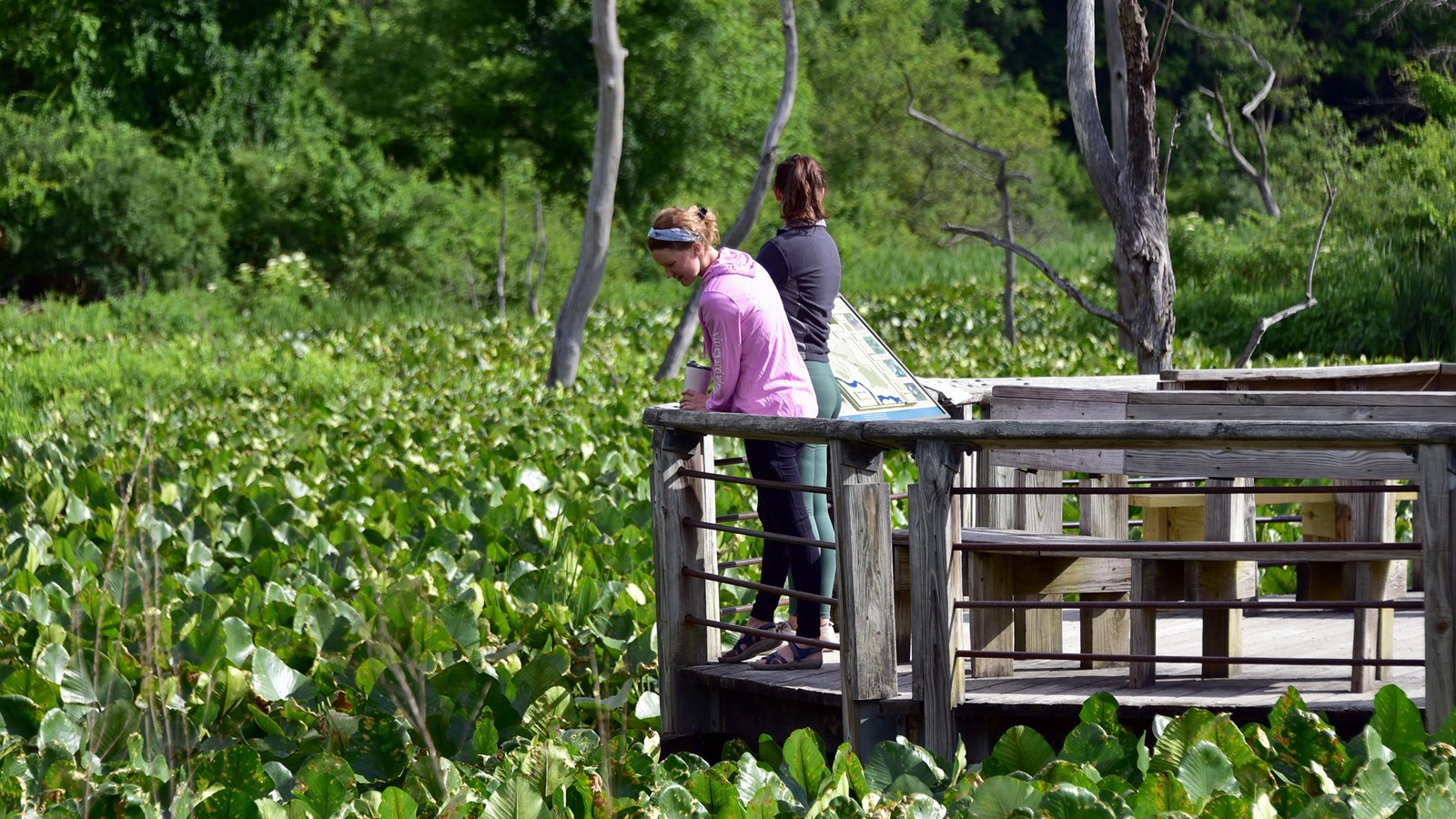
A viewing platform lets visitors look west over the marsh. Here, an exhibit helps you view and appreciate the different plant communities that make up the wetlands. The Beaver Marsh gains its water from three sources: groundwater seeps up, rain and snow fall from above, and streams and the river flow in.
Subtle differences in water chemistry and soils favor different kinds of plants. A tactile map reveals how Beaver Marsh is made up of four major plant communities.
A second exhibit helps you to identify and observe common reptiles and amphibians that live at Beaver Marsh. Amphibian populations are indicators of overall environmental health. The panel features a flipbook and a tactile model of a painted turtle.
The marsh’s transformation is an iconic story of nature’s recovery in the Cuyahoga Valley. Before park establishment in 1974, an auto salvage yard and private homes occupied the land that is now the Beaver Marsh. In the early 1980s, the park and volunteers from the Sierra Club worked to clean the area. At about the same time, beavers started returning to the valley after a 150-year absence. Beavers built a system of dams to hold water in the marsh. It includes a dam across the Ohio & Erie Canal, as well as walls of mud and sticks surrounding the deepest water along the boardwalk.
A viewing platform lets visitors look west over the marsh. Here, an exhibit helps you view and appreciate the different plant communities that make up the wetlands. The Beaver Marsh gains its water from three sources: groundwater seeps up, rain and snow fall from above, and streams and the river flow in.
Subtle differences in water chemistry and soils favor different kinds of plants. A tactile map reveals how Beaver Marsh is made up of four major plant communities.
A second exhibit helps you to identify and observe common reptiles and amphibians that live at Beaver Marsh. Amphibian populations are indicators of overall environmental health. The panel features a flipbook and a tactile model of a painted turtle.