An official website of the United States government
Here's how you know
Official websites use .gov A
.gov website belongs to an official government
organization in the United States.
Secure .gov websites use HTTPS A
lock (
) or https:// means you've safely connected to
the .gov website. Share sensitive information only on official,
secure websites.
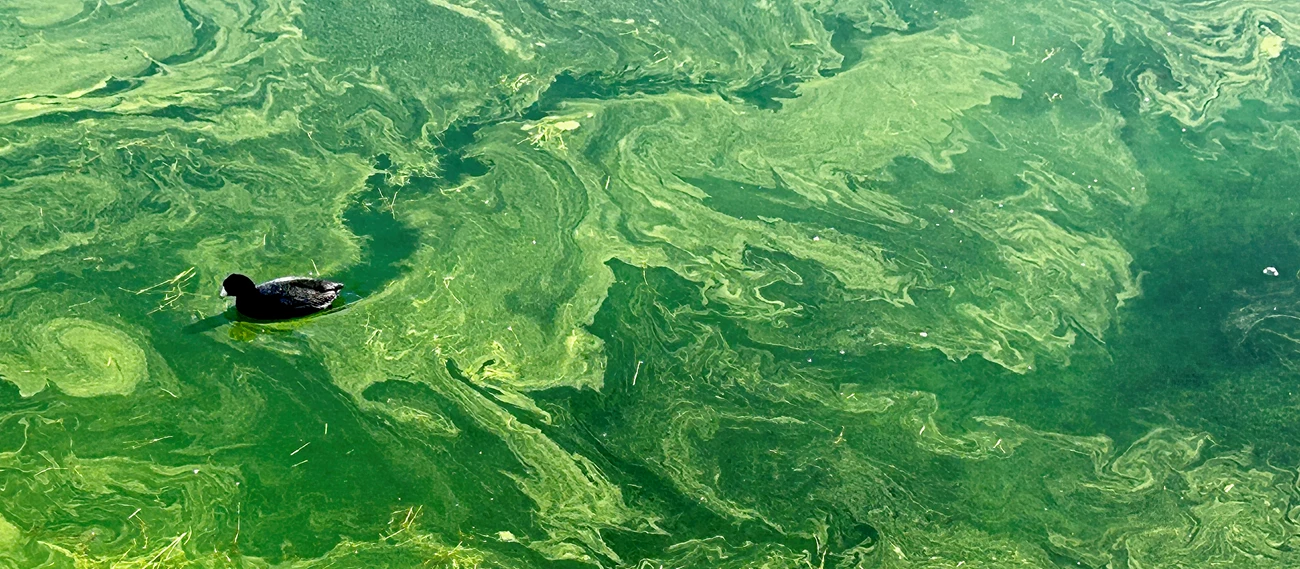
A coot swims through the bright green of a potentially harmful algae bloom along the shoreline of Lake Mohave.
NPS
Blue-green algae cells under a microscope.
NPS
Harmful Algae Bloom Advisory
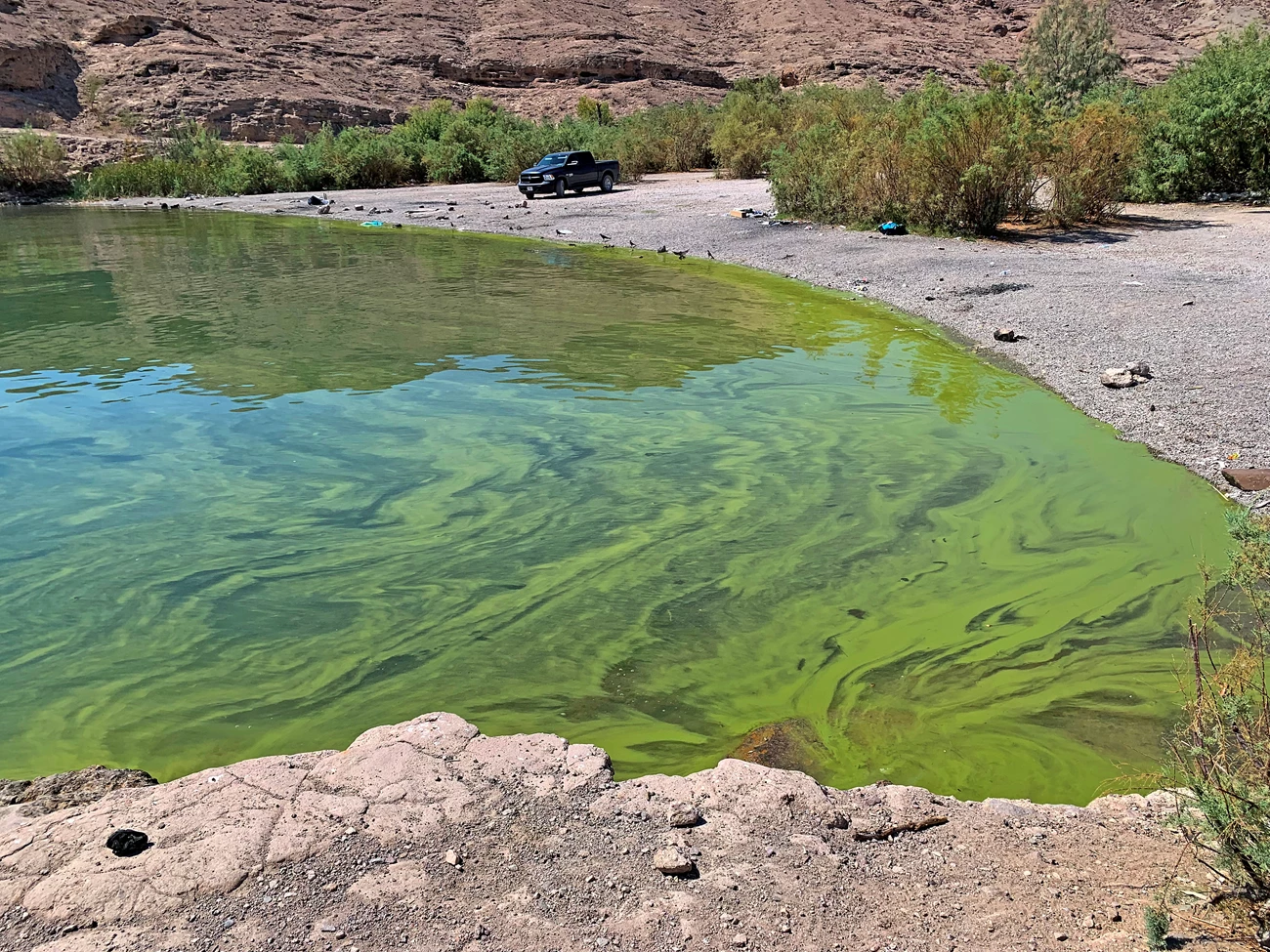
The water shown above contains a harmful algae bloom (HAB) and is unsafe. Avoid contact with water where this blue-green algae is present. It floats on the water like oil. Aquatic plants that grow from the lake bottom are not harmful.
Reporting a HAB to the Park
The park does intermittent monitoring for HABs but the algae blooms can die off or move around with the wind and disappear. Because of this, rangers rely on the public to notify the park if they see a suspected HAB.
If you think you see a HAB, take a photo that shows the beach and landscape in the background, a closeup of the suspected HAB, the location (for example "Nelson Landing") and GPS coordinates if able, to LAKE_information@nps.gov.
Health Risks to People
HABs can produce toxins that cause illness. Symptoms after exposure may include nausea, vomiting, digestive issues, breathing problems, seizures, or unexplained illness. Children are at higher risk due to accidental ingestion of water. Seek medical attention if symptoms occur after exposure.
Health Risks to Animals
Dogs and other animals can become seriously ill or die from ingesting water with HAB toxins. Keep pets on a leash and away from affected water. Seek veterinary care immediately if animals show signs of illness after exposure.
Microcystis cells floating on the lake creating cloud-like patterns.
NPS
Boating
Avoid areas where algae is visible on the surface. Spray from boat motors can contain inhalable toxins.
Fishing
Rinse fish with clean water at a fish cleaning station before consuming.
Seasonality
HABs are most common from August through December but can occur at other times when conditions are favorable.
NPS
About Microcystis
The species most often responsible for HABs here is Microcystis, a blue-green cyanobacteria that can produce toxins harmful to the liver and other organs if ingested. Calm, warm, sunny conditions allow this bacteria to concentrate in coves and form a bright green scum floating on the water surface.