



News Release
NPS Photo/J.Wei
News Release Date: March 18, 2026
Contact:
HAVO Public Affairs
HAWAII NATIONAL PARK, Hawaiʻi – Hawaiʻi Volcanoes National Park reopened some sections Wednesday morning, March 18, but other areas remain closed until further notice due to major storm and volcanic impacts.
Visitors should be prepared for more rain, drive carefully and watch out for brush and tephra on roads and trails.
The following areas are open:
- Crater Rim Drive West from the park entrance to Kilauea Military Camp
- The Welcome Center
- Volcano House, Volcano Art Center Gallery and parts of Kilauea Military Camp
- Crater Rim Drive East and destinations like Devastation, Puʻupuaʻi and Keanakākoʻi
- Nāhuku lava tube but the lights are out (bring a flashlight and be aware of the low ceiling)
- Kīlauea Iki Overlook and Trail
- Chain of Craters Road to the coast
- Hilina Pali Road
- Mauna Loa Road about a mile up to the first cattleguard
- Kīpukapuaulu
- Tree Molds
- Most backcountry areas not including Mauna Loa summit or Red Hill
- Kahuku Unit is open Thursdays through Sundays from 8 a.m. to 4 p.m. The road above the cross fence is closed, and 4WD is required on the road above Upper Palm Trailhead.
- Mauna Loa Road beyond the first cattleguard (about one mile of road is open)
- Mauna Loa Summit, Mauna Loa Trail, Red Hill Cabin and Puʻuʻulaʻula
- Crater Rim Drive West beyond Kilauea Military Camp to Uēkahuna, including bicycles and pedestrians
- Crater Rim Trail beyond Kilauea Military Camp to Uēkahuna
- Nāmakanipaio Campground and trail to Uēkahuna
- Escape Road from Highway 11 to Nāhuku lava tube
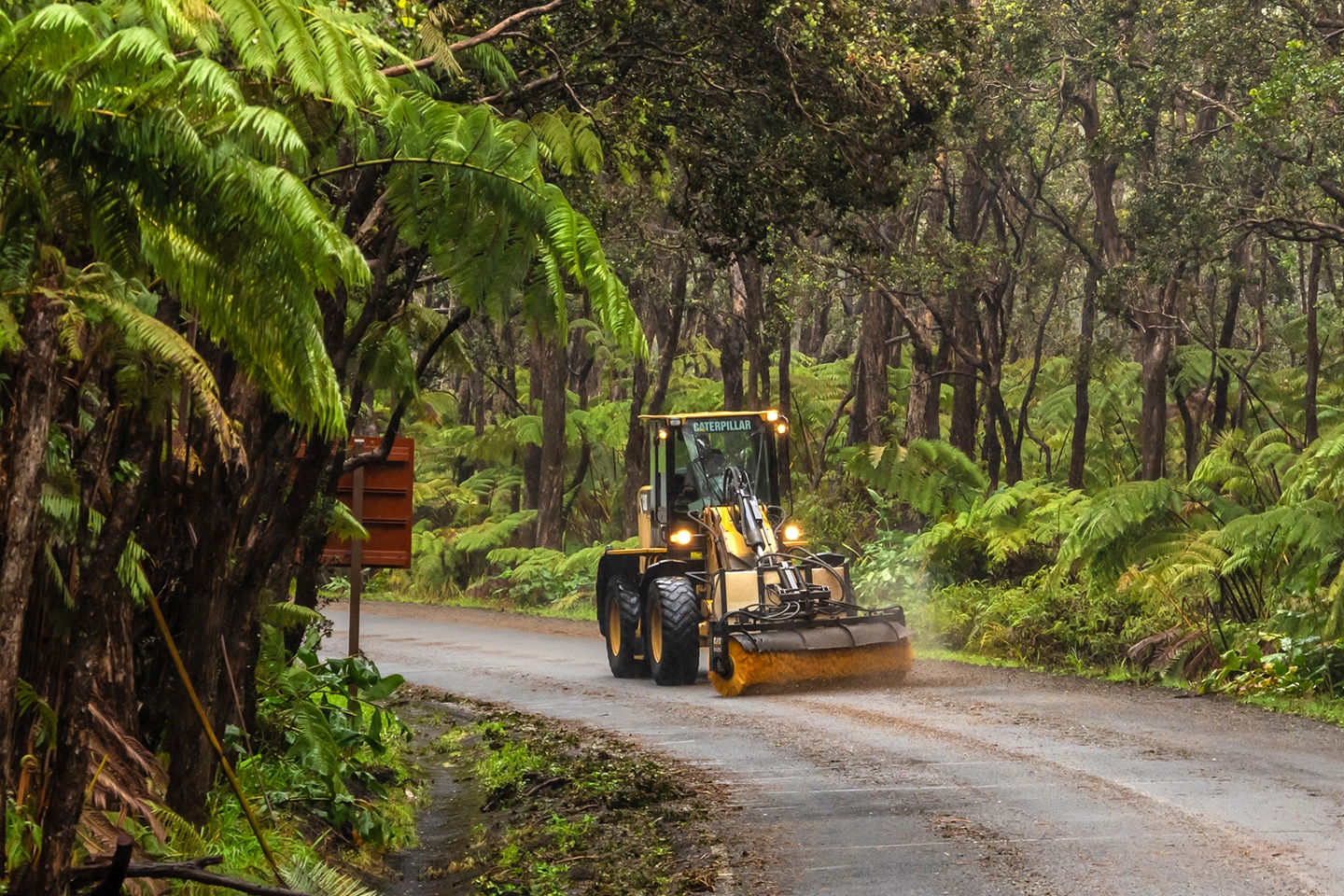
Heavy rain and destructive winds from the powerful March 14 weekend storm knocked down trees and power lines and caused flooding and other damage in Hawaiʻi Volcanoes National Park. Park staff have cleared roads, overlooks and trails from storm debris and will reopen additional areas when assessments are complete and it is safe to do so.
Park staff also continue to clear roads and overlooks blanketed by volcanic rock and ash fallout from the eruption on March 10. Lava fountains from episode 43 reached as high as 1,770 feet (540 meters) high and tephra fallout was widespread at the summit. Kīlauea Overlook and Uēkahuna received the most fallout and are closed.
Check the park website for updates: www.nps.gov/hawaiivolcanoes.
###
About the National Park Service. Established in 1916, the National Park Service preserves America’s most treasured natural and cultural places for the enjoyment, education and inspiration of current and future generations. Learn more at nps.gov.
Last updated: March 26, 2026