



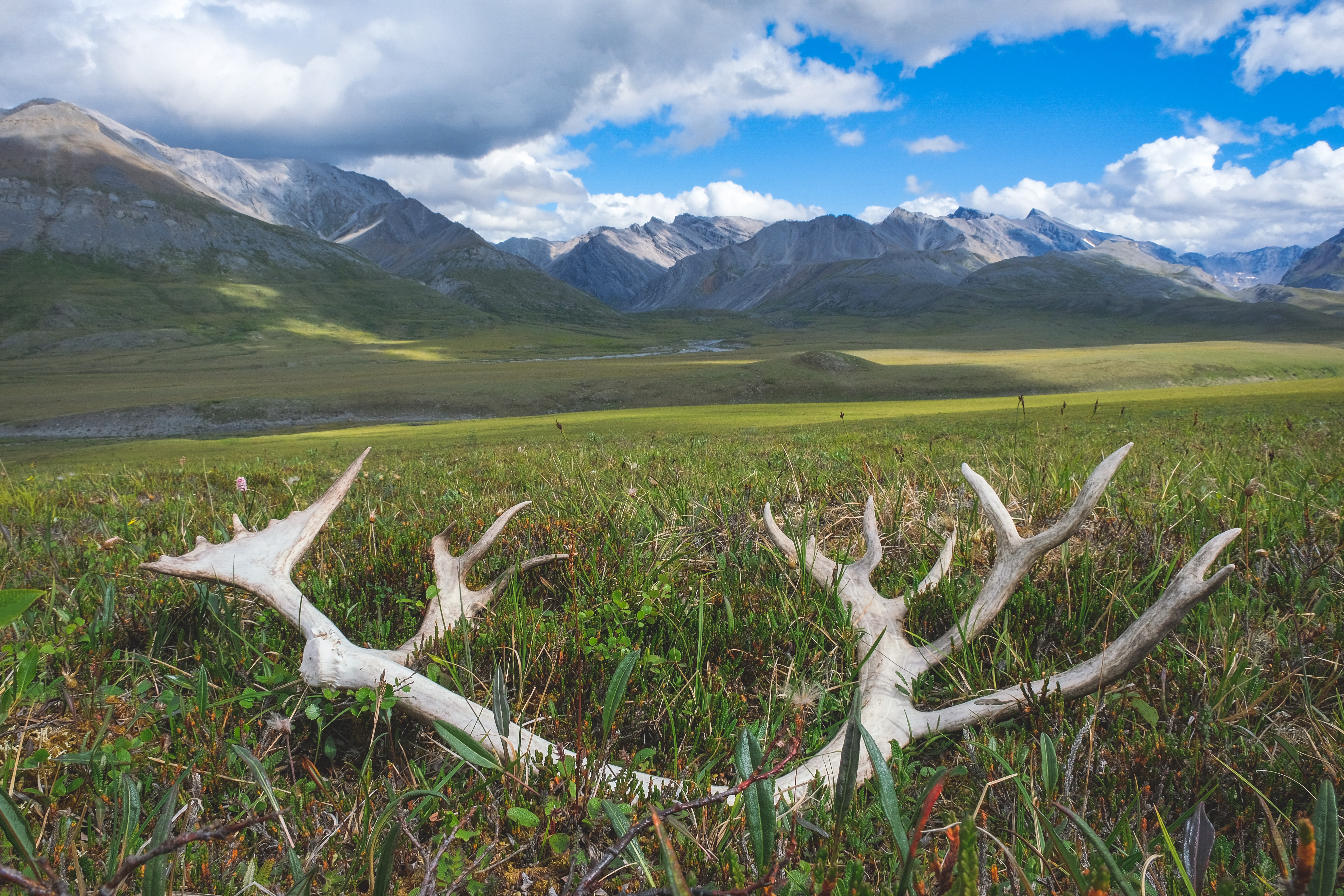
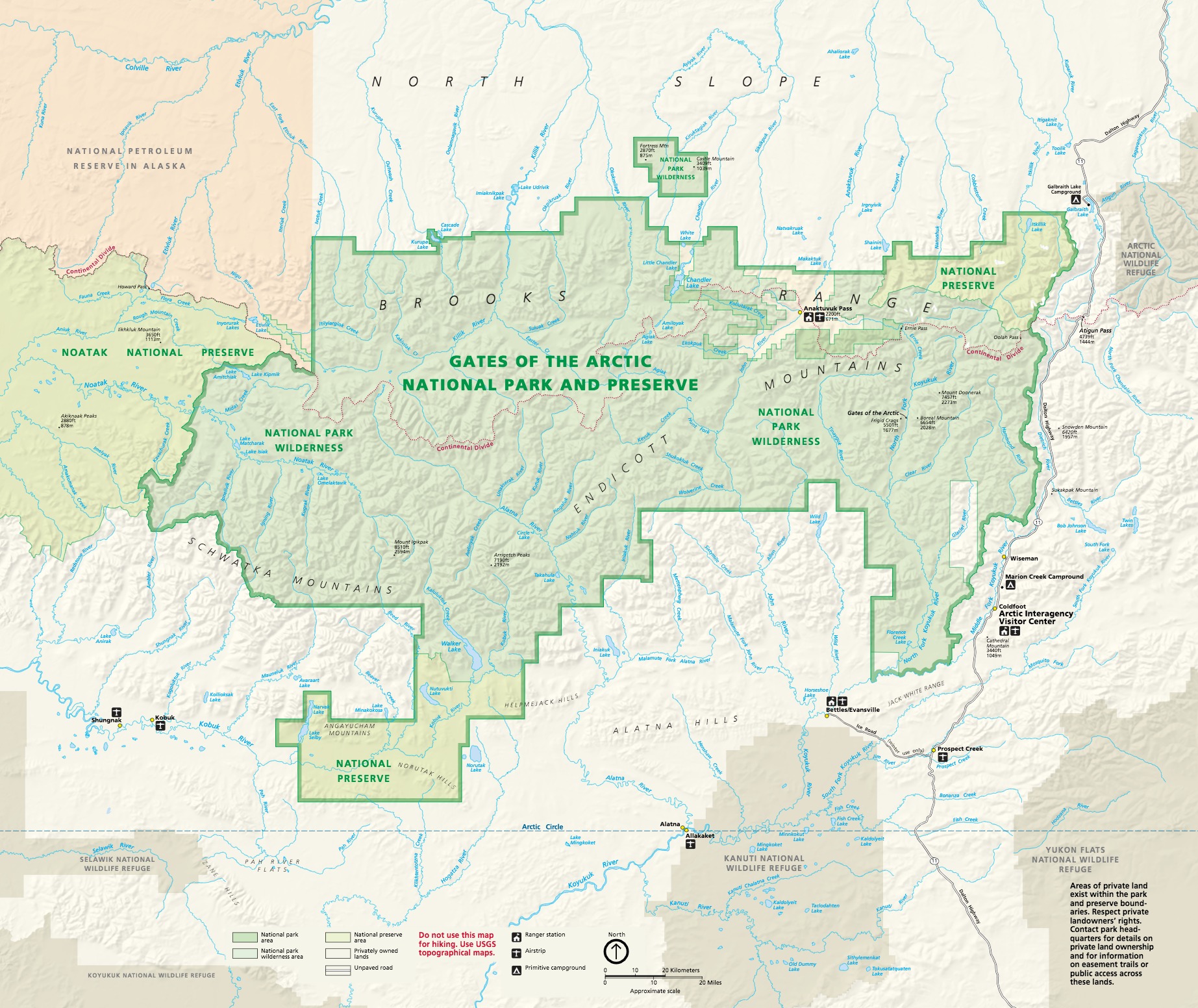
NPS/Josh Spice In the wilderness of Gates of the Arctic, people and nature weave a story of mutual existence. For more than 12,000 years Alaska Native people have been an integral component of the larger landscape; it’s a place where Alaska Native People call home, living as a part of wilderness. This wilderness has traces of semi-nomdadic people that lived, hunted, and traveled in the Brooks Range. Spiritual ties to the land are still interwoven among Alaska Natives, while residents and visitors find deep meaning and connection. Visitors get the opportunity to follow in the footsteps of Robert Marshall, to stand at the “Gates” where Marshall had a revelatory experience that forever influenced the development of wilderness preservation ideals in America. Here, located completely north of the Arctic Circle, the park’s natural arctic ecosystem is functional and intact. Within the park boundary is the central Brooks Range, boreal forests, huge expanses of tundra, and six designated Wild Rivers. Wandering through the rugged landscape are significant predator/prey populations, caribou migration corridors, migratory bird and fish species, and a substantial population of Dall’s sheep. The vast, endless landscape is scoured yearly by extreme seasons where, in the words of noted wilderness philosopher Ray Bane, “winter is the reality, summer is just a lie.” Existing in this harsh, wild indifference teaches us humility and the need for restraint, and serves as a reminder of what it means to be human. In Gates of the Arctic, humans and nature continue to weave a story of mutual existence. Creating the Gates of the Arctic WildernessIn 1978 President Jimmy Carter set aside 8.22 million acres of diverse arctic ecosystems as a national monument. Two years later, the Alaska National Interest Lands Conservation Act (ANILCA) was signed into law, creating Gates of the Arctic National Park and Preserve, totalling of over 8.4 million acres. Gates of the Arctic contains 7,167,192 million acres of designated wilderness and much of the remaining lands are eligible for future designation and still have outstanding wilderness characteristics and values. When combined with the wilderness of Noatak National Preserve, this area equals 12,743,329 acres and comprises the largest contiguous wilderness in the National Park Service system. The ANILCA legislation effectively established the largest expanses of wilderness this country had ever seen. This historic legislation set new visions for wilderness stewardship on a scale largely defined by the preservation of ecological and cultural integrity. 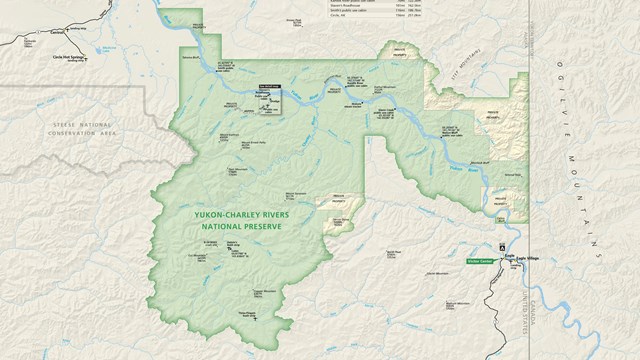
View Yukon-Charley Rivers Maps
View maps of Yukon-Charley Rivers 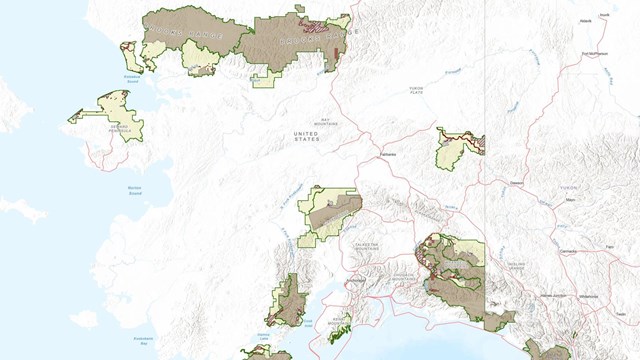
Alaska NPS Wilderness Boundaries Map
View the Alaska NPS Wilderness Boundaries Map 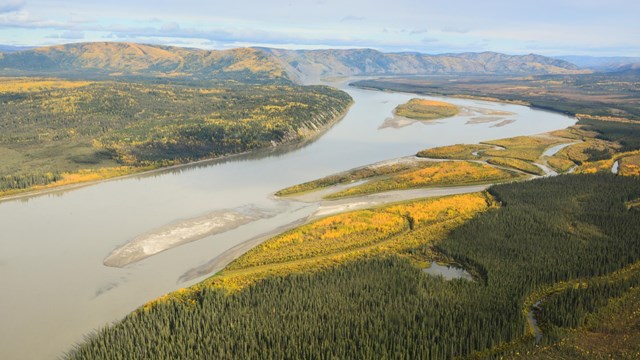
What is Yukon-Charley Rivers?
Learn about Yukon-Charley Rivers Related Gates of the Arctic Wilderness Content |

Last updated: February 26, 2026