



News Release
You are viewing ARCHIVED content
This content was published online before January 20, 2025. Please note that this content is NOT UPDATED, and links may not work. For current information, visit https://www.nps.gov/aboutus/news/index.htm.
M. Brenner
News Release Date: November 9, 2020
Contact:
Carl Brenner, 620-223-0310
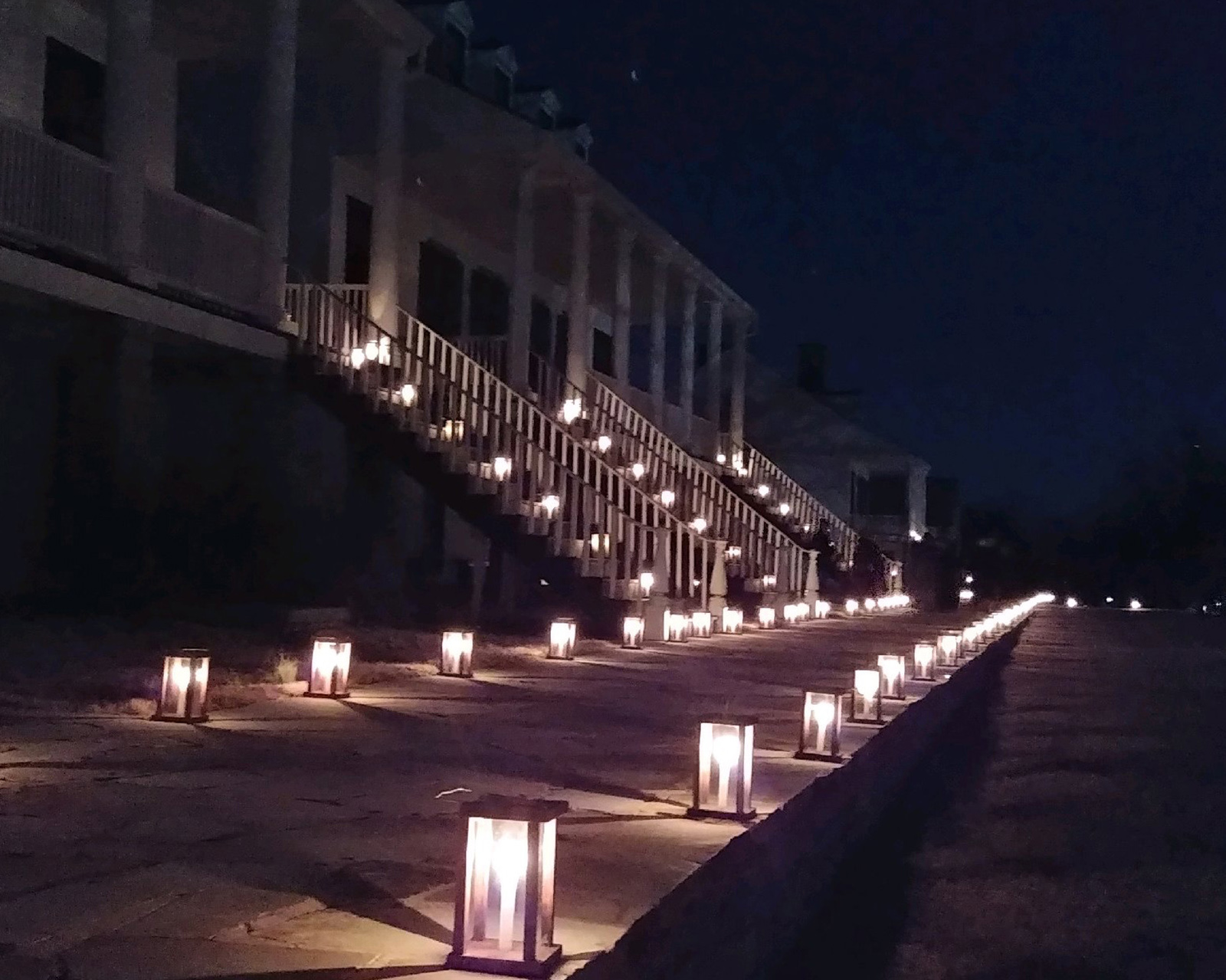
This year’s virtual tour will share images of the traditional 1,000 candle lanterns around the parade ground and will feature six stops exploring 1840s health and safety, law and order, and equal treatment. Was there equality between officers, enlisted soldiers, and even, their horses?
1840s soldiers at Fort Scott lived in isolation because of being distant from towns, other outposts, families, and friends. They also faced inequality because Officers were paid more and had nicer, more spacious, living quarters. If officers were sick, they could be treated in their quarters and if in trouble, they were subject to house arrest. Enlisted soldiers were paid a fraction of an officer’s salary, and they shared bunks in a room with 25 other soldiers. If they were sick, they were treated at the hospital in an open group setting and if in trouble they were sent to a cell in the guardhouse. Both also enjoyed the holidays differently.
Fort Scott was an active military post from 1842-1853, which was a time of rapid growth and change in the country. As Fort Scott was being built, the nation grew west. With this growth, Fort Scott changed, the mission of its soldiers changed, the environment changed, and the nation changed. However, the soldiers at Fort Scott continued to serve faithfully, despite the constant change.
Fort Scott National Historic Site hopes you enjoy our virtual Candlelight Tour as much as our other virtual events this year (all available on www.nps.gov/fosc) and we hope to see you in person for all of our on-site events in 2021.
Last updated: December 23, 2020