



Photo: L. Funaro
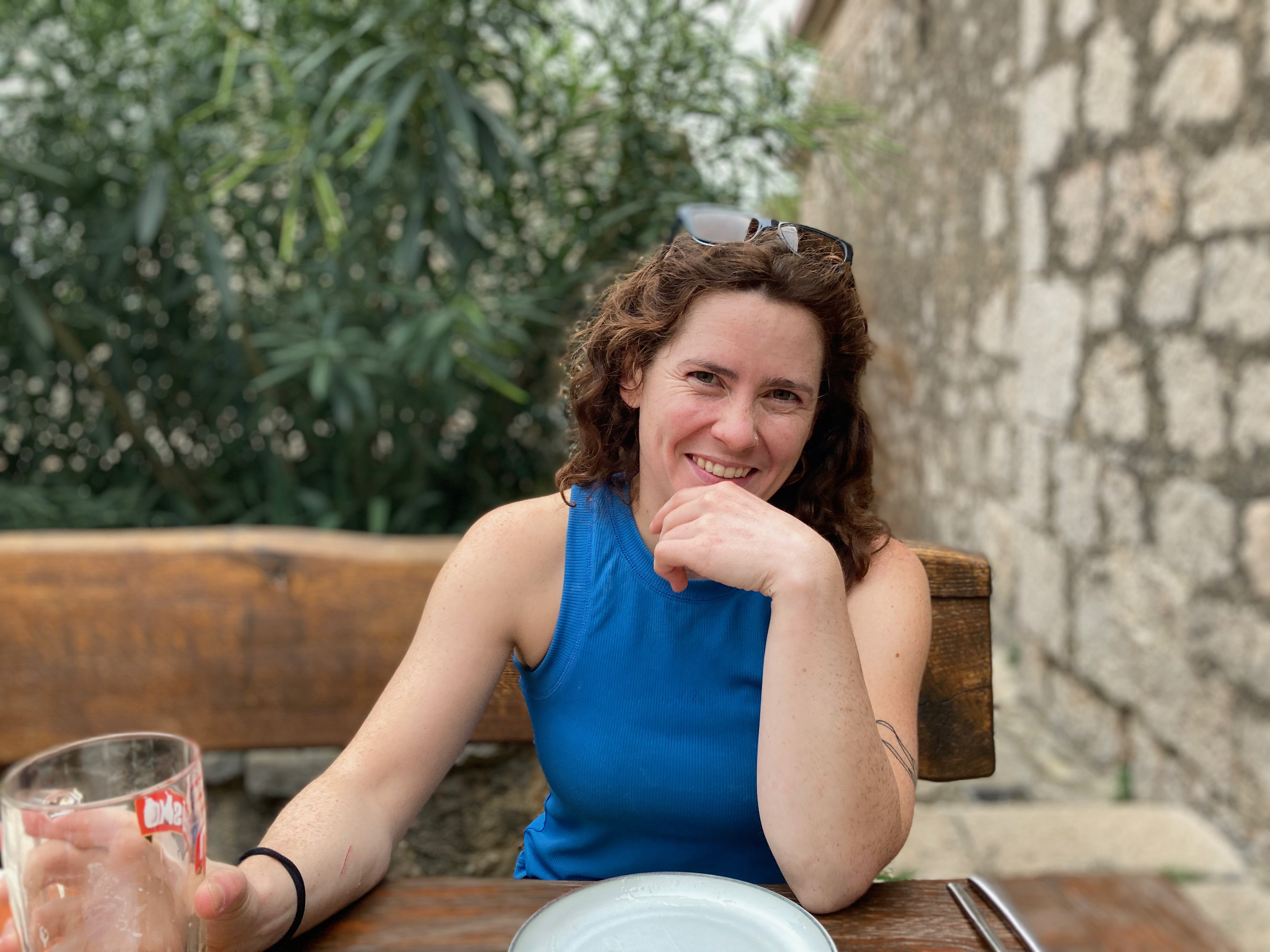
Mountaineering Ranger Robin Pendery died on June 4, 2026. She lost her life in a mountaineering accident while working a West Buttress patrol. This was her second season with the Park Service after guiding McKinley several times for Alpine Ascents. She had worked there since 2015, and also worked as an ER nurse when she was not working for the Park Service. Her career was marked by her service and dedication to others.
I was asked, recently, to sit down in a room with another ranger, and briefly come up with some things to say about Robin. It was for a condolence letter from the Park to her parents, and perspective from those of us who spent the most time with her seemed warranted.
Alan and I sat across from each other and started talking as the representative from the Incident Management Team started to write. Hard working.
Dedicated to the team. Exacting attention to details. Depth of knowledge from her training as a nurse. A huge smile; sharp sense of humor. All the adjectives that, if someone asked you to come up with a list of things you’d want in a coworker, would be on it.
As Alan and I volleyed back and forth and I realized that the rep was receiving way more information than she had asked for, I started to slow down and stopped piling on accolades, even though I didn’t want to. Alan and I could have gone on for quite some time, and it felt good to share things about our friend and colleague.
How do we capture who someone was when they leave us suddenly, unplanned, in an accident like this? Doing so in a few short sentences is so inadequate, and doing so thoroughly and well feels almost insurmountable as you don’t want to do your lost friend a disservice.
Unfortunately, the industry in which we operate sees a lot of death. One thing I have noticed every time someone dies like this, is that their absence in our lives is easier to understand than the fact that they are dead. Our team spends about five weeks training together at the beginning of the season, but then our time together becomes more fleeting and precious as we are assigned various patrols and head into the mountains to do our jobs. Some of us might only see each other a few times in passing from mid-April till the end of June. So right now, it feels as though Robin could just be on a long mountaineering patrol, and we will see her come waltzing through the door any day now to share news and stories from her trip. Curly red hair bouncing as she strides with purpose down the halls, bright laughter ringing like a bell in our gear bay. Her thoughtful and concise descriptions and answers when a more serious consideration of a topic was needed. Her pronunciation of the word “scenario.” I’d always pronounced it as “suh-nair-eo”. Robin said it in what struck me as a more British, serious and proper way: “suh-nahr-eo.” I know this well because Robin, in her push to always make our team better, came up with a bunch of medical scenarios and would run us through “Medical Monday,” when we had the time. It was just who she was. She saw a use for a bit of free time and used it to keep striving for excellence.
I sat on Robin’s interview panel in the fall of 2024. It was a remote interview, and I was sitting in my car in some parking lot, participating on my phone. Robin had volunteered for our program in June of 2024, and I had gotten to overlap with her at our 14,200’ camp for a week or so. A couple things stuck out to me from our time together. First, her quiet diligence and competence with patient care. We had quite a few more serious patients come through our camp at the same time and I remember feeling grateful for her incredibly organized efficiency. The other thing that struck me about Robin was that she was always surrounded by a crowd of friends. One of the things that I love about spending time at 14k’ on our patrols is that you get to see the same crowd year after year. Guides, climbers, friends always stop by to say hello and some of these people I don’t get to see at any other point in the year. Robin attracted a crowd to our camp and there was usually a pile of laughing people arranged in camp chairs in front of our comms tent while she was around.Interviewing her confirmed what I already knew, but it also sharpened the picture of her as someone who would make a great ranger. As soon as we finished, I immediately texted my supervisors Tucker and Joey, “I love her, please hire her.”
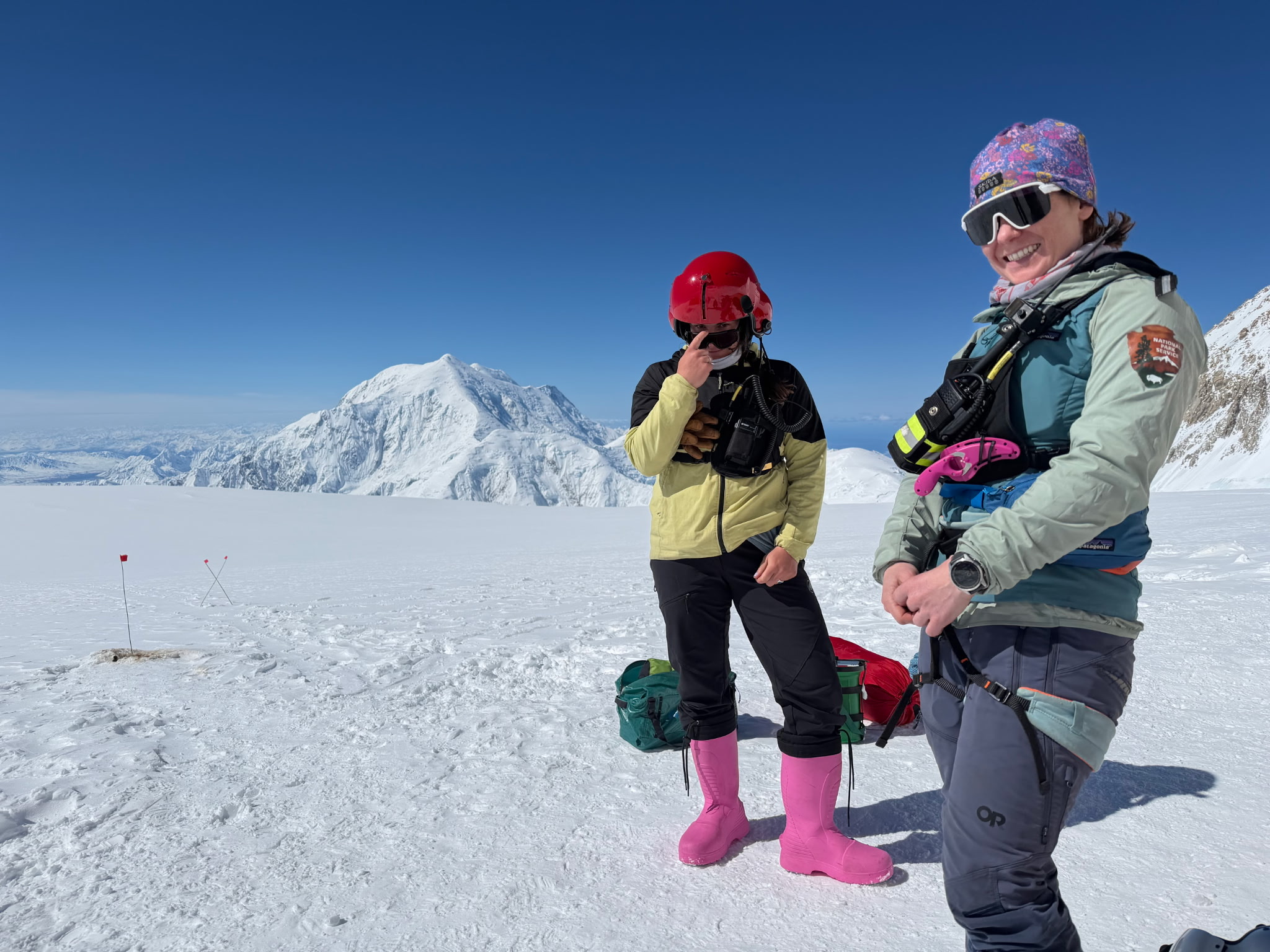
Rangers Chelsea Bomba (left) and Robin Pendery (right) preparing to receive the NPS helicopter at the 14,200’ camp. Photo: C. Dale
We did, and we were so lucky to have her. She dove headlong into the job when she started: confident in the technical skills she brought to the table, and acutely aware and willing to grapple with areas she needed to get better in. One of those was aviation, and it reminded me of myself when I joined our program in 2020: brand new, wide-eyed, and so excited to be working with helicopters. Helicopters are an amazing tool, one that is essential to the success of our program. And they are also just so fun. Watching Robin’s joy in flying was contagious.
My last interaction with Robin was on June 3. She was patrolling our 14,200’ camp and had managed a somewhat complicated rescue that involved short hauling four climbers from high camp back to 14k’, then evacuating three of them back to Talkeetna for medical care. Robin had flown with them as an attendant to hand them off to local EMS, and I got to watch her handoff and spend a few moments with her before she flew back into the field. With three patients, the scene was a bit of organized chaos. There were some things Robin did really well, and a few she could have done a little better. I was grateful for a few moments of quiet so that I could debrief with her and help her learn. Of course, Robin, with her characteristic self-awareness and thoughtfulness, already knew what feedback I was going to give her and summarized it succinctly to me. She wanted to be really good at this job and was constantly analyzing how to do it better. Yep, I said. That’s all I had for you. I’m excited to see what you do next time. I gave her a hug and watched her fly away.
The next day I was off of work. It had been a whirlwind of a week, with 16 evacuations in a nine-day period. It had also been quite heavy; four of these patients were fatalities. So, I was asleep when my supervisor Tucker called me. “Today is a bad day,” he said.
We are a team that exists, in large part, to handle other people’s bad days. Someone else’s bad day is just our job. Tucker telling me that we were having a bad day was an immediate indication that something had happened to one of our teammates.
The next few hours were a blur. I went into the office and sat witness as our team in the field did their job. It slowly was confirmed that this was a recovery, not a rescue, something that I knew deep down as soon as Tucker called me. Our team had to manage our coworker’s death just as we would manage anyone else’s. We have been trained to handle situations like this, we know what steps need to be taken in an emergency, and then we do the things that must be done. Our team did them again this time because we said that we would; it is our duty and there is no one else to do it. It turns out that it does not matter whether we are responding to a faceless member of the public or someone we know and love dearly; the job must be done.
We flew Robin home to Talkeetna the following day, June 5.
The aftermath of Robin’s death has been awful, confusing, exhausting. We all know that serious injury and death could be a consequence of our job; it is something we discuss every year in training. But the gap between verbalizing this fact and actually confronting it is wide and incomprehensible.
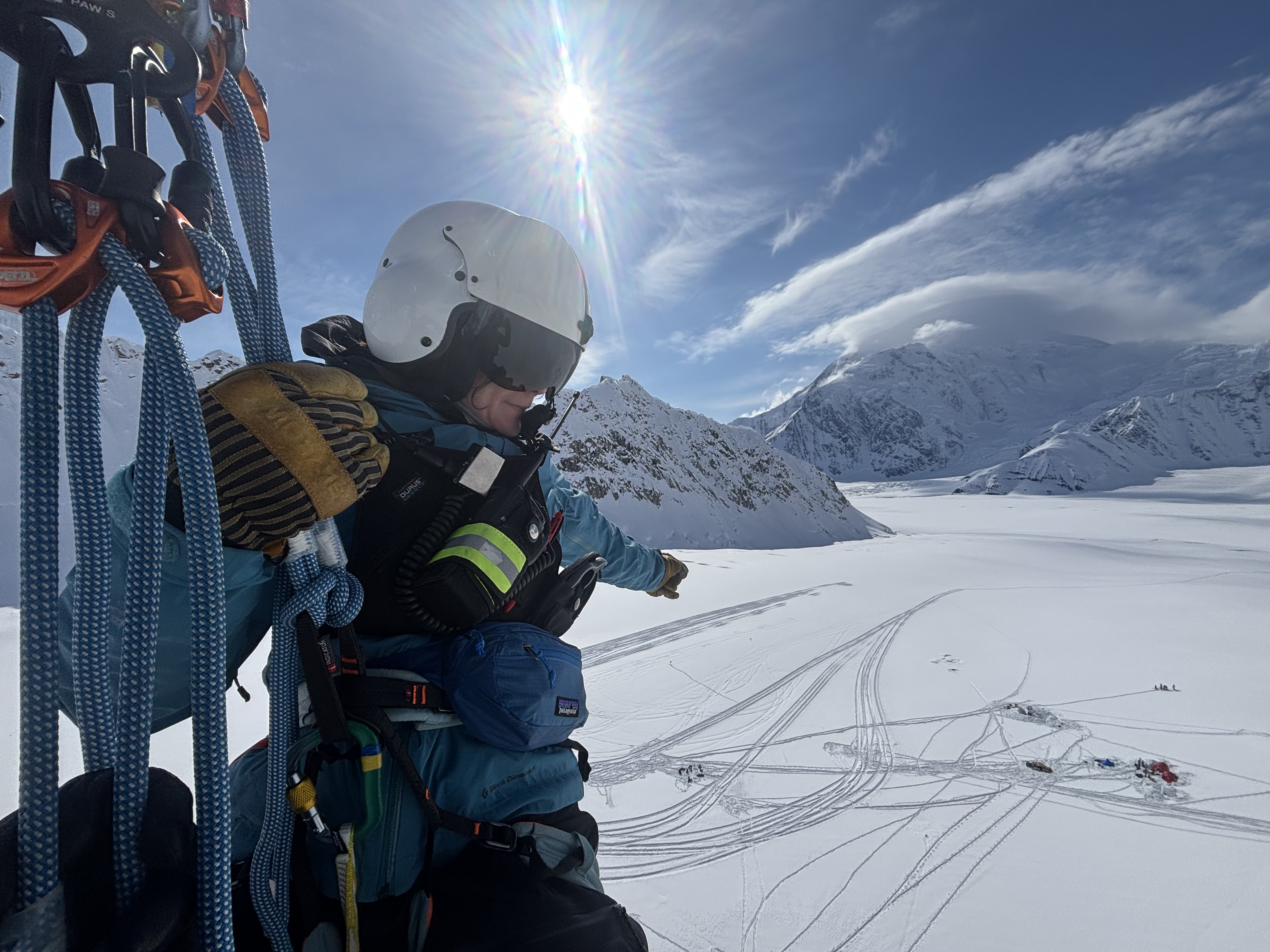
Robin during a short haul training in Kahiltna Basecamp. Photo: S. Barrier
The only positive of this event is that it has been an opportunity for an entire community of the people who love Robin to come together. I have seen now several times the beauty that comes when someone leaves us, from people coming together and actualizing the love that otherwise sits in between the members of a community unspoken. We should really speak it more often, unprompted by death.
People who knew and loved Robin have descended upon Talkeetna in the last week and a half. Her beautiful, sweet family; her dear and loving friends. We have all shared stories and memories of her and I hope that as the dust settles we do not stop. Whatever may happen to us when we die, I know that the most powerful way we live on is in how we have impacted other people, how we have changed their lives and the way that they see the world. I hope people continue to share how Robin did this for them for years to come.
As we organized and packed up Robin’s physical presence in the Ranger Station, we discovered a gift she had left that was so quintessentially her. In true Robin fashion, she had created a folder with all her important information, account logins, things that would make the lives of the people she loved easier if she were to die in exactly a case like this. It was just so Robin of her to have done something like this: she did not obsess over the inherent risks our job entailed, but she was practical, thoughtful, diligently organized. And if something did happen to her, she wanted to ease the aftermath in any way that she could for her family and friends.
There are lots of little reminders of her around the Ranger Station like this, thoughtful things to improve others’ lives. Her printed out medical scenarios, sitting on desks for people to learn from. A detailed step-by-step guide to one of our rope rescue exercises. Her name next to piles of gear, neatly organized and inventoried.But our bright, beautiful, and promising young ranger is gone and has left a huge hole in our lives here. And I don’t know what else to say about that.
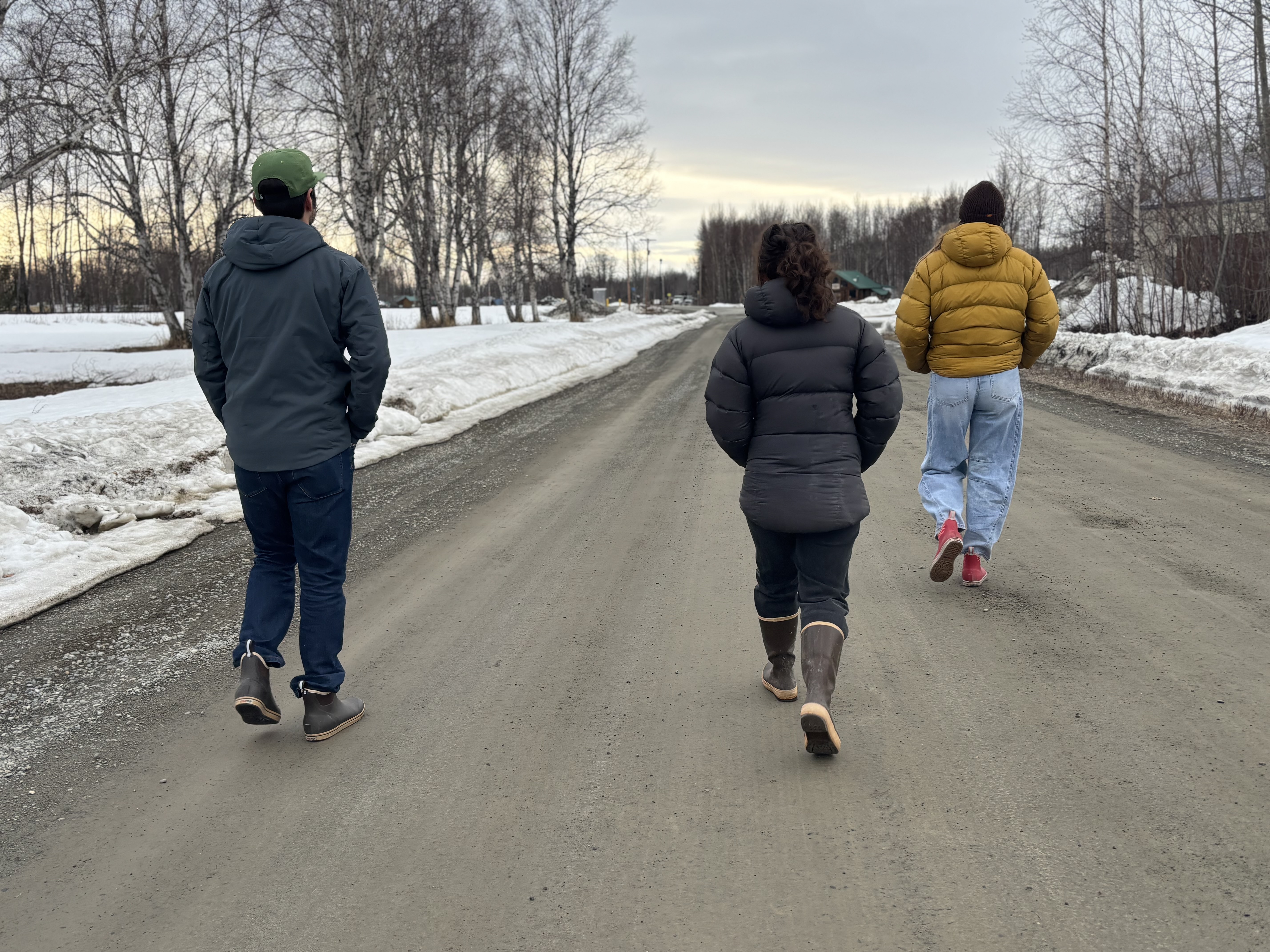
Robin (center) was small in stature and large in just about every other way. Photo: S. Barrier