



“12 Soldiers of the Revolution” is a multi‑part article series illuminating the extraordinary lives of twelve men whose courage helped shaped the American Revolution. These stories highlight the personal sacrifices and defining moments that collectively helped secure America’s independence during one of the most transformative eras in world history.
-
Article 1: Simon Knowles: A Legacy of Patriotism and Constancy
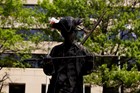
Simon Knowles of New Hampshire enlisted at age 15 and served throughout the eight years of the Revolutionary War. He took part in many pivotal battles while enduring the harsh conditions frequently faced by soldiers of the Continental Army. Read more
-
Article 2: Caesar Glover: A Legacy of Service and Resilience
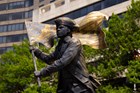
Caesar Glover was an African who was kidnapped into slavery as a child and taken to America, where he was sold. Still enslaved as an adult, he enlisted in the Continental Army. Glover served three years and obtained his freedom after the war. Read more
-
Article 3: Joseph Warren: The Sacrifice that Rallied a Nation
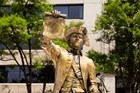
Dr. Joseph Warren, a Boston physician, was a top-ranking American officer in the American War for Independence but chose to fight as a private. His martyrdom galvanized the Patriot cause for the long hard struggle ahead. Read more
-
Article 4: Jude Hall: A Legacy of Courage, Sacrifice, and Enduring Freedom
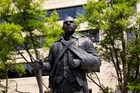
Jude Hall is one of the many black American soldiers who helped pave the way to the nation’s birth during the Revolutionary War. He served in the national Continental Army throughout its entire existence from 1775 to 1783. Read more
-
Article 5: John Peter Gabriel Muhlenberg: Preacher and Patriot
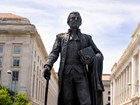
Rev. John Peter Gabriel Muhlenberg was a military general in the War for Independence. He fought in many major battles and helped win the battle of Yorktown. After the war, he was elected to the first Congress and helped pass the Bill of Rights. Read more
-
Article 6: James Lafayette: A Legacy of Courage and Espionage
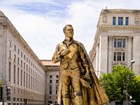
James Lafayette, an enslaved black American, was an American double agent and spy during the Revolutionary War. He provided intelligence that turned the tide at the Siege of Yorktown. After the war, the Virginia legislature granted James his freedom. Read more
-
Article 7: Samuel Whittemore: Courage Beyond Years
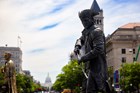
Samuel Whittemore, a 78-year-old farmer and veteran, singlehandedly fought British forces during the earliest moments of the Revolutionary War. The British shot and bayoneted Whittemore, leaving him for dead. But he recovered and lived to age 96. Read more
-
Article 8: Jack Sisson: A Legacy of Courage and Liberty
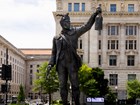
Jack Sisson was an enslaved black American from Rhode Island whose bold actions became a symbol of the sacrifice and spirit of the Patriots. He fought in the Battles of Rhode Island and Yorktown. After the war, he returned to Plymouth, Massachusetts. Read more
-
Article 9: James Caldwell: A Legacy of Faith and Fight
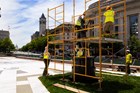
The Rev. James Caldwell is a hero whose faith, bravery, and sacrifice helped forge the United States. Known as the “Fighting Parson” (or clergyman) of New Jersey, his service during the American Revolution was a microcosm of the convergence of religious conviction and patriotic action. A Presbyterian minister, he took up military arms alongside his congregation. Read more
-
Article 10: Peter Salem: A Legacy of Courage and Freedom
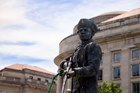
The statue of Peter Salem, erected in honor of the 250th anniversary of American independence, honors the patriotism and heroism demonstrated by this African American soldier at the Battle of Bunker Hill on June 17, 1775. Salem’s actions on the battlefield saved the lives of countless Americans and has inspired every generation since. Read more
-
Article 11: Naphtali Daggett: The Courageous Clergyman
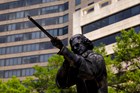
In 1779, as the American Revolution was in full stride, British troops marched into largely undefended New Haven, Connecticut, threatening both the local inhabitants as well as Yale College and its students. In an effort to give the people time to flee, Yale’s professor of divinity and former president, Dr. Naphtali Daggett, along with a few dozen brave defenders (many of whom were students), placed themselves between their town and the British. Read more
-
Article 12: Salem Poor: Patriot of Bunker Hill
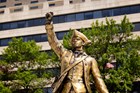
Born into slavery around 1742 in Andover, Massachusetts, Salem purchased his freedom in 1769. Six years later, he took up arms against British forces at the Battle of Bunker Hill, where his distinguished service prompted 14 separate officers to write the Massachusetts General Court heralding his extraordinary bravery. Read more
-
Article 13: Black Patriots: An Untold Story of the American Revolution
Black Patriots played a vital, often overlooked, role in the success of the American Revolution. The Daughters of the American Revolution estimates that 5,000 to 8,000 served the American cause as soldiers, sailors, teamsters, cooks, stewards, nurses, and camp followers. Read more
Tags:
freedom plaza