National Park Service LogoU.S. Department of the InteriorNational Park ServiceNational Park Service
National Park Service:  U.S. Department of the InteriorNational Park Service Arrowhead
Yosemite National ParkSnowy Half Dome
view map
text size:largestlargernormal
printer friendly
Yosemite National Park
History & Culture
 
Galen Clark sits beside a Yosemite lake

NPS Historic Photo Collection

“I have seen persons of emotional temperament stand with tearful eyes, spellbound and dumb with awe, as they got their first view of the Valley from Inspiration Point, overwhelmed in the sudden presence of the unspeakable, stupendous grandeur.”

– Galen Clark, guardian of the Yosemite Grant


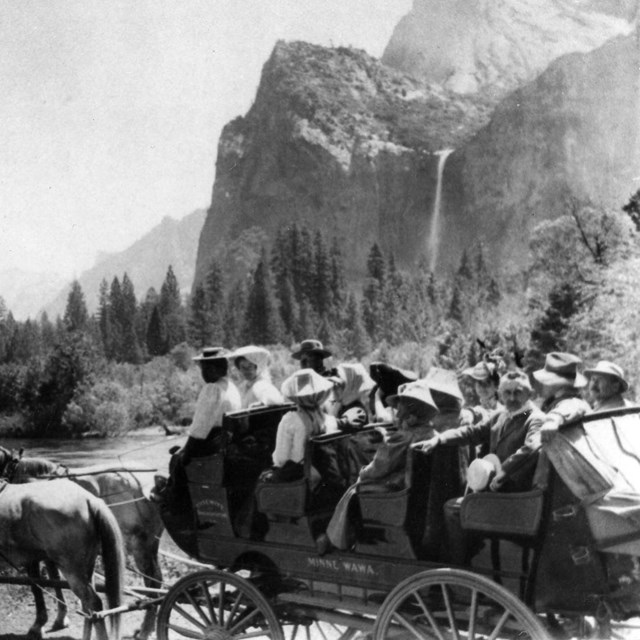
For tens of thousands of years, humans have changed, and have been changed by, this place we now call Yosemite. The Ahwahneechee lived here for generations, followed by the arrival of Europeans in the mid-1800s. The rugged terrain challenged many early travelers, with just a few—only 650 from the mid-1850s to mid-1860s—making the journey to Yosemite Valley by horseback or stagecoach. By 1907, construction of the Yosemite Valley Railroad from Merced to El Portal eased the journey, thereby, increasing visitation. Today, 3.5 million people enter the park’s gates to explore. We learn from the stories of those who walked Yosemite’s trails before us, allowing appreciation of their lasting footprints that led to conscious preservation.

 
Female ranger riding horseback

In 1918, Yosemite's Claire Marie Hodges became the first female park ranger in the National Park Service.

People: Seven present-day tribes descend from the people who first called this area home. As Europeans arrived in the mid-1800s, violent disruption ensued that displaced the native populations. Early white settlers arrived and hosted writers, artists, and photographers who spread the fame of "the Incomparable Valley" throughout the world.   

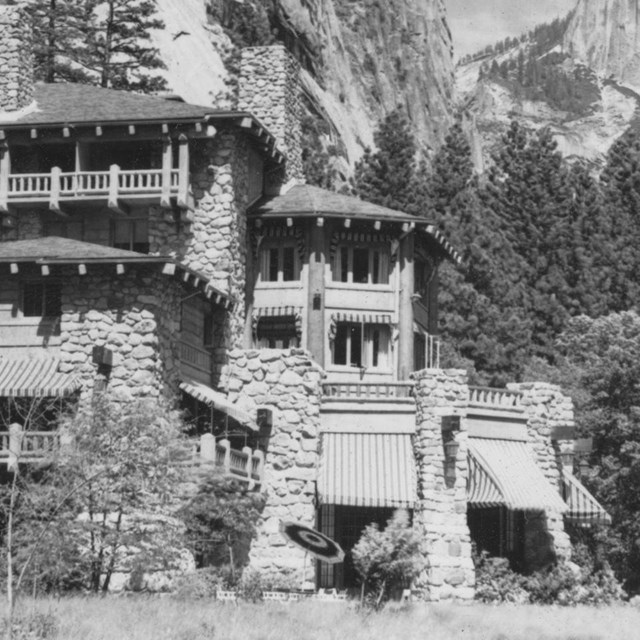
Places: Within Yosemite’s history, various cultures abounded that left a mark. Historic mining sites remain from miners who came to the Sierra to seek their fortune in gold. Early lodging establishments, like the Wawona Hotel, offered a more primitive setting for the Valley’s first tourists and today's visitors, and more elegant lodging, like The Ahwahnee, was added to satisfy those looking for comfort.

Stories: History books detail the Mariposa Battalion entering Yosemite Valley in 1851 to remove the Ahwahneechee. As Euro-American settlement occurred, people arrived on foot, on horseback and by rail to rustic hotels. Parts of the landscape were exploited, spurring conservationists to appeal for protections. President Abraham Lincoln signed an 1864 bill granting Yosemite Valley and the Mariposa Grove to the State of California. John Muir helped spark the creation of Yosemite National Park in 1890.

Collections: Yosemite’s resources fill a flourishing museum collection of more than 4 million items. The museum maintains a research library with some 10,000 books relevant to Yosemite, as well as photographs and articles. And, recently, an oral history project has collected interviews of people's park stories, events, and experiences that captures eye-witness evidence of the past.

Preservation: Archeological and architectural recognition honor Yosemite's past. Archeologists systematically study the things left behind to uncover clues about historic cultures, economic systems, settlement patterns, demography, and social organizations. Architects make note of the National Park Service Rustic Style of many Yosemite structures representing the belief that buildings should blend in with natural surroundings.

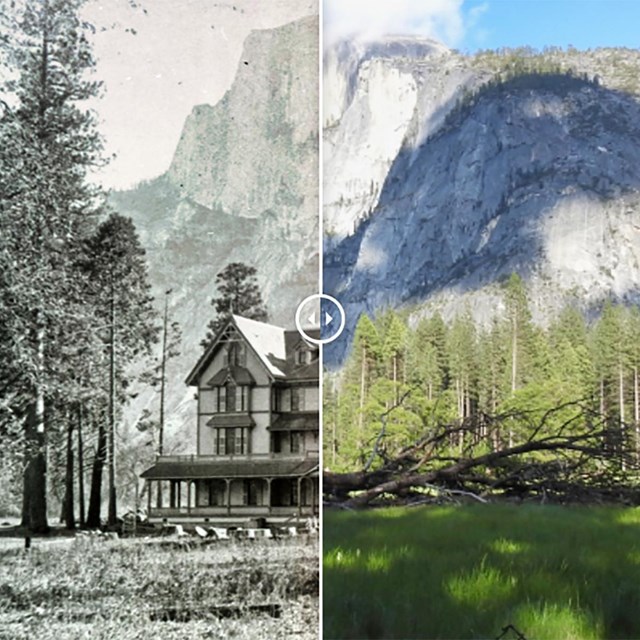
Research and Studies:  Ongoing scientific research abounds at Yosemite from vista management to soundscape preservation to human carrying capacity issues. Yosemite has been building its Division of Resource Management and Science, serving as a public meeting place for scientific symposiums with papers presented at monthly forums. View the schedule for this year's Yosemite Forum. In addition, the division processes hundreds of research permits every year for its staff and outside interests. Also, learn how Yosemite's scientists work on a regional level through Inventory & Monitoring.

 
greay gray owl face in logo

TWITTER: Follow Yosemite's natural and cultural resource developments. Go to http://twitter.com/YosemiteScience. You do not need an account simply to view our daily postings.

Face of a ranger
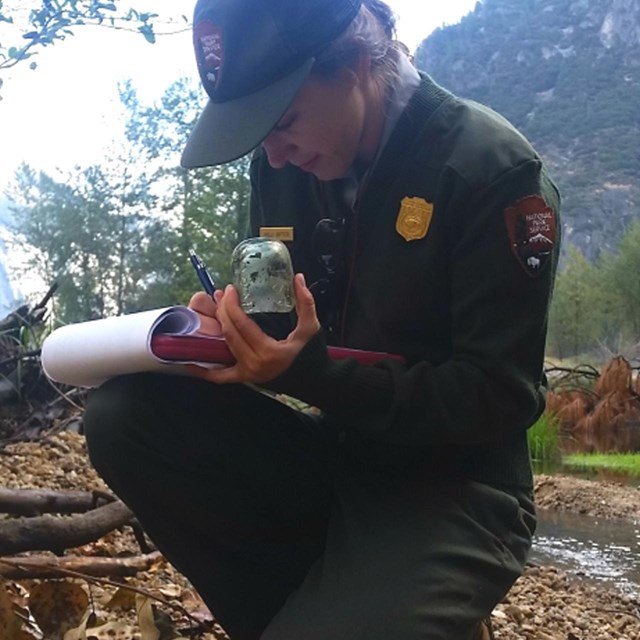
Study the Scientist
Watch a video of a historical architect in the field
more...
Buffalo Soldier in Yosemite
Buffalo Soldiers
Yosemite ranger researches role of black U.S. Army soldiers
more...
Pine tree against rock cliff
Yosemite reaches out to sister parks
Chinese and Chilean sites learn from Yosemite
more...
Cover of Historic Resources Study
Yosemite Historic Resources Study
Read the full history of the discovery, management, and physical development of Yosemite (1987)
more...
Low intensity fire in Yosemite  

Did You Know?
Natural fires in Yosemite are often no more than a single burning snag (standing dead tree) or a slow moving, low intensity fire that cleans underbrush from the forest floor. These fires prevent unwanted fires by removing accumulating forest debris that can fuel a larger fire in hot, dry conditions.

Last Updated: October 04, 2009 at 19:58 EST