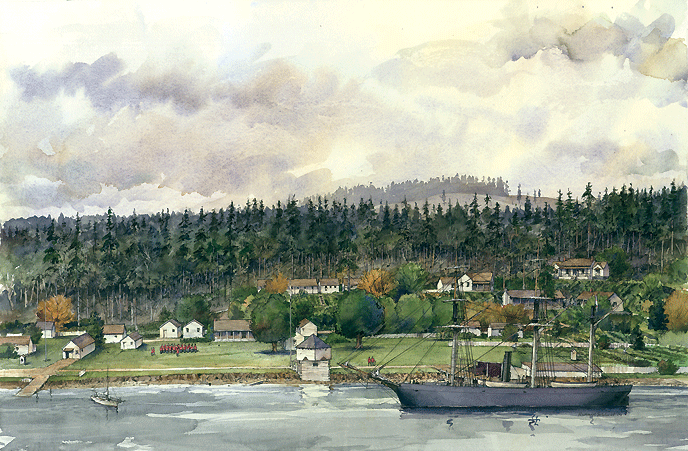
NPS Painting by Richard Schlecht When Great Britain and the United States in 1859 agreed to jointly occupy San Juan Island until their water boundary was settled, they decided their camps should be on opposite ends of the island. Capt. James Prevost, commander of H.M.S. Satellite, selected the site of English Camp on Garrison Bay — 15 miles northwest of American Camp — from among seven finalists. He’d remembered the bay shore from explorations two years earlier as a part of the water boundary commission survey of the island. At that time, one of his officers, Lieutenant Richard Roche, had commented on seeing abandoned Indian plank houses nestled among a vast shell midden. After clearing the shore of its thick growth of trees, they erected the commissary and planted a small garden where the formal garden lies today. Barracks, cooking houses and other vital structures quickly followed, especially after Rear Admiral R. Lambert Baynes visited in June and ordered extra pay for the men preparing the camp for winter. During its peak operations, one visitor commented: "We may remark here that the neatness, cleanliness and good order observable throughout the entire camp were the subject of general observation." New commander, Captain William Delacombe, who arrived in 1867, upgraded English Camp considerably. New officers' quarters were built to house the captain and his family as well as the camp's second in command. Delacombe also directed that a formal garden be constructed at the base of the hill leading to the officers' quarters.
|
 |
|
Official websites use .gov
A
.gov website belongs to an official government
organization in the United States.
Secure .gov websites use HTTPS
A
lock (
) or https:// means you've safely connected to
the .gov website. Share sensitive information only on official,
secure websites.