
National Park Service LogoU.S. Department of the InteriorNational Park ServiceNational Park Service
National Park Service:  U.S. Department of the InteriorNational Park Service Arrowhead
Rocky Mountain National Park a photo of Halletts in the snow
view map
text size: largest larger normal
printer friendly
Rocky Mountain National Park
Winter Recreation
 

Skiing and Snow Shoeing
Snow accumulation varies tremendously across Rocky Mountain National Park. The West Side of the park receives moisture-bearing storms first, and has the deepest accumulation of the fluffy white stuff. Often there is sufficient snow cover by late November to cover rocks, logs, and other obstacles, making trails and slopes safe for skiing and snow shoeing. There are no ski lifts in the park, so skiers generally use cross-country equipment that allows them to ascend as well as descend in mountainous terrain.

The East Side of the park, the lee side of the mountains, is relatively dry and snow cover is patchy, especially early in the winter. Strong winds blow what snow falls into drifts, covering some areas but exposing others. Snow coverage is often intermittent below 9500 feet. Above that elevation, steep slopes and variable snow coverage result in challenging ski conditions.

Although the East Side does not really offer beginning cross-country skiing, it does have a selection of trails suitable for the beginning snow-shoer. Free ranger-led walks (link to ranger-led activities) can help you get started. If you don't have your own "shoes", several local stores offer equipment rentals.

The strong winds, variable temperatures, and steep slopes of the East Side all contribute to increased avalanche danger. Since snow conditions and avalanche hazard are quite changeable, we encourage you to stop by a visitor center or call the Information Office/Backcountry Office to discuss your plans.

The park offers ranger guided snowshoe and cross country ski programs during the winter. Click here for more information.

Winter Play
A winter play area, suitable for sledding, is located at Hidden Valley. However, as described above, conditions are not always safe. In particular, when snow coverage is limited, rocks and logs may not be safely buried. Heavy use at this area, particularly on weekends, can result in icy conditions. Condition reports are made daily, and can be obtained at any visitor center. However, it is your responsibility to inspect an area to ensure it is safe before allowing children to sled or play.

Snowmobiling
Snowmobiling is allowed along a two mile stretch of the North Supply Access Trail in the southwest corner of the park. This trail connects the town of Grand Lake to a system of National Forest trails adjacent to the park.

To learn more about winter hiking, click here.

To download printable brochures about winter activities and trails, click here.

Photo Twitter Icon
Rocky Twitters
Visit us on Twitter!
more...
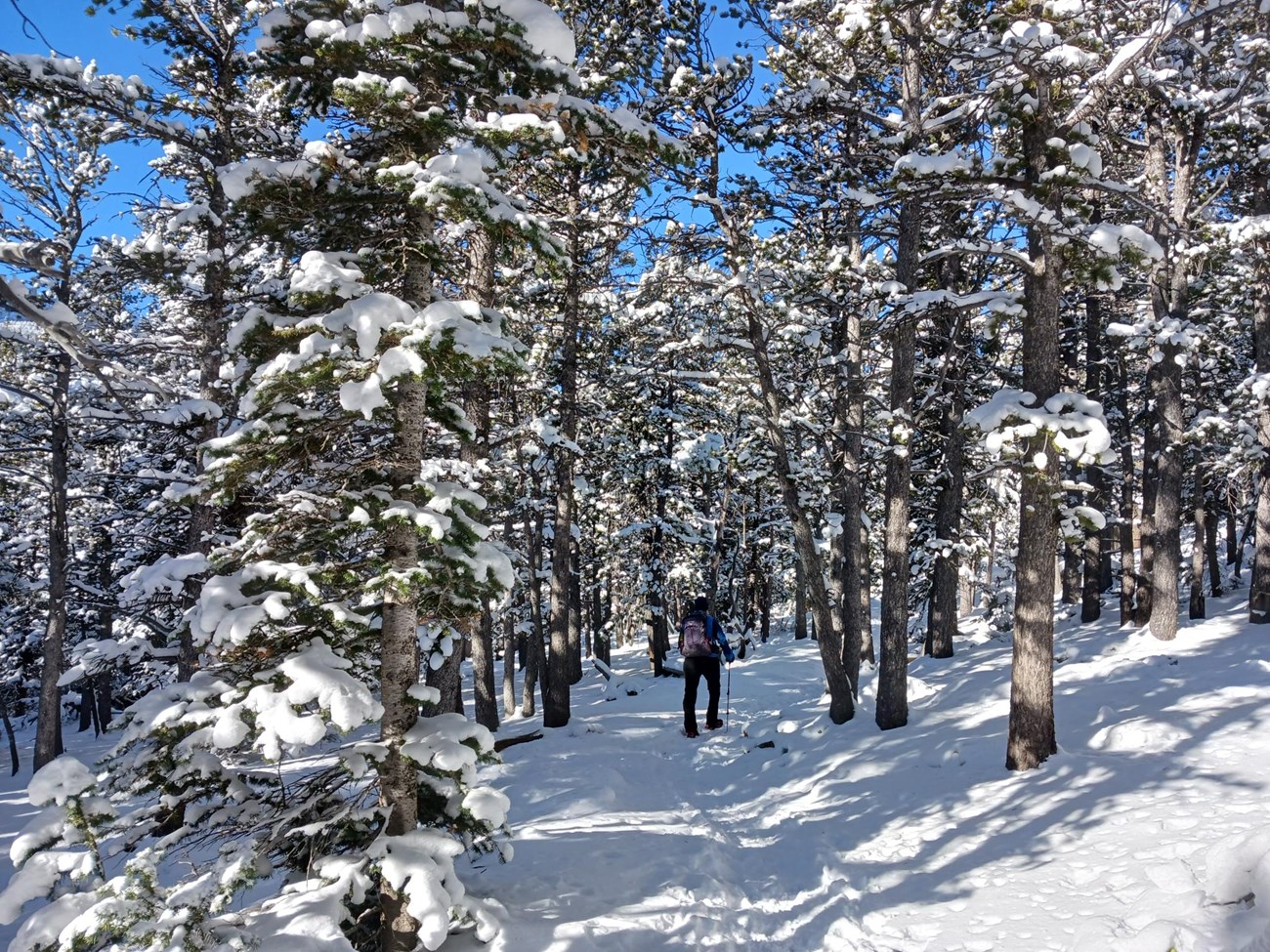
a photo of a snowshoer at Wild Basin
A snowshoer at Wild Basin
For more information on Winter Hiking, use this link
more...

You are exiting the National Park Service website

Thank you for visiting our site.

You will now be redirected to:

We hope your visit was informative and enjoyable.

A deer wears a radio collar so scientists can track its movements.

Did You Know?
You can access research information throughout the entire National Park Service system. Find out which parks are studying Chronic Wasting Disease.
more...

Last Updated: December 30, 2011 at 15:52 MST