




NPS Photo Mount Rainier National Park is a popular place to enjoy winter activities. The mountain receives abundant snowfall and the scenery is spectacular. In winter, recreational opportunities are numerous. A winter visit to Mount Rainier can include:
With the arrival of snow in late October, Mount Rainier's beauty changes and so do its challenges. Visitors planning to travel to the park in winter should familiarize themselves with winter travel tips, road status, weather forecast, and be prepared for potential winter hazards. Winter PublicationsMore information on winter recreation is available in the winter issue of the park's Tahoma News. The Paradise Winter Recreation brochure includes a winter recreation map of Paradise with marked trails and other useful winter recreation information. Learn about winter hiking opportunities at Longmire in the Longmire Winter Trails brochure. Winter Camping
Winter Food StorageHabituated Cascade foxes and other wildlife have been obtaining winter campers' food throughout the Paradise/Reflection Lakes/Tatoosh area. This has resulted in damage to camping equipment and increasingly persistent and aggressive wildlife behavior. Proper food storage is required at all times when camping. All campers must hang food, garbage and scented items to keep them out of reach of wildlife, or secure them in an approved hard-sided container (5-gallon plastic buckets with tight-fitting lids, or manufactured wildlife resistant food containers). Hung food should also be stored inside a container to prevent habituated jays and ravens from obtaining food out of stuff sacks. 
NPS Photo Ranger-Guided Snowshoe WalksJoin a park ranger to learn the art of snowshoeing and discover how plants, animals, and people adapt to the challenging winter conditions at Mount Rainier. On this guided snowshoe experience, you will be led by park staff through lush evergreen forests and sweeping vistas in a winter wonderland. WhenUpdate 5/7/26: Ranger-guided snowshoe walks have ended for the 2025-2026 season. Check back next winter! Distance & TimeSnowshoe walks cover approximately 1.5 miles in 2 hours. Group sizeSnowshoe walks are limited to 25 people, eight years old or older, on a first-come, first-served basis. A sign-up sheet is available at the Jackson Visitor Center information desk one hour before each walk. All snowshoe walk participants must be present at sign-up. EquipmentFor an enjoyable snowshoe walk, you will need:
Paradise Sledding and SlidingSledding Status (updated 11/21/25): CLOSED. The Paradise Sledding Area will not open for the 2025-2026 season. Skiing and SnowboardingTo avoid damaging exposed vegetation, a minimum of 5 feet of snow is strongly advised for skiing and snowboarding. Obtain further information at the Jackson Visitor Center at Paradise (weekends and holidays) and the Longmire Museum (daily). SnowmobilingIn the southwest corner of the park, snowmobiles are permitted for 6.5 miles along the Westside Road from its junction with the main park road as far as Round Pass. Beyond Round Pass, the Westside Road is closed to snowmobile use. Snowmobiles are also permitted on all the road loops of Cougar Rock Campground. The campground is closed to overnight use during winter and the roadway is left unplowed. Contact a park ranger at the Longmire Museum or the Carbon River Ranger Station for maps and additional snowmobile information in the park. The US Forest Service District Office in Enumclaw provides information and maps for White River, Carbon River, and Mowich Lake areas. For more information, call the USFS District Office in Enumclaw at (360) 825-6585. State Route 410 is closed near its junction with Crystal Mountain Ski Area road, at the north park boundary. Visitors must park in the Silver Springs Campground SNO-park located off of SR410 on the road going to Crystal Mountain. All vehicles must have the State SNO-park pass or be subject to a fine. No vehicles are allowed to park at the park entrance or block the entrance gate. Snowmobiles are permitted on the 12-mile section of unplowed road from the north park boundary on SR410 to the White River Campground. Snowmobiles may not continue on SR410 south of the White River Road turnoff. They are also prohibited from proceeding beyond the closure at the White River Campground road junction towards Sunrise. Snowmobiles must stay on the road corridor; they are not allowed to proceed beyond the campground towards Glacier Basin. Be aware of avalanche danger and the weather forecast. Wilderness permits, required for all backcountry camping, and climbing registration cards are available at the north boundary arch on SR410 or by self registration at the Ohanapecosh Ranger Station. 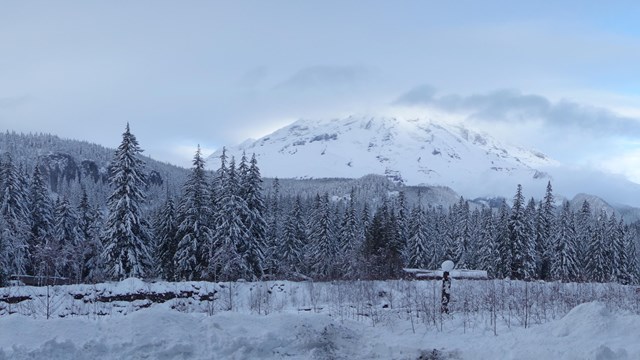
Alternative Winter Destinations
Longmire, Carbon River, and nearby communities offer many options for winter recreation. 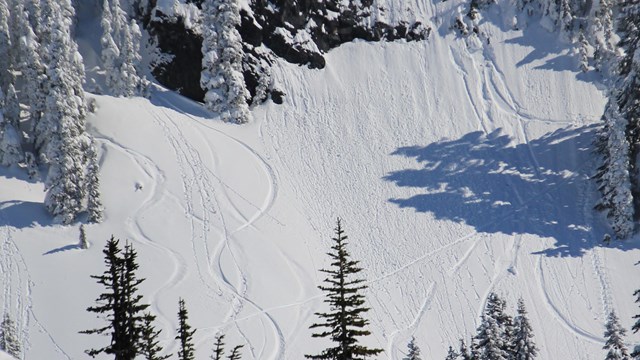
Winter & Snow Safety
Winter can show you a different side of the park, but it also involves extra safety considerations such as the risk of avalanches. |
Last updated: May 7, 2026