



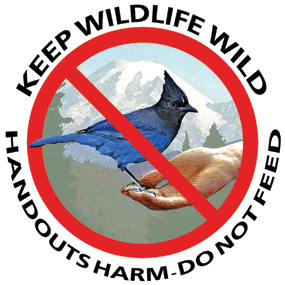
Visiting Mount Rainier can be a wonderful experience. Part of your experience is enjoying the amazing wildlife and supporting habitat protected in the park. Mount Rainier is home to 65 species of mammals, 182 species of birds, and 18 species of amphibians and reptiles. Though you are not likely to see all of them, there are a variety of birds and mammals you may encounter while in the park. Some of these animals are easy to spot, such as black-tailed deer grazing in the meadows. Other species take patience and a good eye to see, like the sooty grouse whose camouflage markings hide it from predators. Knowledge of these different species and what is appropriate behavior around them will enhance your experience and protect both you and the wildlife from harm. Biologists at Mount Rainier National Park have noticed a change in the natural behavior of the park’s wildlife. Animals have been fed by people and are now “food-conditioned”— meaning, they seek out people for food. They learn to steal from picnic tables, trash cans, and will even forage through your belongings. This behavior is unsafe for both wildlife and park visitors. Park staff need your help to stop this unnatural behavior and keep wildlife wild. Feeding wildlife can be as direct as offering a bit of your lunch, to leaving your food or garbage exposed for animals to find. It may take just one experience for an animal to learn “people” equals “food.” Wildlife depend on natural behavior for survival, once a wild animal becomes food-conditioned it loses its natural fear of people and public places. Not feeding park animals keeps you safe and the wildlife wild. What’s the problem?
Here’s what you can do:
Keep the "wild" in wildlife...Show Your Support!Mount Rainier has “Keep Wildlife Wild” buttons! Five different species of native wildlife (Townsend’s chipmunk, gray jay, Steller’s jay, black-tailed deer, and Cascade red fox) are featured on different buttons for visitors to wear in support of this important issue. Buttons are available in the Paradise and Sunrise park visitor centers. All donations support ongoing educational efforts to protect the wildlife that live in the park. Other Resources
Wildlife Safety
The park is home to a diversity of animals, including potentially dangerous large mammals like black bears and mountain lions. 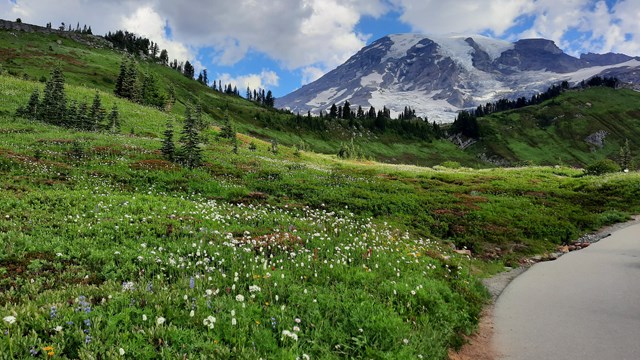
Meadow Preservation
Preserve and protect Mount Rainier's precious subalpine meadows by staying on trail during your visit. 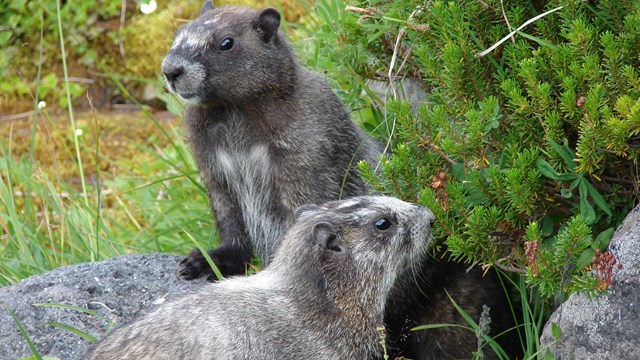
Animals
Discover all of the animals that call Mount Rainier home! |
Last updated: January 24, 2025