




NPS/T.Vaughn Qizhjeh Vena is the ancestral homeland of the Dena’ina people. Long before this lake was part of Lake Clark National Park and Preserve, it was known as Qizhjeh Vena, 'a place where people gather lake.' The Qizhjeh (Kijik) area includes K'q'uya Vena (Kijik Lake) and the portion of the Ch'ak'dałtnu (Kijik River) that flows into Lake Clark. These areas hold great cultural importance to local Dena'ina people. 
NPS Photo Qizhjeh (Kijik Village) Historical texts as old as 1818 mention Qizhjeh (Kijik) village, but the first residents may have moved there decades earlier. The community contained many houses and, according to elders from the village of Nondalton, a Russian Orthodox church was built around 1889. 
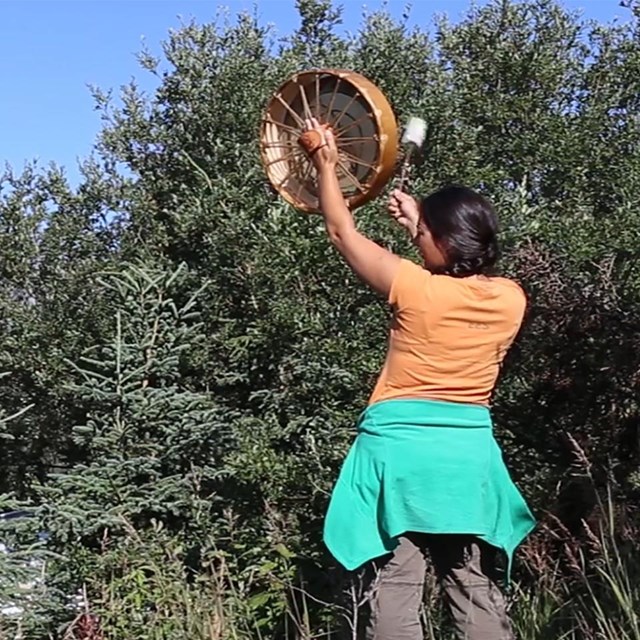
NPS Photo A Sacred PlaceThe Dena’ina people have continued to live, fish, and hunt in the same areas as their ancestors who lived at Qizhjeh. Qizhjeh is still considered a sacred and highly respected place. In recent summers, Quk' Taz'un, 'The Sun Is Rising', a Dena'ina outdoor learning camp is held in Qizhjeh. At this camp, students learn from and honor the knowledge of ancestors, and are provided the tools and encouragement to engage with Dena'ina history and culture. 
Related Stories
|
 |
|
Last updated: February 4, 2019