Operating Hours & Seasons
|
All Visitor Centers will be closed on Thanksgiving, Christmas, and New Years Day.
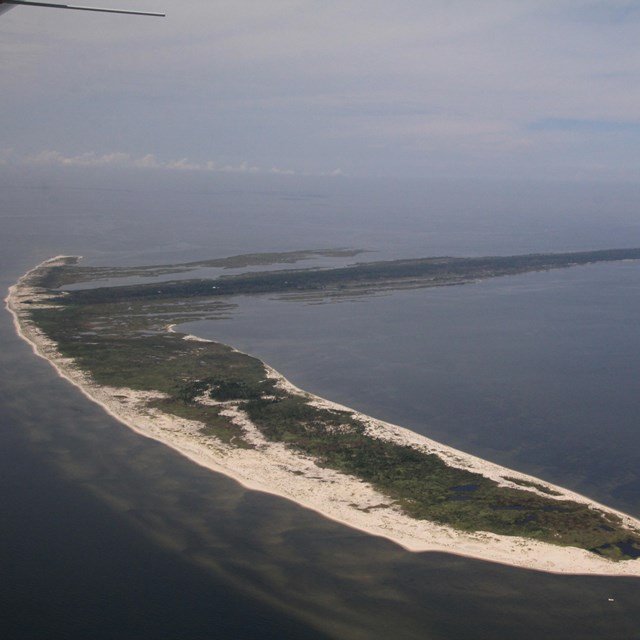
Small boats anchor at the beach on West Ship Island. nps photo All of the Mississippi islands in the Seashore are open to park visitation unless posted. Davis Bayou Area 6:00 am - 10:00 pm. Visitor Center 8:30 am - 4:30 pm Closed on Wednesday's and Thursdays.
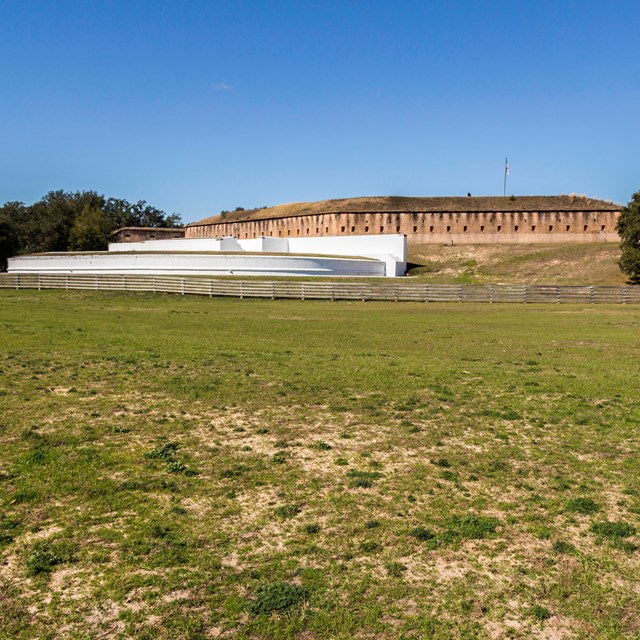
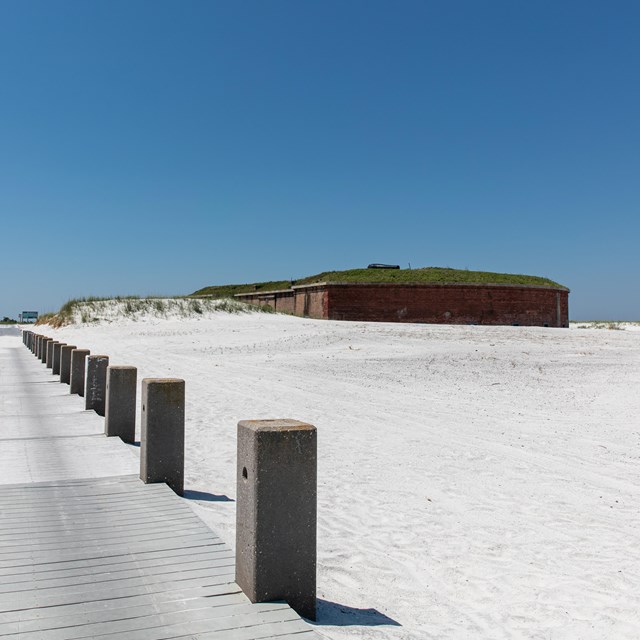
Visitor Center Grounds 8:00 am - sunset. West Ship Island 7:00 am - sunset. Fort Massachusetts 10:00 am - 4:30 pm (Summer) or 10:00 am - 2:00 pm (Spring and Fall).
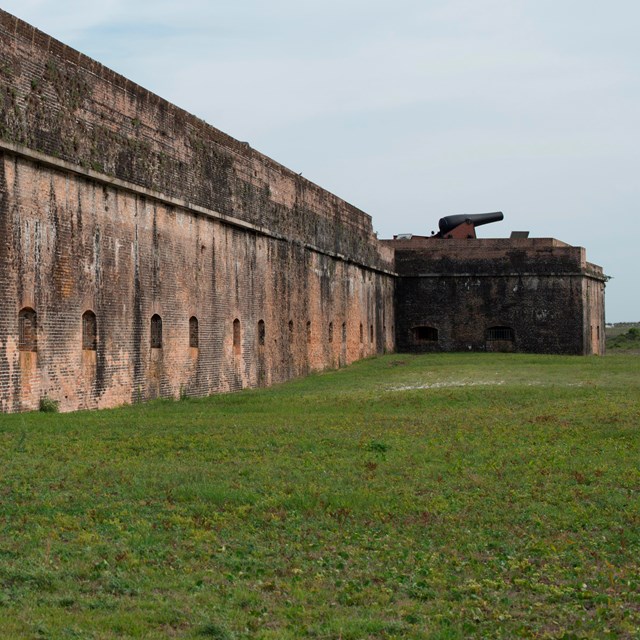
A ranger explains the significance of Fort Barrancas to a park visitor. nps photo All areas of the Florida District are open year-round unless posted. Operating hours vary seasonally and from unit to unit. Visitors with back country camping permits for the Perdido Key Area or Night Owl permits for Fort Pickens or Perdido Key Areas may access those places after evening closures. Naval Live Oaks 8:00 am - sunset. Naval Live Oaks Visitor Center 8:30 am - 4:30 pm. (New Visitor Center Hours starting April 7, 2013, Monday - Friday 8:30 am - 4:30 pm) Fort Pickens Area is open daily from 7:00 am until sunset. Fort Pickens Visitor Center (Seasonal Hours) Fort Pickens Museum open 9:00 a.m. to 5:00 p.m. March - October 9:30 a.m. - 4:45 p.m. November - February 8:30 a.m. - 4:00 p.m. Fort Barrancas and Fort Pickens Visitor Center (Seasonal Hours): Closed Monday - Thursday (4 days/week) March - October 9:30 am - 4:45 pm. November - February 8:30 am - 3:45 pm. Tours given daily at 2:00 pm. Advanced Redoubt tours at 11:00 on Saturdays Okaloosa Area (Day Use Only) 8:00 am - sunset. Santa Rosa Area (Day Use Only) 8:00 am - sunset. Perdido Key Area (Day Use Only) 8:00 am - sunset (Extended hours for primitive camping and Night Owl permits).
|
Did You Know?
In 1828, John Q. Adams designated the Naval Live Oaks Area of Gulf Islands National Seashore as the first United States tree farm. Live oak trees are known for their incredible density and resistance to disease. They provided durable wood for the construction of early naval vessels.