
|
NPS, Michael Quinn
Contact: Maureen Oltrogge, 928-638-7779 Contact: Phil Fessler, 928-638-7362 Grand
Canyon, In the 1930s the National Park Service (NPS) constructed
residences within the park at an area known as Supai Camp, and relocated
Havasupai tribal members who had been living at A General Agreement between the NPS and the Havasupai Tribe was developed to recognize the historic use and occupancy of Supai Camp by tribal members and to establish terms and conditions for occupancy by the tribe. Prior to the start of the project to construct six new handicap accessible housing units, Supai Camp consisted of four historic cabins built in the 1930s, one community building-turned-residence that was constructed in the 1950s, and one community bathroom and laundry facility – referred to as a washeteria that was constructed in 1962, and upgraded in 1980. The NPS had long been concerned about the living conditions at Supai Camp and had proposed infrastructure improvements through an environmental assessment that was issued in August 2009. The substandard conditions that existed at Supai Camp included the lack of indoor plumbing, unsafe and unhealthy housing conditions, shortage of housing opportunities, and poor road conditions. A decision document signed by the NPS Intermountain Regional Director approved the construction of the six new housing units, and installation of a new sewer and water line to connect Supai Camp to the park's wastewater treatment plant. Additional projects approved in the decision document that are currently underway or planned as additional funding becomes available include the rehabilitation of five existing cabins and construction of up to 14 additional units. In January 2010, the NPS awarded Modular Solutions, Ltd.,
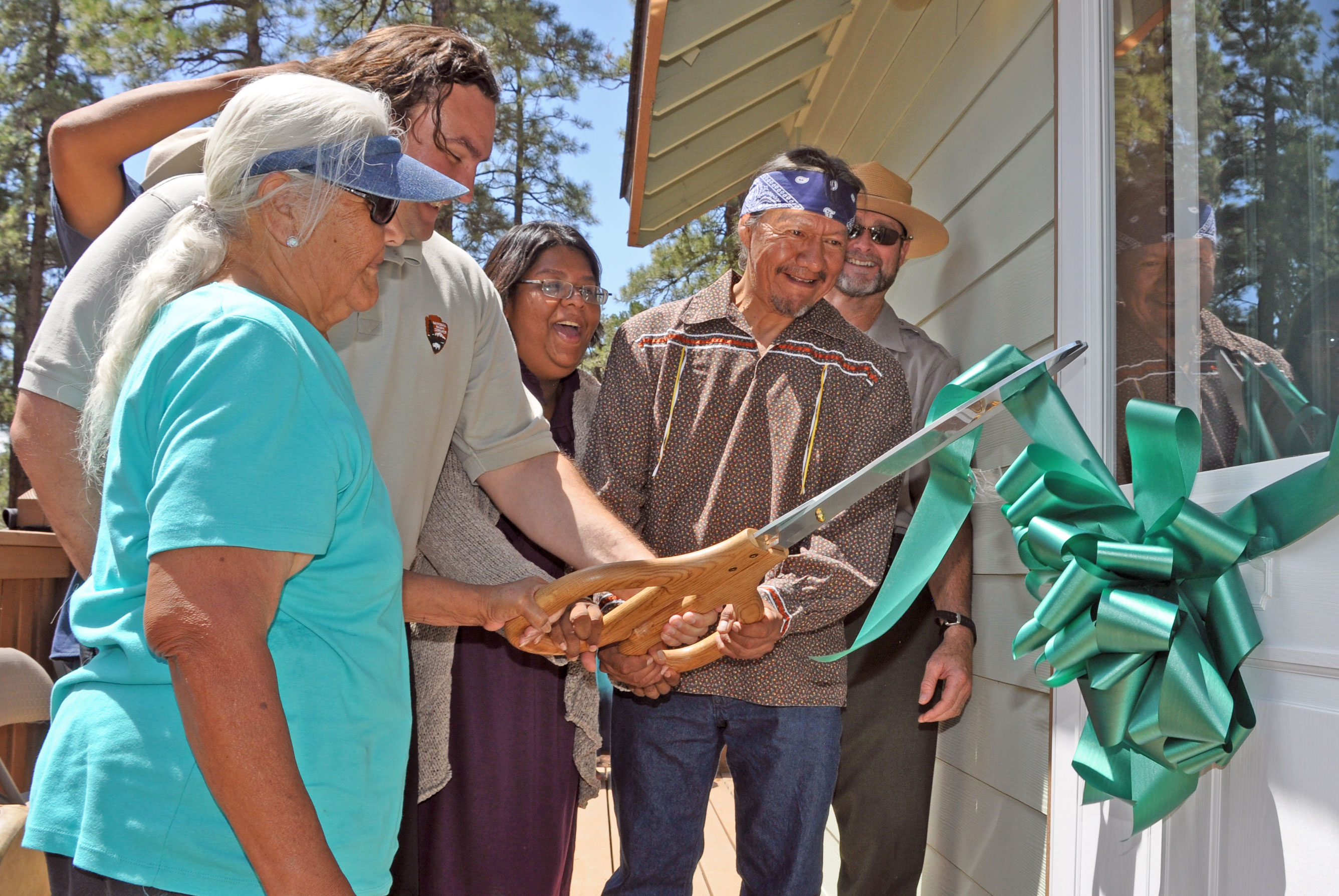
from "Through our partnership with the Havasupai Tribe we were able to provide adequate housing for tribal elders and families that live and work on the South Rim of Grand Canyon National Park," stated Park Superintendent, Steve Martin. "Funds allocated to the park through the American Recovery and Reinvestment Act provided us with the opportunity to complete this long standing and necessary project." Many of the Havasupai Tribal members were at the ribbon
cutting ceremony and reflected on growing up in the The American Recovery and Reinvestment Act passed earlier
this year gave $3 billion to the Department of the Interior (Interior). Of that amount, the NPS received $750 million
– approximately $18 million of which was directed to These ARRA funds are part of a stimulus package that is an important component of the President's plan to jumpstart the economy and put a down payment on addressing long-neglected challenges so the country can thrive in the 21st century. Under ARRA, Interior is making an investment in conserving American's timeless treasures – our stunning natural landscapes, our monuments to liberty, the icons of our culture and heritage – while helping American families and their communities prosper again. Interior is also focusing on renewable energy projects, the needs of American Indians, employing youth and promoting community service. "With its investments of Recovery Act funds, the Department
of the Interior and its bureaus are putting people to work today to make
improvements that will benefit the environment and the region for many years to
come," Secretary of the Interior Ken Salazar said. "This project will greatly benefit the
Havasupai people who have called the Secretary Salazar has pledged unprecedented levels of
transparency and accountability in the implementation of Interior's economic
recovery projects. The public will be
able to follow the progress of each project on www.recovery.gov and on www.interior.gov/recovery. For additional information on the Supai Camp housing project, please contact Phil Fessler, Project Manager at 928-638-7362, or Maureen Oltrogge, Public Affairs Officer at 298-638-7779 or on line at e-mail us. -NPS- |

Last updated: February 24, 2015